
Why Choosing the Right Sweetener for Smoothies Changes Everything
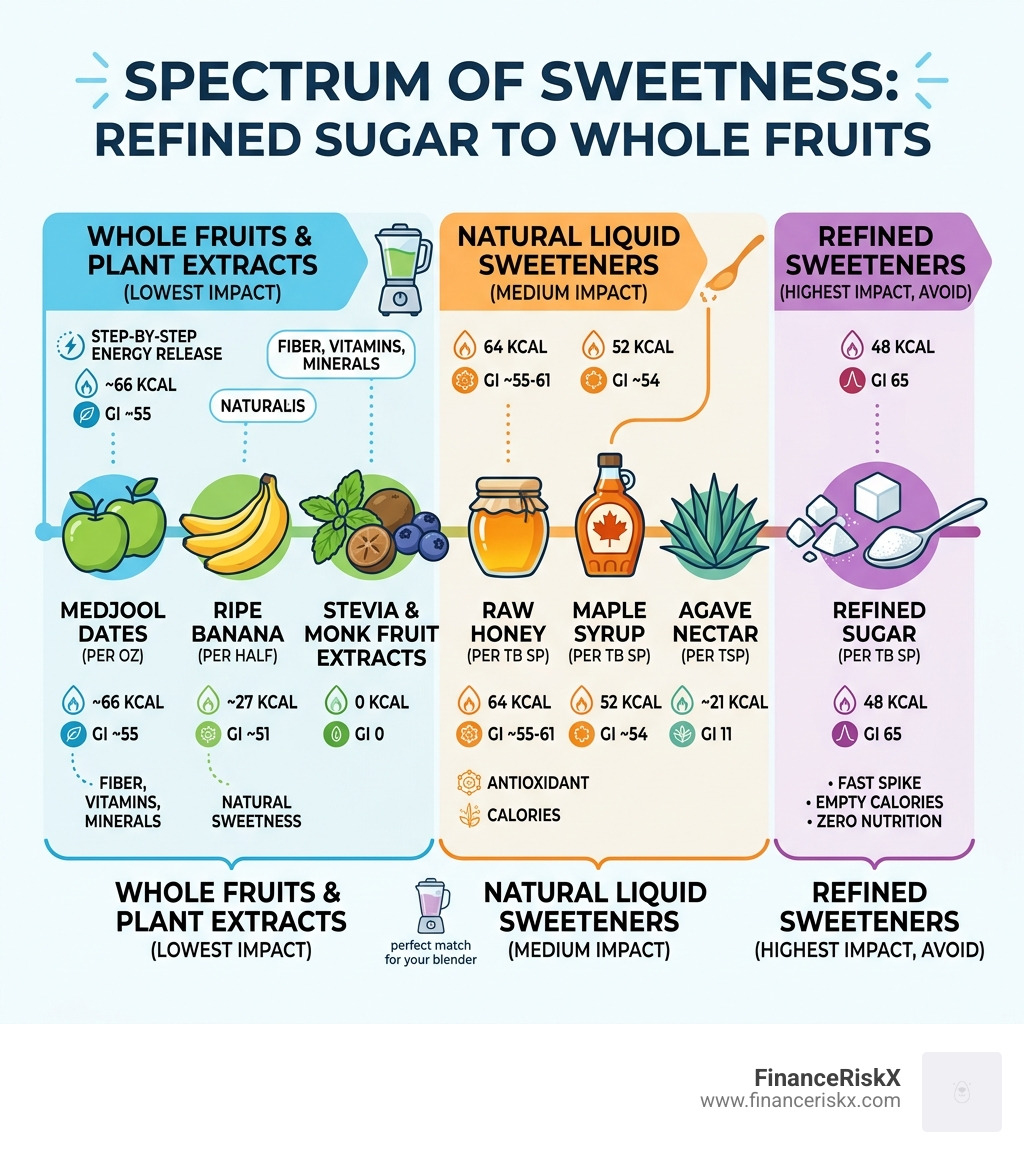
The best sweetener for smoothies depends on your health goals, but here are the top options ranked by how natural and blood-sugar-friendly they are:
| Sweetener | Calories (per tbsp) | Glycemic Index | Best For |
|---|---|---|---|
| Stevia | 0 | 0 | Keto, diabetic, weight loss |
| Monk fruit | 0 | 0 | Keto, clean flavor |
| Medjool dates | ~66 per oz | ~55 | Whole food, fiber, caramel flavor |
| Agave nectar | ~21 per tsp | 11 | Low blood sugar impact |
| Maple syrup | 52 | ~54 | Antioxidants, rich flavor |
| Raw honey | 64 | ~55-61 | Antimicrobial, floral notes |
| Ripe banana | ~27 per half | ~51 | Creaminess, no added sugar |
Most people reach for refined sugar out of habit. But it’s one of the worst choices for a smoothie — it spikes blood sugar fast, adds empty calories, and offers zero nutrition.
The good news? You have a lot of better options.
Some sweeteners come straight from whole foods — think ripe bananas, Medjool dates, or frozen mango. Others are plant-based extracts like stevia or monk fruit that add sweetness with zero calories. And some, like honey and maple syrup, sit in the middle — natural, but still calorie-dense.
The right pick depends on what you’re blending, why you’re blending it, and what your body needs. A green detox smoothie calls for a different approach than a post-workout chocolate protein shake.
This guide breaks down every major sweetener option so you can make a smart, confident choice — no guesswork required.
The Best Natural Sweetener for Smoothies: Whole Food Heroes
When we talk about the gold standard for sweetening, we always look toward whole foods first. Why? Because nature packages its sugars with fiber, vitamins, and minerals. Unlike refined sugar (sucrose), which has a high glycemic index of 65 and zero nutritional value, whole fruits provide a “slow burn” of energy.
Using whole fruit as a sweetener for smoothies allows you to hit your sweetness goals while ticking off your daily fiber requirements. If you are looking for ways to make a smoothie sweeter without refined sugar, focusing on the ripeness and type of fruit is your first step. We have found that certain “hero” ingredients can transform a bitter green drink into a dessert-like treat without a single drop of syrup. For more on this, check out our guide on smoothie sweeteners that are healthy.
Nature’s Candy: Using Dates and Prunes
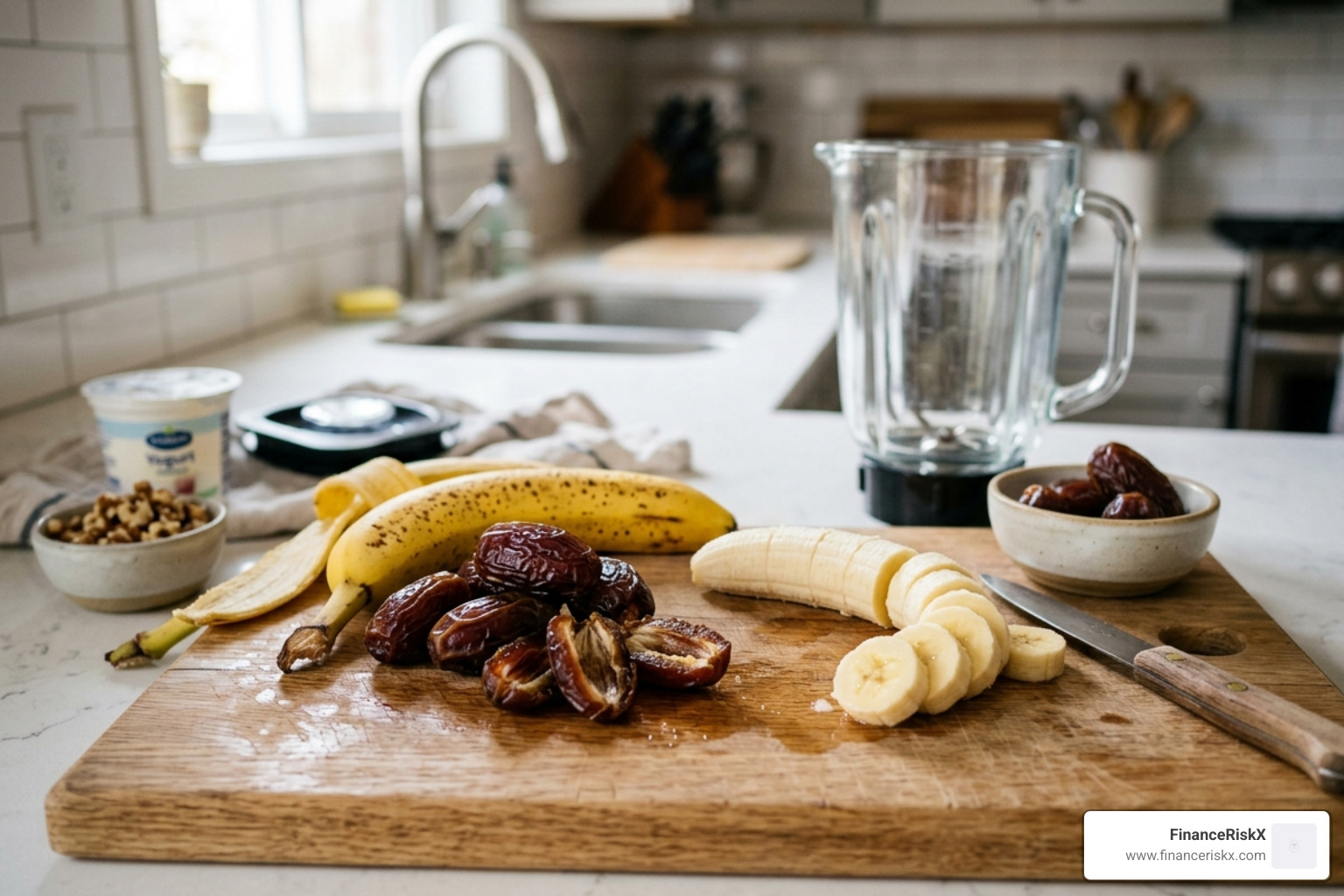
Dates are often called “nature’s caramel,” and for good reason. They offer a deep, rich sweetness that pairs perfectly with chocolate, nut butters, and vanilla. A single ounce of dates provides 3 grams of fiber, and a full cup can contain up to 8 grams. This fiber is crucial because it slows down the absorption of sugar into your bloodstream.
To get the most out of dates, we recommend using Medjool dates—they are plumper and softer than the Deglet Noor variety. If your dates feel a bit firm, soak them in warm water for 5 to 10 minutes before tossing them in the blender. For the smoothest texture, blend your liquid and dates first to create a “date milk” before adding your frozen fruits and greens.
The Creamy Power of Ripe Bananas
The humble banana is the undisputed king of the blender. As bananas ripen, their starch converts to sugar, making overripe, spotty bananas the ultimate sweetener for smoothies. Beyond sweetness, they provide a velvety, creamy texture that mimics dairy.
Bananas are packed with potassium and vitamin B6, providing a natural energy boost. A pro tip we swear by: peel your overripe bananas, break them into chunks, and freeze them. Frozen bananas act as both a sweetener and an ice replacement, ensuring your smoothie is frosty and thick rather than watered down. They are also the best tool for masking the “earthy” taste of kale or parsley.
Liquid Gold and Plant-Based Syrups
Sometimes you need a concentrated burst of sweetness that fruit alone can’t provide. Liquid sweeteners are convenient because they dissolve instantly, preventing the “grainy” texture sometimes caused by granulated sugars. However, because these are concentrated, portion control is key.
You can explore more about these options in our article on liquid gold and coconut sugar.
Honey and Maple Syrup: Flavor vs. Nutrition
Raw honey is a powerhouse ingredient. Containing roughly 64 calories per tablespoon, it offers more than just sweetness; it provides antioxidants and has been used for centuries for its antimicrobial properties. Depending on the flowers the bees visited, honey can add floral, citrus, or even spicy notes to your blend.
Maple syrup is another excellent choice, clocking in at 52 calories per tablespoon. It is a surprising source of manganese and zinc, which support immune health. We recommend sticking to “Grade A” Dark or Amber syrups for smoothies, as they provide a robust flavor that stands up well against strong ingredients like coffee or cocoa.
Agave and Coconut Sugar: Low-GI Alternatives
Agave nectar is a favorite in the vegan community. It is thinner than honey and has a remarkably low glycemic index of 11, meaning it won’t cause the same dramatic blood sugar spikes as table sugar. However, it is high in fructose, so use it sparingly—a little goes a long way.
Coconut sugar is a solid alternative if you prefer a granulated feel. It contains trace amounts of iron, zinc, and calcium. With a GI typically ranging from 35 to 54, it is a gentler option for your metabolism. If you’re wondering what to add to your smoothie for sweetness, these syrups offer a quick fix that balances flavor and function.
Low-Calorie and Keto-Friendly Options
For those of us watching our caloric intake or managing conditions like diabetes, traditional sugars—even natural ones—might be off the table. This is where high-intensity, plant-based sweeteners shine.
Zero-Calorie Sweetener for Smoothies: Stevia and Monk Fruit
Stevia, derived from the Stevia rebaudiana leaf, is a miracle of nature. It is roughly 200 times sweeter than sugar but has zero calories and a GI of 0. Research suggests that those who consume stevia can have up to 15% lower blood glucose levels an hour after eating compared to those who consume refined sugar.
Monk fruit (luo han guo) is another fantastic option. It ranges from 150 to 200 times sweeter than sugar. Its sweetness comes from unique antioxidants called mogrosides. Many people prefer monk fruit over stevia because it tends to have a “cleaner” taste with less of the bitter aftertaste often associated with stevia. If you’re looking for the healthiest alternative to sugar for your morning blend, these two are top contenders.
Innovative Extracts and Blackberry Leaf
If you want to move beyond the usual suspects, consider blackberry leaf sweetener (Rubus suavissimus). This Eastern medicinal staple is nearly 100 times as sweet as cane sugar but has a zero glycemic index. It’s perfect for berry-based or green smoothies where you want a light, refreshing sweetness.
Don’t overlook the power of extracts. A few drops of pure vanilla or almond extract can trick the brain into perceiving sweetness without adding any sugar at all. This is a favorite trick among athletes who need to keep their smoothies strictly low-calorie. You can find more healthy ways to sweeten a smoothie by experimenting with these potent plant extracts.
Pro Tips for Balancing Flavor and Nutrition
Sweetening a smoothie is an art form. It’s not just about dumping in sugar; it’s about balancing the five basic tastes: sweet, sour, salty, bitter, and umami. If your smoothie tastes “off,” it might not need more sugar—it might need balance.
Choosing the Right Sweetener for Smoothies by Flavor Profile
- Berry Smoothies: These are naturally tart. Agave nectar or a floral honey (like orange blossom) complements the acidity of strawberries and raspberries beautifully.
- Green Smoothies: The bitterness of kale or spinach needs a strong “mask.” Dates or overripe bananas are best here because their fiber helps bulk up the drink while the sugar cuts through the chlorophyll taste.
- Tropical Blends: Pineapple and mango are already high in sugar. You might not need an added sweetener for smoothies in this category, but a splash of coconut water can enhance the natural vibes.
- Chocolate/Protein Shakes: These crave richness. Maple syrup or monk fruit drops pair excellently with the deep notes of cacao or whey protein.
Spices and Aromatics That Mimic Sweetness
Spices are our secret weapon for making smoothies without sugar. Ceylon cinnamon, for example, doesn’t just taste “sweet”—it actually helps regulate blood sugar levels. Nutmeg, cardamom, and ginger add warmth and complexity that makes the palate believe a drink is sweeter than it actually is.
Adding a pinch of sea salt can also help. Salt suppresses bitterness, which in turn allows the natural sweetness of your fruits to shine through more clearly.
Frequently Asked Questions about Smoothie Sweeteners
Which natural sweetener has the lowest glycemic index?
Stevia and monk fruit are the champions here, with a glycemic index of 0. Among liquid nutritive sweeteners, agave syrup is the lowest with a GI of 11. For comparison, regular table sugar has a GI of 65, and honey sits around 55-61. Choosing a low-GI sweetener for smoothies is essential for avoiding the “sugar crash” that can leave you tired by mid-morning.
How can I sweeten a smoothie without adding any sugar or syrups?
The best way is to use high-sugar fruits like mango, pineapple, or very ripe pears. You can also use “sensory” sweeteners: spices like cinnamon and vanilla extract. Another great hack is adding creamy fats like almond butter or avocado; while not “sweet” themselves, they improve the mouthfeel and help carry the flavors of the fruit more effectively.
What are common mistakes to avoid when sweetening smoothies?
The most common mistake is over-sweetening too early. Always blend your base ingredients first, taste it, and then add your sweetener in small increments. Another mistake is ignoring the “hidden” sugars in flavored yogurts or protein powders. Lastly, don’t forget the fiber! If you use a liquid sweetener, try to ensure your smoothie has plenty of whole fruit or seeds (like chia or flax) to balance the glycemic load.
Conclusion
At FinanceRiskX, we believe that health is the ultimate investment. Transitioning away from refined sugars in your daily routine is one of the most effective ways to protect your long-term wellness. Whether you choose the fiber-rich path of Medjool dates or the zero-calorie efficiency of monk fruit, the goal is to find a balance that satisfies your palate without compromising your health goals.
By experimenting with whole foods, spices, and natural extracts, you can retrain your taste buds to enjoy the subtle, complex sweetness that nature provides. Ready to upgrade your morning routine? Find the healthiest smoothie sweeteners that are actually good for you and start blending with confidence today.
