
Why Frozen Fruit Is the Secret to Milkshake-Style Smoothies
Frozen fruit thick smoothies are the easiest way to get a rich, creamy, milkshake-like texture at home – no ice cream required.
Here’s a quick answer to get you started:
The best produce for making thick smoothies:
- Frozen banana – the #1 thickener; acts as a natural binder
- Frozen mango – adds creaminess and tropical sweetness
- Frozen avocado – adds healthy fats and a silky texture
- Frozen berries – mixed or single variety for thick, frosty results
- Frozen peaches or cherries – smooth, dense, and naturally sweet
The key rules for thickness:
- Use only frozen fruit – no fresh fruit or ice cubes
- Keep liquid to a minimum (around 1/4 to 1/2 cup per 2 servings)
- Add liquid to the blender first, then pile frozen fruit on top
- Blend on low, then ramp up – use a tamper instead of adding more liquid
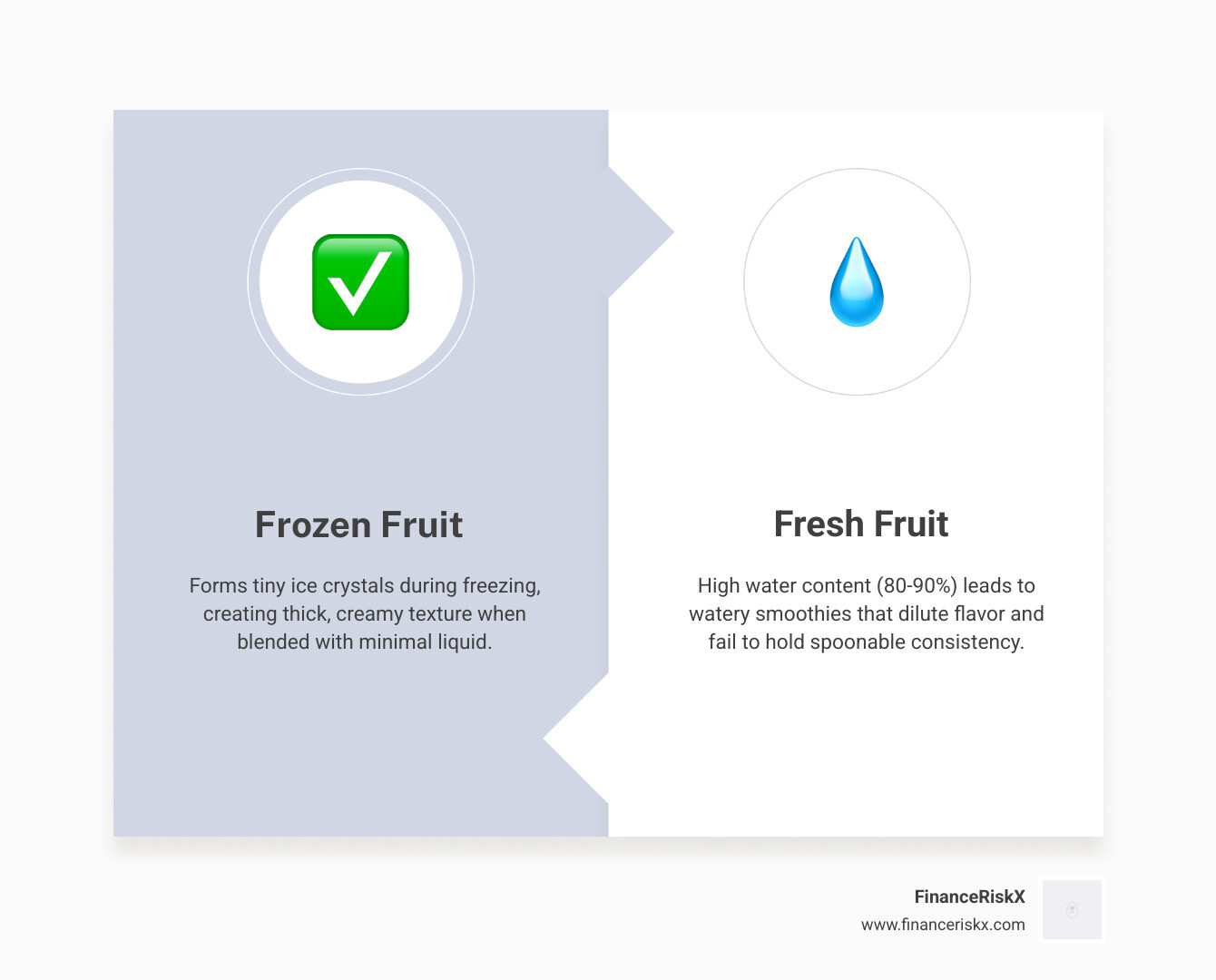
Most people end up with a watery, disappointing slushie because they add too much liquid or rely on ice cubes. Ice dilutes flavor and thins texture. Frozen fruit, on the other hand, creates tiny suspended ice crystals that blend into a thick, creamy slurry – much closer to soft-serve than a sad juice drink.
A single serving can pack 2-3 portions of fruit, along with meaningful amounts of dietary fiber, vitamin C, potassium, and folate. That’s a genuinely nutritious meal or snack that also tastes like dessert.
Below, we’ll walk through exactly which frozen produce works best and how to use it.
The Best Produce for Frozen Fruit Thick Smoothies
When we aim for that elusive “spoonable” consistency, not all fruits are created equal. Some fruits are watery, while others possess the cellular structure to create a dense, velvety base. By choosing the right produce, we can skip the ice cubes entirely—which is a major win, as ice only serves to water down the vibrant flavors of our fruit.
Frozen Bananas: The Gold Standard
If there is one “must-have” in your freezer, it is a stash of frozen bananas. When a banana is frozen at peak ripeness (think brown spots!), its starches turn to sugar and its texture becomes remarkably similar to custard once blended. We recommend peeling and slicing them before freezing so they are easier for your blender to catch. A frozen banana acts as a natural emulsifier, binding the other ingredients together into a cohesive, soft-serve-like treat.
Mango Chunks and Avocado Slices
For those who want a tropical flair or a boost of healthy fats, mango and avocado are the secret weapons. Frozen mango chunks blend into a thick, sorbet-like consistency that is naturally very sweet.
On the other hand, avocado might sound strange for a smoothie, but it is a game-changer. It adds incredible silkiness and heart-healthy monounsaturated fats without overpowering the flavor of your berries or cocoa. If you’ve ever wondered frozen fruits vs fresh for smoothies, the answer almost always comes down to texture. Frozen produce preserves the cellular integrity and sweetness at peak ripeness, ensuring your drink is never “limp” or watery.
Dark Sweet Cherries and Peaches
Don’t overlook the stone fruits. Frozen dark sweet cherries provide a deep, dessert-like flavor and a beautiful purple hue. They are dense enough to maintain thickness even when a splash of milk is added. Peaches offer a similar benefit, providing a fuzzy, creamy mouthfeel that mimics a dairy-heavy milkshake but with significantly more fiber.
| Fruit Type | Fiber (per cup) | Calories (per cup) | Thickening Power |
|---|---|---|---|
| Banana (1 medium) | 3.1g | 105 | High (Creamy) |
| Mango Chunks | 2.6g | 99 | High (Sorbet-like) |
| Avocado (1/2 fruit) | 6.7g | 160 | Very High (Silky) |
| Mixed Berries | 5.0g | 70 | Medium (Icy/Frosty) |
| Sweet Cherries | 2.9g | 90 | Medium-High (Dense) |
Mastering the Blend: Liquid Ratios and Techniques
Even with the best produce, your frozen fruit thick smoothies can turn into a juice box nightmare if your technique is off. We’ve all been there: the blender stalls, we get impatient, we pour in more juice, and suddenly we’re drinking our breakfast through a straw instead of eating it with a spoon.
The Minimal Liquid Rule
The most common mistake is using too much liquid. To achieve a “scoopable” secret, we suggest starting with a 1/4 cup liquid-to-fruit ratio. For every 2 to 3 cups of frozen fruit, start with just a small splash of liquid (milk, coconut water, or apple juice). You can always add a tablespoon more if the blades truly won’t move, but you can’t take it back once it’s in there.
The Blending Sequence
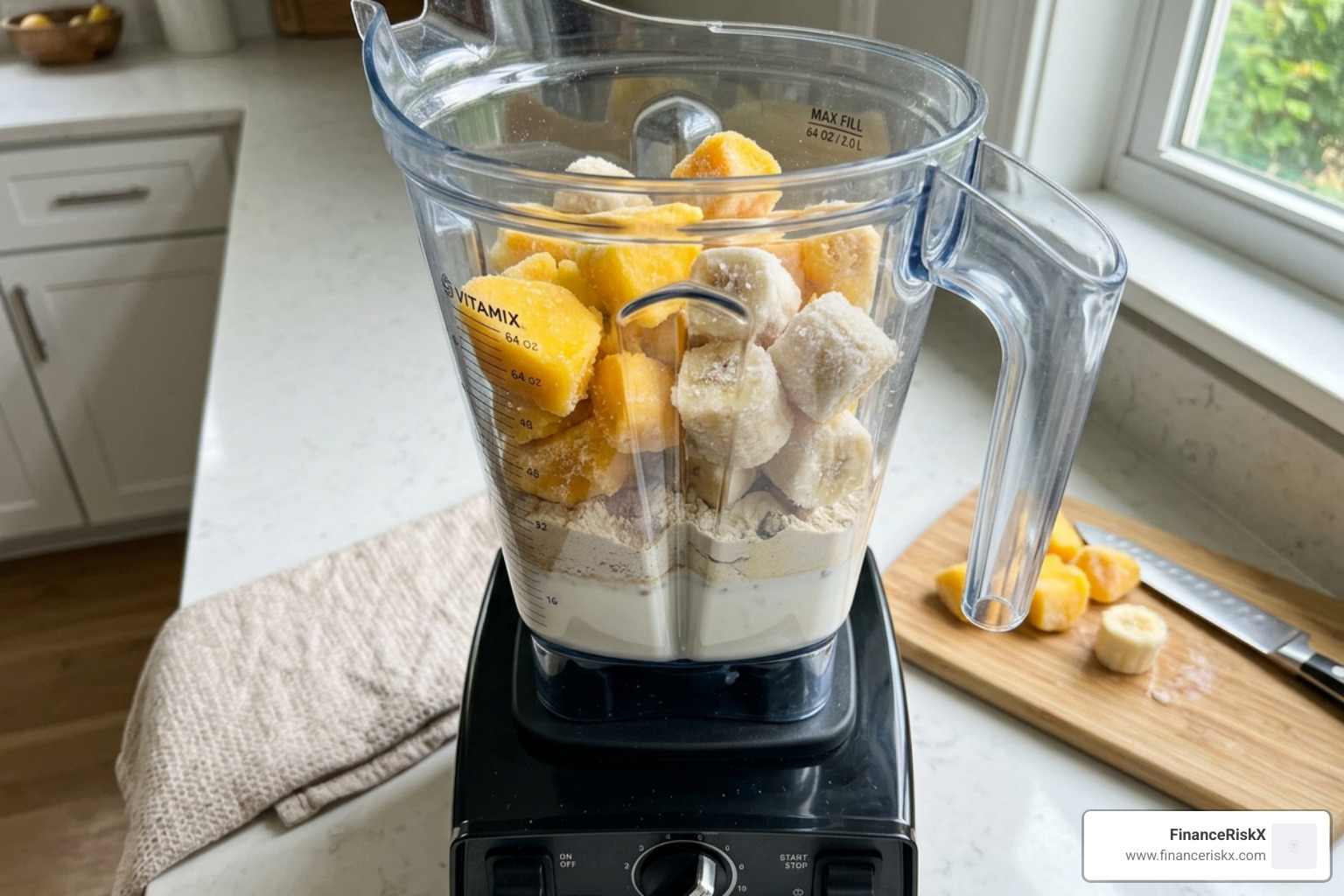
The order in which you load your blender matters. Always add your liquid first. This creates a small “whirlpool” at the base that helps pull the heavier frozen chunks down into the blades. Follow the liquid with any powders (like protein or greens), then finish with your densest frozen fruit on top. This layering prevents “bridging,” where the fruit gets stuck above the blades.
High-Speed Blending and Tools
If you are mastering the perfect creamy smoothie, a high-speed blender is your best friend. These machines are designed to pulverize frozen solids in seconds.
- Use the Tamper: Don’t be afraid of the tamper tool! It’s designed to push the fruit into the blades without hitting them. It allows you to keep the liquid low while ensuring every chunk is processed.
- Scrape the Sides: If you don’t have a high-speed blender, you’ll need patience. Stop the motor, scrape the sides with a spatula, and pulse in short bursts.
- Start Low: Always start on the lowest speed to break up the large chunks, then ramp up to high speed once the mixture starts to move.
Customizing Your Thick Smoothie Base
Once you have your fruit and liquid ratio down, it’s time to level up. Adding specific “boosters” can change the nutritional profile and the final texture of your frozen fruit thick smoothies.
Secret Ingredients for Frozen Fruit Thick Smoothies
- Greek Yogurt: This is a fantastic way to add protein and a tangy creaminess. It’s thicker than regular yogurt, which helps maintain that “milkshake” structure.
- Nut Butters: A tablespoon of almond or peanut butter adds healthy fats and acts as a stabilizer, making the smoothie feel more substantial and filling.
- Rolled Oats: If you want a smoothie that eats like a meal, toss in 1/4 cup of dry rolled oats. They blend into a flour-like consistency that thickens the mix significantly.
- Chia and Flax: These seeds are hydrophilic, meaning they absorb liquid and turn into a gel. They add a boost of Omega-3s and help “set” the smoothie so it doesn’t melt as quickly.
Banana-Free Alternatives for Frozen Fruit Thick Smoothies
We know that not everyone loves the taste of bananas. If you’re looking for secrets to making a thick smoothie without them, you have plenty of options:
- Frozen Cauliflower: Trust us on this one! Steamed and then frozen cauliflower florets are virtually tasteless when blended with fruit. They add incredible bulk and fiber without the sugar of a banana.
- Silken Tofu: This is a vegan’s best friend for creaminess. It adds a punch of protein and a texture that mimics dairy perfectly.
- Coconut Cream: For a decadent, dessert-style treat, a dollop of canned coconut cream will make your smoothie feel like a premium gelato.
- Sweet Potato Puree: Frozen cubes of cooked sweet potato add a velvety, earthy sweetness that pairs beautifully with berries or cinnamon.
Pro Tips for Serving and Storage
A thick smoothie deserves a beautiful presentation. Because these are so dense, they are often served as “smoothie bowls” rather than in a glass.
Topping Your Masterpiece
The fun of a thick base is that your toppings won’t sink to the bottom! We love adding:
- Crunchy Granola: For a contrast in texture.
- Hemp Hearts: For a nutty flavor and extra protein.
- Fresh Berries: To add a pop of brightness against the frozen base.
- Nut Butter Drizzles: Warm up some peanut butter and drizzle it over the top for a “juice shop” look.
Storage and Meal Prep
Can you make frozen fruit thick smoothies ahead of time? Yes!
- Freezer Packs: Pre-portion your frozen fruit and “boosters” into silicone bags. In the morning, just dump the pack into the blender, add your splash of liquid, and blend.
- Leftovers: If you make too much, pour the remainder into a glass jar or an airtight container. It will stay good in the fridge for up to 24 hours, though it will thin out slightly.
- Smoothie Cubes: You can also freeze leftovers in ice cube trays. Later, you can pop these “smoothie cubes” back into the blender with a tiny bit of milk for an instant refresh.
Frequently Asked Questions about Thick Smoothies
Why is my smoothie watery instead of thick?
The most likely culprit is your fruit-to-liquid ratio. If you use fresh fruit, the water content is too high. If you use ice cubes, they eventually melt and dilute the mixture. Another factor could be blending for too long; the friction of the blades creates heat, which can melt your frozen fruit if you blend for more than 60-90 seconds.
Can I make a thick smoothie in a regular blender?
Absolutely, it just takes a bit more effort. We recommend letting your frozen fruit sit on the counter for about 5–10 minutes to soften slightly before blending. Use the “pulse” setting and be prepared to stop and stir the mixture manually several times. Avoid the temptation to add more liquid!
Are thick frozen fruit smoothies good for weight loss?
When made with whole fruits and no added sugars, these smoothies are excellent for weight management. The high fiber content from the fruit and add-ins like chia seeds promotes satiety, meaning you’ll feel full for longer. Plus, the nutrient density provides your body with the vitamins it needs to function optimally. Just keep an eye on “extras” like large amounts of honey or nut butters, which can quickly increase the calorie count.
Conclusion
At FinanceRiskX, we believe that a healthy lifestyle doesn’t have to be complicated or boring. Mastering the art of frozen fruit thick smoothies allows you to enjoy a nutrient-dense breakfast that feels like a guilty pleasure. By focusing on whole fruit nutrition and smart blending techniques, you can ditch the expensive juice shop bowls and create your own “milkshake-style” masterpieces at home.
Ready to take your blending skills to the next level? Explore our complete guide to green smoothies to learn how to sneak even more nutrition into your daily routine!
