
Is Erythritol in Fruit Smoothies Actually Good for You?
Erythritol in fruit smoothies is a popular way to add sweetness without sugar — and for good reason. It has zero calories, doesn’t spike blood sugar, and blends into drinks more easily than many other sweeteners.
Here’s a quick summary of what you need to know:
- Calories: Nearly zero (less than 0.4 kcal/g, labeled as 0)
- Blood sugar impact: Glycemic index of 0 — no glucose or insulin spike
- Sweetness: About 70% as sweet as regular sugar
- Taste in smoothies: Clean, sugar-like, with a mild cooling sensation
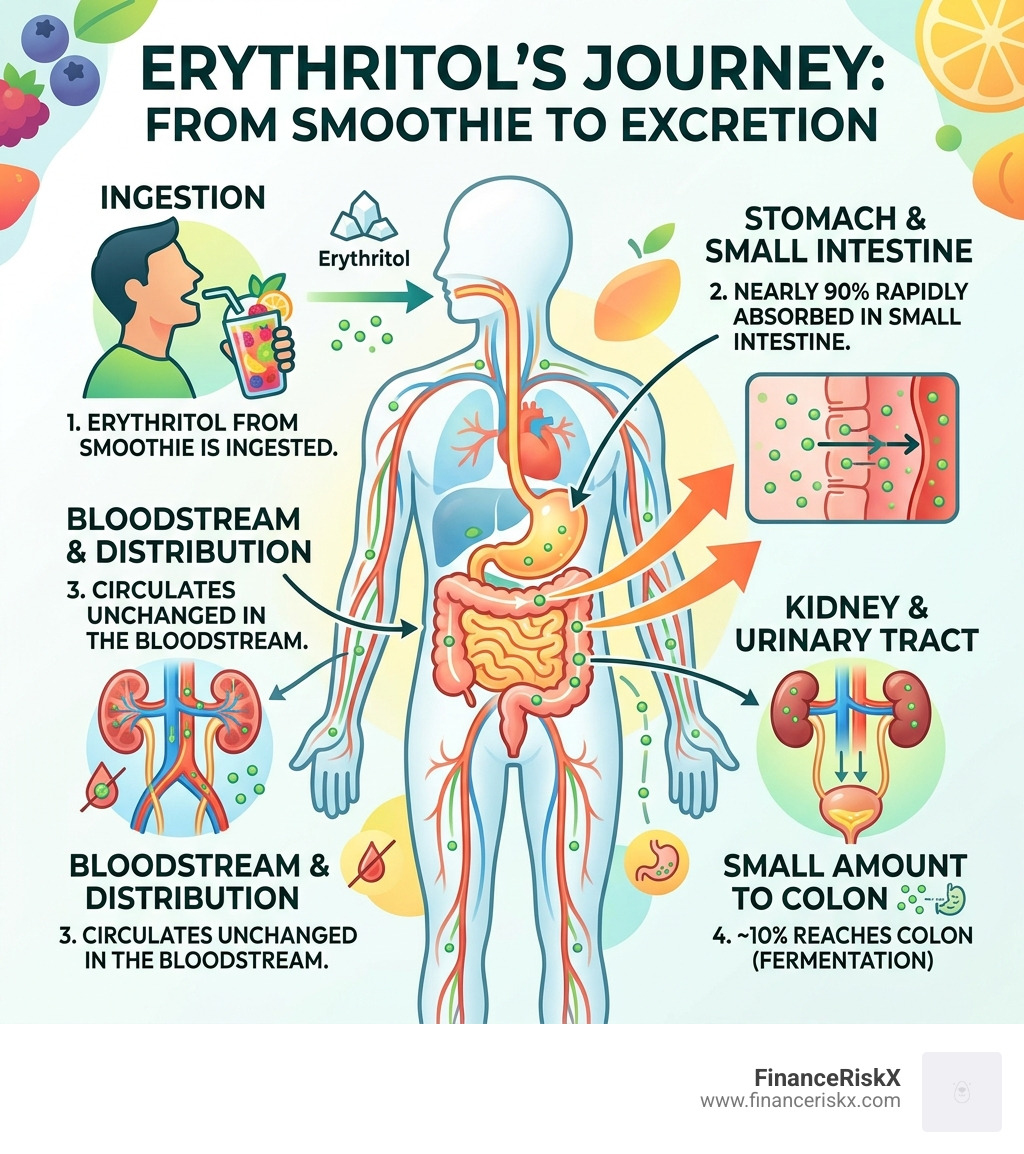
- Digestive tolerance: Better than most sugar alcohols — about 90% is absorbed and excreted unchanged in urine
- Main concern: Recent studies link high doses to increased cardiovascular risk and platelet stickiness
- Best for: Keto, low-sugar, and diabetic-friendly smoothie recipes
So should you use it? It depends. For most healthy people, small amounts in a daily smoothie are likely fine. But if you have heart disease or other cardiovascular risk factors, the latest research gives reason for caution.
The science is still evolving — and that’s exactly what this guide unpacks.
What is Erythritol and Why is it Used in Fruit Smoothies?
If you’ve ever looked at the back of a “keto-friendly” protein powder or a “zero-sugar” bottled smoothie, you’ve likely seen erythritol on the label. But what exactly is it? Erythritol is a sugar alcohol (or polyol) that occurs naturally in very small amounts in fruits like grapes, melons, and pears, as well as in fermented foods like cheese and soy sauce.
However, the erythritol in fruit smoothies you buy at the store isn’t squeezed out of a grape. It is commercially produced through the fermentation of glucose—usually derived from corn or wheat starch—using specific types of yeast. The result is a white, granulated powder that looks almost exactly like table sugar.
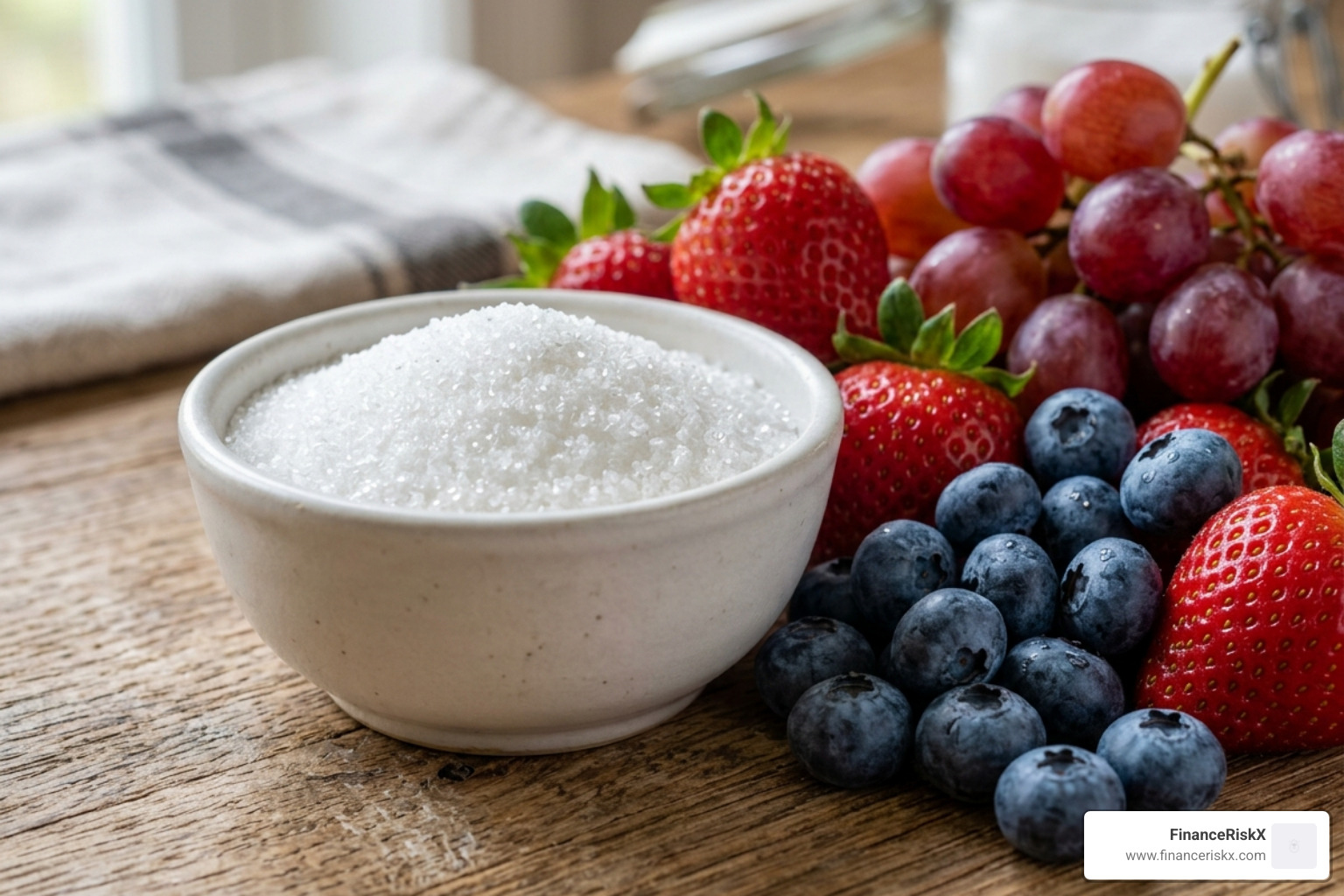
The reason it has become a darling of the health food world is its unique profile. It provides about 70% of the sweetness of sucrose (table sugar) but contains negligible energy. While sugar packs 4 calories per gram, erythritol contains less than 0.4 kcal/g. Because it is so low, nutrition labels are allowed to list it as 0 calories.
Furthermore, according to Erythritol: An In-Depth Discussion of Its Potential to Be a Beneficial Dietary Component, it has a glycemic index of 0 and an insulinemic index of 2. This means it doesn’t cause the “sugar crash” that usually follows a high-carb blended drink.
Common Uses of Erythritol in Fruit Smoothies
We see erythritol popping up in several places within the blending world:
- Keto Smoothie Recipes: Since most fruits (like bananas) are high in carbs, keto enthusiasts often use a base of avocado or coconut milk and rely on erythritol for that necessary hit of sweetness.
- Protein Powders: Many plant-based and whey protein isolates use erythritol to mask the earthy or chalky taste of the protein without adding sugar.
- Frozen Smoothie Packs: Pre-portioned frozen bags often include a “sweetener pellet” made of erythritol and stevia to keep the calorie count low.
- Commercial “Health” Shakes: Brands focused on weight loss often use erythritol to provide bulk and sweetness in meal replacement drinks.
The Science of Solubility and Taste in Blended Drinks
One reason we love using erythritol in fruit smoothies is its “clean” taste. Unlike saccharin or some stevia extracts, it doesn’t have a bitter aftertaste. However, it does have a “cooling sensation” on the tongue—much like the feeling of mint—which can be quite refreshing in a cold berry blend.
If you are making your own at home, keep in mind that erythritol is a bit stubborn when it comes to dissolving in cold liquids. If you just toss granulated erythritol into a cold blender, you might end up with a slightly gritty texture.
Pro-tip for a smoother blend:
- Pulse your granulated erythritol in a dry blender first to turn it into a fine powder.
- Alternatively, dissolve it in a tablespoon of warm water before adding it to your frozen ingredients.
- Check out our guide on how to make smoothies without sugar for more texture-saving tips.
The Health Impact of Erythritol in Fruit Smoothies
When we talk about the health impact of erythritol in fruit smoothies, we have to look at both the immediate metabolic effects and the long-term concerns recently raised by the medical community.
Metabolically speaking, erythritol is a bit of a marvel. Unlike other sugar alcohols that travel to your colon and cause “trouble” (more on that in a moment), about 90% of erythritol is absorbed in the small intestine and excreted unchanged in your urine within 24 hours. This is why it doesn’t spike your blood sugar or insulin levels, making it a viable tool for managing Type 2 diabetes.
| Sweetener | Glycemic Index | Calories per Gram | Digestive Tolerance |
|---|---|---|---|
| Erythritol | 0 | 0.24 | High |
| Xylitol | 7-13 | 2.4 | Moderate |
| Sorbitol | 4-9 | 2.6 | Low |
| Sucrose (Sugar) | 65 | 4.0 | N/A |
Cardiovascular Risks and Blood Clotting Concerns
While erythritol has been considered “Generally Recognized as Safe” (GRAS) by the FDA since 2001, recent research from institutions like the Cleveland Clinic has hit the headlines.
A 2023 study found that consuming a single serving of an erythritol-sweetened food or drink (containing about 30g of the sweetener) could increase blood erythritol levels 1,000-fold. These elevated levels lasted for several days and were linked to an increased risk of blood clotting, heart attack, and stroke. The theory is that high levels of erythritol might make our platelets “stickier,” which could facilitate the formation of clots.
It is important to note that many of these studies focused on people who already had high cardiovascular risk factors. However, the American Heart Association and Mayo Clinic suggest that if you have a history of heart issues, you might want to limit your intake until more long-term human trials are completed.
Digestive Tolerance and Side Effects
One of the biggest complaints about sugar alcohols like sorbitol or maltitol is that they can lead to… let’s call it “gastric distress” (bloating, gas, and a sudden need for a bathroom).
Erythritol is generally much better tolerated. Because most of it is absorbed before it reaches the large intestine, it doesn’t ferment in the gut as much as its cousins. However, “better tolerated” doesn’t mean “invincible.”
Studies show that doses up to 0.66 g/kg of body weight for men and 0.80 g/kg for women are usually fine. For a 150-pound (70kg) person, that’s roughly 46 to 56 grams a day. If you go overboard—say, by putting three tablespoons of erythritol in fruit smoothies twice a day—you might still experience nausea or a laxative effect.
Comparing Erythritol to Other Smoothie Sweeteners
If the recent heart health news has you feeling a bit “sweetener-shy,” you aren’t alone. When choosing a sweetener for your morning blend, it helps to see how erythritol stacks up against the competition.
- Stevia: Derived from a leaf, stevia is much sweeter than sugar (about 200x). It’s natural, but many people find the aftertaste metallic. It’s often blended with erythritol to balance the flavor.
- Monk Fruit: This is a small melon from Southeast Asia. It has a cleaner taste than stevia and is also zero-calorie. Like stevia, it’s often “bulked up” with erythritol in commercial packets.
- Allulose: A “rare sugar” found in figs and raisins. It tastes very close to real sugar and doesn’t have the “cooling effect” of erythritol, but it can be more expensive.
For a deeper dive into these options, see our article on what is the healthiest alternative to sugar for your morning blend.
Natural Fruit-Based Alternatives
We often tell our readers that the “perfect” sweetener for a smoothie is… the smoothie itself! By choosing the right fruits, you can get all the sweetness you need along with fiber and vitamins.
- Medjool Dates: These are nature’s caramel. They are high in fiber (about 3g per ounce) which helps slow down sugar absorption.
- Frozen Bananas: Using a very ripe, frozen banana creates a creamy, milkshake-like texture and provides natural sweetness.
- Mango Puree: Mangoes are incredibly sweet and pair perfectly with greens like spinach to mask any bitterness.
While these do contain calories and sugar, they also provide nutrient density that erythritol lacks. You can find more ideas in our list of smoothie sweeteners that are healthy.
How Erythritol in Fruit Smoothies Affects Satiety
One interesting thing about zero-calorie sweeteners is how they interact with our brains. Some experts believe that when we taste something sweet but the calories never arrive, our brain remains “hungry” for those calories, potentially leading to overeating later in the day.
Dates and bananas, while higher in calories, provide actual fuel and fiber that help you feel full. If you find yourself reaching for snacks an hour after your erythritol-sweetened smoothie, you might want to try a whole-food sweetener instead.
Practical Guidelines for Erythritol in Fruit Smoothies
If you decide to keep using erythritol in fruit smoothies, we recommend a “moderation-first” approach.
Safe Intake Limits and Expert Recommendations
Most experts agree that for the average healthy adult, erythritol is safe when consumed in typical dietary amounts. A “typical” amount is generally considered to be around 10 to 15 grams per serving.
- The 30g Rule: Since the blood-clotting concerns were specifically linked to a 30g “bolus” (a large single dose), try to keep your per-smoothie addition to 1 or 2 teaspoons (about 4–8 grams).
- Listen to Your Gut: If you notice bloating or rumbling, scale back.
- High-Risk Groups: If you have a history of heart disease, stroke, or high blood pressure, consult your doctor before making erythritol a daily habit.
Identifying Hidden Erythritol in Smoothie Products
Erythritol is a master of disguise. Because it isn’t technically “sugar,” companies can use it and still put “No Sugar Added” on the front of the bottle. To find it, look for these red flags:
- “Keto-Certified” or “Paleo-Friendly” labels: These almost always rely on erythritol or monk fruit.
- The Ingredients List: Look for “erythritol” or the phrase “sugar alcohol.”
- The Nutrition Facts Table: Check the line under “Total Carbohydrates” for “Sugar Alcohols.”
For more tips on navigating labels, read our guide on how to make smoothies without sugar.
Frequently Asked Questions about Erythritol in Smoothies
Is naturally produced erythritol different from the additive?
This is a great question! Your body actually produces its own erythritol through something called the “pentose phosphate pathway” (PPP). However, the levels your body produces naturally are very, very low.
When you consume erythritol in fruit smoothies as an additive, your blood levels can spike to 1,000 times higher than what your body would ever produce on its own. This is why researchers are concerned—we are essentially putting our bodies into a state they aren’t naturally designed to handle for long periods.
Does erythritol in fruit smoothies cause a cooling effect?
Yes! Erythritol has a “negative heat of solution.” In plain English: when it dissolves in your mouth, it absorbs heat, making your tongue feel cold.
In a tropical smoothie with pineapple or mint, this cooling effect is actually quite pleasant and enhances the “refreshing” factor. However, if you’re making a warm “smoothie bowl” or a spiced pumpkin blend, the cooling sensation might feel a bit out of place.
Can erythritol help with dental health in smoothies?
Believe it or not, yes! Unlike sugar, which feeds the bacteria in your mouth that cause cavities, erythritol actually inhibits them. Some studies have shown it is even more effective than xylitol at reducing dental plaque. So, while you’re sipping that smoothie, you’re technically doing your teeth a small favor!
Conclusion
At FinanceRiskX, we believe that the best approach to nutrition is one rooted in whole foods and informed choices. Using erythritol in fruit smoothies can be a helpful tool for those managing blood sugar or trying to cut calories, but it shouldn’t be a “free pass” to avoid whole fruits.
If you’re healthy and enjoy the taste, a teaspoon in your morning blend is likely perfectly fine. However, given the emerging research on cardiovascular health, moderation is key. Whenever possible, try to lean on the natural sweetness of berries, dates, or bananas.
Want to level up your blending game? Explore our guide to healthy green smoothies for recipes that focus on nutrient density and natural flavors, or check out our list of smoothie sweeteners that are healthy to find your new favorite sugar substitute.
