
Why Smoothie Portion Size Makes or Breaks Your Blend
Smoothie portion size is one of the most overlooked factors in getting real nutrition from your blender. Get it right, and your smoothie fuels your day. Get it wrong, and you’re either left hungry — or accidentally drinking a second meal’s worth of calories.
Here’s a quick answer to get you started:
| Purpose | Recommended Size | Calorie Range |
|---|---|---|
| Snack | 8 oz (240ml) | 150-250 calories |
| Standard serving | 8-12 oz (240-355ml) | 200-350 calories |
| Pre-workout | 10-12 oz | 300-400 calories |
| Meal replacement | 12-16 oz | 400-600 calories |
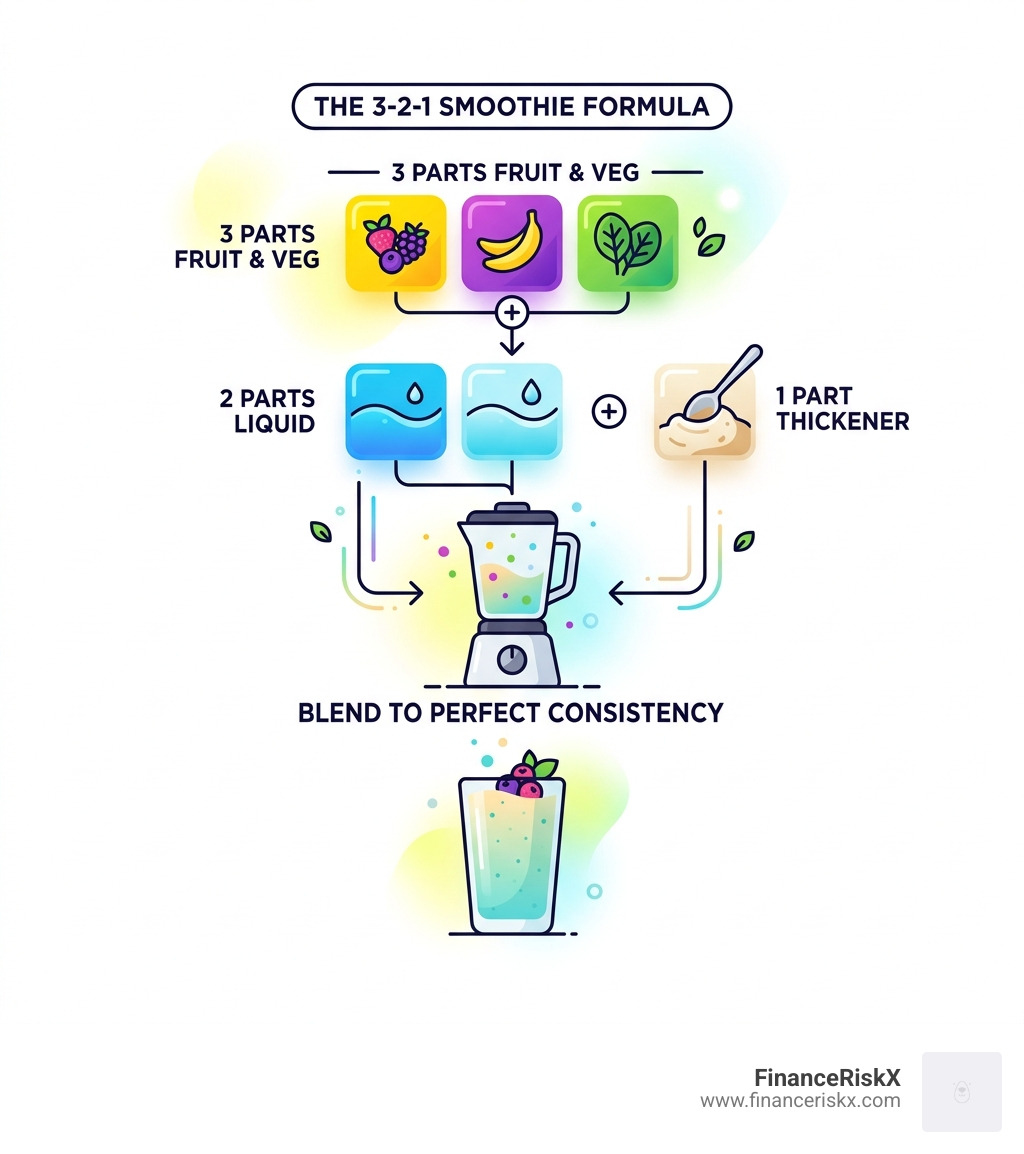
The basic formula most nutrition guides agree on:
- Liquid base: 1 to 1.5 cups
- Fruit: 1 to 1.5 cups
- Vegetables: 1 to 2 cups
- Protein: 20-25g
- Thickener (e.g. Greek yogurt): about 0.5 cup
The challenge is that smoothies look small but can pack a serious calorie punch. A large store-bought smoothie can carry as much energy as a full cooked dinner. And on the flip side, a smoothie that’s too small won’t keep you full or give your body what it needs.
This guide walks you through exactly how to size your smoothie — whether you’re blending a quick snack, fueling a workout, or replacing a meal entirely.
Defining the Standard Smoothie Portion Size
When we talk about a “standard” glass of anything, we usually mean about 8 to 12 ounces. For a smoothie, this is the sweet spot for a general snack or a light breakfast accompaniment. However, there is a big difference between the volume (how much space it takes up in the glass) and the density (how many calories and nutrients are packed into that space).
According to The Scoop on Smoothie Serving Sizes, a typical serving is roughly one standard glass. But if you look at international health guidelines, the numbers can be much stricter. For instance, the NHS 5 A Day guide suggests that smoothies and juices should only count as one portion of your daily fruit and vegetable intake, regardless of how much you drink. They recommend a limit of 150ml (about 5 ounces) per day. This is because blending fruit releases free sugars, which can be tougher on your teeth and blood sugar than eating whole fruit.
In our the-perfect-smoothie-portion-size-guide, we emphasize that the liquid base plays a huge role in satiety. Using water or unsweetened almond milk keeps the volume high but the calories low, whereas using fruit juice can double the sugar content before you’ve even added the fruit!
Why Smoothie Portion Size Matters for Weight Loss
If your goal is weight management, smoothie portion size becomes your most important metric. It is incredibly easy to experience “portion distortion,” where we perceive a drink as less filling than a plate of food. Research shows that some commercial “half-size” smoothies are actually 80% of the full-size version, leading to a massive hidden calorie intake.
For weight loss, we recommend aiming for 300-400 calories. The key is to focus on fiber. As noted in Portion distortion: Smoothies, large smoothies can provide as much energy as a cooked dinner but without the same level of chewing, which can lead to overconsumption. By following smoothie-hacks-for-beginners, such as adding more leafy greens and less tropical fruit, you can keep the volume satisfying without the blood sugar spike.
Adjusting Smoothie Portion Size for Athletes and Kids
Not everyone needs the same glass. A child’s stomach is smaller, and an athlete’s metabolic engine runs hotter.
- For Kids: A good rule of thumb is the “palm of the hand” guide. For children aged 4–8, aim for 150–200 calories. For those aged 9–13, 200–250 calories is usually sufficient.
- For Athletes: A pre-workout smoothie should be around 300–400 calories, focusing on easily digestible carbs and a bit of protein. Post-workout, the focus shifts to protein absorption for muscle recovery.
Experts at How to Make a Healthy Smoothie suggest that whey protein is excellent for muscle repair because it’s absorbed quickly. If you are new to greens, check out our green-smoothie-tips-for-beginners to learn how to mask the taste of spinach while still getting those vital micronutrients.
The Golden Ratio: Balancing Your Ingredients
Creating the perfect smoothie is less about a rigid recipe and more about the right ratios. If you master the balance, you can swap ingredients in and out based on what’s in your fridge.
| Component | Snack Ratio | Meal Replacement Ratio |
|---|---|---|
| Fruit | 1 cup | 1.5 – 2 cups |
| Vegetables | 1 cup | 2 cups |
| Liquid | 1 cup | 1.5 cups |
| Protein/Thickener | 1/4 cup | 1/2 – 1 cup |
| Healthy Fats | None or 1 tsp | 1-2 tbsp |
A common mistake is going overboard on fruit. While fruit is healthy, The Exact Amount of Fruit to Put in Your Smoothies suggests limiting it to 2 cups or fewer per serving. We recommend a 60/40 fruit-to-vegetable ratio for those who like a sweeter taste, or a 50/50 ratio for those more accustomed to green blends.
Our smoothie-flavor-combinations-guide can help you pair these ratios effectively. For example, pairing berries with kale helps mask the bitterness of the greens. If you find yourself out of a specific ingredient, don’t worry—our smoothie-recipe-substitutions guide has you covered, whether you need a vegan thickener or a low-sugar liquid base.
Calorie Counting and Component Breakdown
To truly size your smoothie like a pro, you need to understand what each “part” brings to the table. It’s not just about the total smoothie portion size in ounces; it’s about the caloric density of your add-ins.
- Protein (20-25g): This is the anchor of your smoothie. Whether it’s a scoop of protein powder or 1/2 cup of Greek yogurt (roughly 100 calories), protein keeps you full.
- Vegetables (1-2 cups): Leafy greens like spinach or kale add bulk and nutrients for only about 7–15 calories per cup. They are the ultimate “hack” for a larger portion without the calorie hit.
- Healthy Fats (100-150 calories): A tablespoon of nut butter or a quarter of an avocado adds creaminess and satiety. However, this is where calories can sneak up on you—measure these carefully!
- Liquid Base: Unsweetened almond milk usually clocks in at 30–60 calories per cup, while fruit juices can be 120 calories or more.
If you’re struggling with texture, check out secrets-to-making-a-thick-smoothie. Using frozen cauliflower or chia seeds can thicken your drink without needing extra fruit. And if your green blend tastes a bit too “earthy,” we have plenty of tips-to-make-smoothies-taste-better using natural sweeteners like a pinch of cinnamon or a few drops of vanilla extract.
Practical Tips for Portion Control at Home
The easiest way to fail at portion control is to “eyeball” your ingredients. A “handful” of walnuts can vary by 100 calories depending on who is grabbing them!
- Use the Markings: Most high-quality blenders have ounce and cup markings on the side. Use them! If you’re looking for a new one, see our list of best-blenders-for-smoothie-recipes.
- Frozen vs. Fresh: Frozen fruit is often superior for texture because it creates a “milkshake” consistency without needing ice, which can water down the flavor. You can even try DIY freezing: wash and cut fresh fruit, freeze it on a tray for 30 minutes, then bag it.
- Meal Prep Bags: Spend 10 minutes on Sunday portioning your fruit and veggies into individual freezer bags. This ensures your smoothie portion size is identical every morning.
- Mindful Sipping: It takes about 20 minutes for your brain to realize your stomach is full. If you chug a 16oz smoothie in two minutes, you might still feel hungry. Use a straw and take your time.
For more ways to enhance your experience, our tips-to-make-smoothies-taste-better-2 guide offers creative ideas like adding citrus zest or ginger to brighten the flavor without adding bulk.
Frequently Asked Questions about Smoothie Portions
Should a smoothie replace a full meal?
Yes, but only if it’s designed to do so. A snack-sized smoothie of 200 calories will leave you reaching for the biscuit tin by 10:00 AM. A true meal replacement should be between 400 and 600 calories and must contain a balance of macronutrients: protein (to maintain muscle), healthy fats (for hormone health), and fiber (for digestion). Without this balance, you’re just drinking a very expensive snack.
How much fruit is too much in one serving?
Most dietitians recommend a 2-cup limit for fruit in a single smoothie. While fruit contains vitamins and fiber, it also contains fructose. Drinking too much at once can lead to a quick spike in blood sugar followed by a “crash.” To mitigate this, stick to lower-glycemic fruits like berries (raspberries, strawberries, blackberries) rather than relying solely on high-sugar options like mango or pineapple.
Does frozen fruit change the portion size?
Frozen fruit actually expands the volume of your smoothie because it incorporates more air during the blending process, resulting in a thicker, “frothy” texture. This is great for satiety because it feels like you are consuming more. Just be aware that because it’s denser than fresh fruit, 1 cup of frozen berries might contain slightly more fruit by weight than 1 cup of fresh berries.
Conclusion
At FinanceRiskX, we believe that health is the ultimate investment. Mastering your smoothie portion size is a simple, daily habit that ensures you’re getting the maximum “return” on your nutritional choices. Whether you’re blending for weight loss, athletic performance, or just a quick breakfast, being mindful of your ratios and total volume makes all the difference.
Ready to start blending like a pro? Dive deeper into our the-perfect-smoothie-portion-size-guide for more specific recipes and advanced tips. Happy blending!
