
Why Finding the Right Honey Alternative for Smoothies Matters
The best honey alternatives for smoothies are:
| Alternative | Best For | Key Benefit |
|---|---|---|
| Maple syrup | Everyday use | Versatile, 1:1 swap, GI ~54 |
| Agave nectar | Low-glycemic needs | GI 15-30, neutral flavor |
| Medjool dates | Whole-food nutrition | 8g fiber, caramel-like taste |
| Ripe banana | Creamy texture | Natural, zero added sugar |
| Stevia/monk fruit | Zero-calorie/keto | GI 0, sweet |
| Blackberry leaf | Ultra-low glycemic | GI 0, ~100x sweeter than sugar |
Use 1 teaspoon of maple syrup or agave as a starting point to replace 1 tablespoon of honey. For whole-food options, 1-2 pitted Medjool dates per smoothie serving works well.
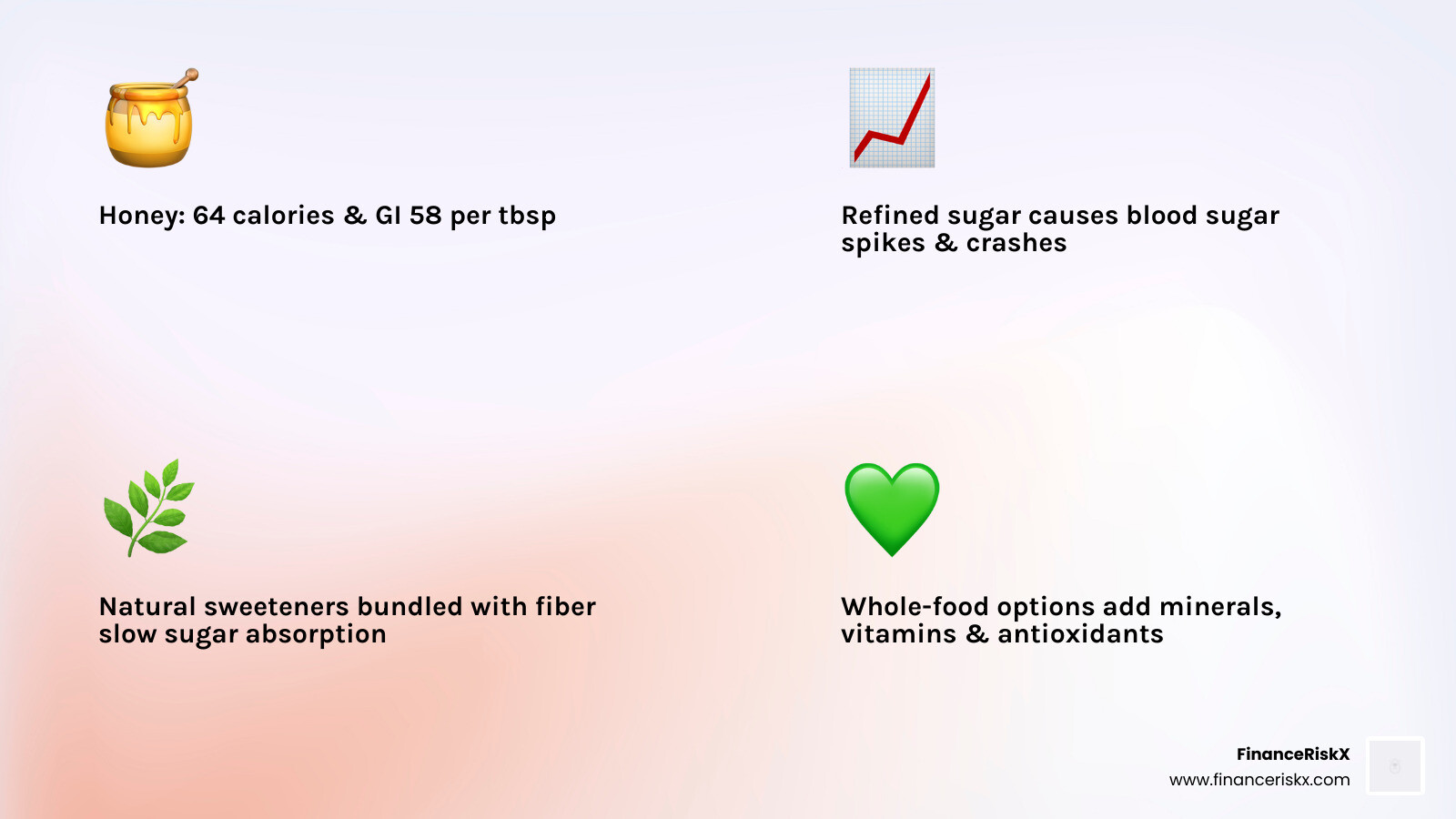
Honey is a go-to smoothie sweetener for good reason. It dissolves easily, adds a mild floral flavor, and brings a touch of natural sweetness. One tablespoon contains about 64 calories and has a glycemic index of roughly 58.
But honey isn’t always the right fit.
It’s not vegan. Some people are sensitive to its pollen content. Others simply want fewer calories or a lower glycemic impact. And sometimes you just run out mid-blend.
The good news? There are plenty of natural, whole-food options that can match — or even improve on — what honey does in a smoothie. Some add fiber and minerals. Others bring zero calories. A few are so potent that a single drop is all you need.
This guide covers all of them, so you can pick the one that fits your health goals, taste preferences, and dietary needs.
Introduction
When we talk about crafting the ultimate smoothie, sweetness is often the final piece of the puzzle. While refined sugar is a common culprit in store-bought versions—boasting over 56 different names to hide its presence—we prefer keeping things closer to nature. Refined sugar causes sharp blood sugar spikes and crashes, whereas fruit-based sugars are bundled with fiber and nutrients that help our bodies process them more effectively.
Using a honey alternative for smoothies isn’t just about avoiding bee products; it’s about exploring a world of flavors and nutritional profiles. Whether you are looking for the caramel notes of a date or the clean, zero-calorie hit of monk fruit, understanding these options helps you move away from processed additives and toward a vibrant, whole-food lifestyle.
Top Plant-Based Honey Alternatives for Smoothies
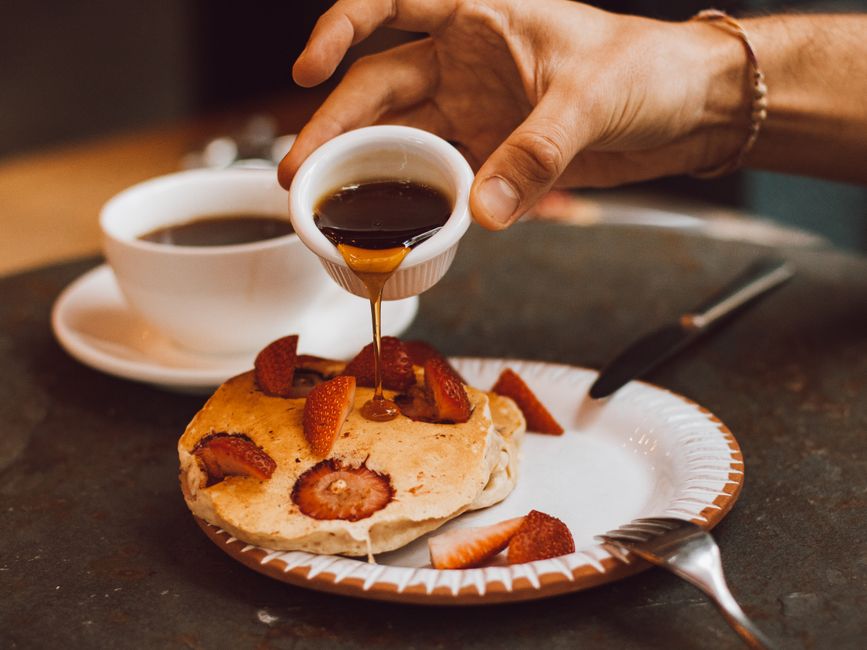
For those following a plant-based or vegan lifestyle, honey is often off the menu. Vegans avoid honey because it is an animal-derived product, and commercial beekeeping can sometimes involve practices that are less than ideal for bee welfare. Fortunately, the plant kingdom provides several liquid sweeteners that mimic honey’s viscous texture and sweetening power perfectly.
If you are looking for 4 Must-Try Honey Alternatives for Vegans, you’ll find that liquid syrups are the easiest transition. They blend seamlessly into cold liquids, ensuring you don’t end up with gritty sugar crystals at the bottom of your glass. Selecting smoothie sweeteners that are healthy means looking for options that offer more than just empty calories.
Maple Syrup: The Versatile Honey Alternative for Smoothies
Maple syrup is perhaps the most popular swap for honey. Derived from the sap of maple trees, it carries a rich, earthy flavor that works in almost any recipe. From a nutritional standpoint, it contains over 24 antioxidants and essential minerals like manganese and zinc.
With a glycemic index of around 54, it is slightly lower than honey and significantly lower than refined white sugar. In most smoothies, you can use a 1:1 substitution ratio. When shopping, look for “Grade A” syrups. Golden or Amber grades are generally best for smoothies because they have a lighter, more delicate flavor that won’t overpower your fruit. For more details on how this compares to other options, check out this Honey Alternatives (2026): A Complete Guide.
Agave Nectar: A Low-Glycemic Liquid Option
Agave nectar comes from the same plant used to make tequila, but don’t worry—it won’t give your morning green drink a kick! It is prized for its very low glycemic index (15 to 30), meaning it has a much slower impact on blood sugar levels than most other sweeteners.
Agave is thinner than honey and exceptionally soluble, making it a dream for cold beverages. It has a very neutral flavor, which is perfect if you want to let the taste of your berries or tropical fruits shine. However, it is high in fructose, so we recommend using it in moderation. It’s one of the 5 Natural Sweeteners To Elevate Your Smoothies because a little goes a long way.
Whole Food Sweeteners: Fiber-Rich Substitutes
If you want to skip the syrups entirely, whole foods are the gold standard. When we use whole fruits as a honey alternative for smoothies, we aren’t just adding sugar; we are adding fiber, vitamins, and minerals. This “packaging” is crucial because fiber slows down the absorption of sugar into the bloodstream, preventing that dreaded mid-morning energy crash. Learning how to make smoothies without sugar usually starts with mastering these two heavy hitters.
Medjool Dates: Nature’s Caramel
Dates are often called “nature’s candy” for a reason. They have a deep, caramel-like sweetness that is incredibly satisfying. Nutritionally, they are powerhouses, containing 8 grams of fiber per serving along with significant amounts of potassium and iron.
To use them as a honey alternative for smoothies, simply pit 1 or 2 Medjool dates and toss them into the blender. If your blender isn’t high-powered, we suggest soaking the dates in hot water for 5–10 minutes beforehand to soften them. You can also make a “date paste” by blending soaked dates with a little water or juice, which can be stored in the fridge for up to a week. For more ideas on how to use dates, see this guide on the Top 7 Substitute For Date Syrup for Sweet, Healthy Recipes.
Ripe Bananas and Mangoes
Never underestimate the power of a spotted, ripe banana. As bananas ripen, their starch converts to sugar, making them incredibly sweet. They also provide a creamy, milkshake-like texture that honey simply can’t match.
Mangoes and pineapples are also excellent choices for masking the bitterness of leafy greens like kale or spinach. If you find your green smoothie a bit too “earthy,” adding a handful of frozen mango or a very ripe banana can transform the flavor profile without needing any liquid sweeteners. We’ve found these tips to make smoothies taste better are essential for beginners who are still getting used to the taste of raw vegetables.
Low-Calorie and Keto-Friendly Honey Alternatives
For those managing diabetes or following a ketogenic diet, even natural sugars like those found in dates or maple syrup might be too high in carbohydrates. In these cases, we look toward high-intensity sweeteners that provide the flavor we crave without the caloric load or the blood sugar spike.
Managing blood sugar is a top priority for many of our readers. This Sugar Substitutes for Smoothies: The Definitive Guide highlights how moving away from honey can help maintain steady energy levels throughout the day.
Stevia and Monk Fruit: Zero-Calorie Sweetness
Stevia and monk fruit are the kings of the zero-calorie world. Stevia is derived from a leaf and has been shown in some studies to result in 15% lower blood glucose levels after one hour compared to refined sugar. Monk fruit, used for centuries in traditional Chinese medicine, offers a clean sweetness without the bitter aftertaste some people associate with stevia.
Because these are hundreds of times sweeter than sugar, you only need a tiny amount. We recommend using liquid drops for smoothies to ensure even distribution. Many store-bought versions are blended with erythritol, a sugar alcohol. Interestingly, 90% of erythritol gets digested before it even reaches the colon, meaning it is much less likely to cause digestive upset than other sugar alcohols. Check out these smoothie recipe substitutions for more keto-friendly ideas.
Blackberry Leaf: The Potent Honey Alternative for Smoothies
A lesser-known but highly effective honey alternative for smoothies is blackberry leaf sweetener (Rubus suavissimus). This extract is nearly 100 times sweeter than typical cane sugar but has a glycemic index of zero. It is an excellent option for those who want an intense sweetness boost with an added hit of antioxidants. It’s particularly effective in berry-based or super-green smoothies where you want to neutralize tartness without adding bulk or calories.
How to Substitute Honey in Your Favorite Recipes
Switching up your sweetener isn’t just a matter of “pour and go.” Different alternatives have different moisture levels and sweetness intensities. If you are just starting out, these smoothie hacks for beginners can help you avoid a kitchen disaster.
Matching Sweetness and Consistency
When substituting, keep these general rules in mind:
- Maple Syrup/Agave: Use a 1:1 ratio, but start with 1 teaspoon per serving and adjust.
- Dates: 1-2 Medjool dates generally replace 1 tablespoon of honey.
- Stevia/Monk Fruit: Follow the package instructions carefully; usually, 2-3 drops replace a tablespoon of honey.
Honey also acts as a thickener. If you switch to a thinner liquid like agave, you might want to add a teaspoon of chia seeds or a few extra ice cubes to maintain that thick, frosty texture. For more advanced texture tips, see these tips to make smoothies taste better-2.
Frequently Asked Questions about Honey Alternatives
What is the healthiest honey alternative for smoothies?
The “healthiest” option depends on your goals. For maximum nutrition and fiber, Medjool dates or ripe bananas are the winners because they are whole foods. For blood sugar management, monk fruit or stevia are the best choices.
How many dates equal one tablespoon of honey?
Typically, one to two pitted Medjool dates will provide the same level of sweetness as one tablespoon of honey. If you are using smaller Deglet Noor dates, you may need three or four.
Which honey alternative has the least impact on taste?
Agave nectar has the most neutral flavor profile. It provides a “clean” sweetness that doesn’t add the floral notes of honey or the woody notes of maple syrup.
Conclusion
At FinanceRiskX, we believe that small changes in your daily routine—like choosing a better honey alternative for smoothies—can lead to significant long-term health benefits. Whether you are choosing maple syrup for its minerals, dates for their fiber, or monk fruit for its zero-calorie profile, you are taking a step toward a more intentional and nutritious diet.
Don’t be afraid to experiment! Every palate is different, and the “perfect” sweetener is the one that makes you look forward to your morning glass of greens. Explore more healthy smoothie recipes and tips to keep your journey exciting and delicious. Happy blending!
