
Why Getting Your Smoothie Liquid Right Makes All the Difference
A good smoothie liquid amount guide is the difference between a creamy, satisfying drink and a chunky mess — or watery disappointment. Most smoothie problems come down to one thing: too much or too little liquid.
Here’s a quick reference to get you started:
| Consistency | Liquid | Solids |
|---|---|---|
| Spoonable (smoothie bowl) | ~1/2 cup | 2.5 – 3 cups |
| Thick & creamy | ~3/4 cup | 2 – 2.5 cups |
| Drinkable | ~1 cup | 2 cups |
Key rules to remember:
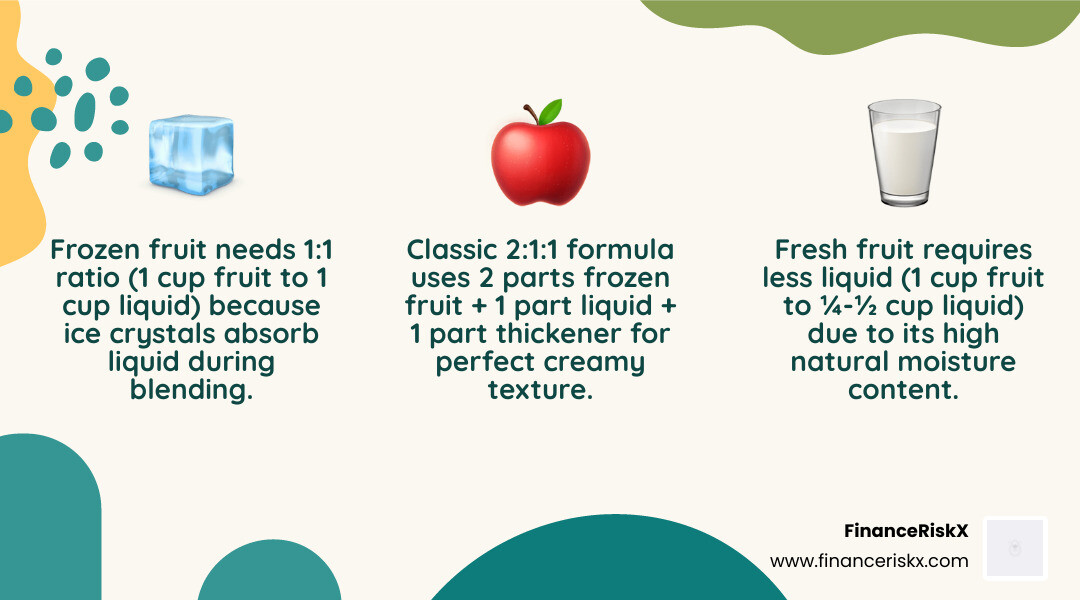
- Frozen fruit: Use a 1:1 ratio — 1 cup fruit to 1 cup liquid
- Fresh fruit: Use less liquid — 1 cup fruit to just 1/4 to 1/2 cup liquid
- Standard single serving: Start with 1 cup liquid + 1.5 cups fruit + 1 cup greens
- Classic formula (Bon Appétit): 2 parts frozen fruit + 1 part liquid + 1 part thickener
Always start with less liquid than you think you need. It’s easy to add more — impossible to take it out.
Most people skip measuring entirely and end up frustrated. One food writer summed it up perfectly: she thought she could throw in whatever ingredients she wanted, only to end up gulping down “weird, chunky glop.” Sound familiar?
The good news? Once you know a few simple ratios, you’ll nail the texture every single time — no recipe required.
The Golden Ratios for Perfect Consistency
When we talk about a smoothie liquid amount guide, we aren’t just talking about pouring milk into a jar until it looks “right.” We are talking about the physics of blending. To get that perfect vortex—the whirlpool that pulls ingredients down into the blades—you need a specific balance of solids to liquids.
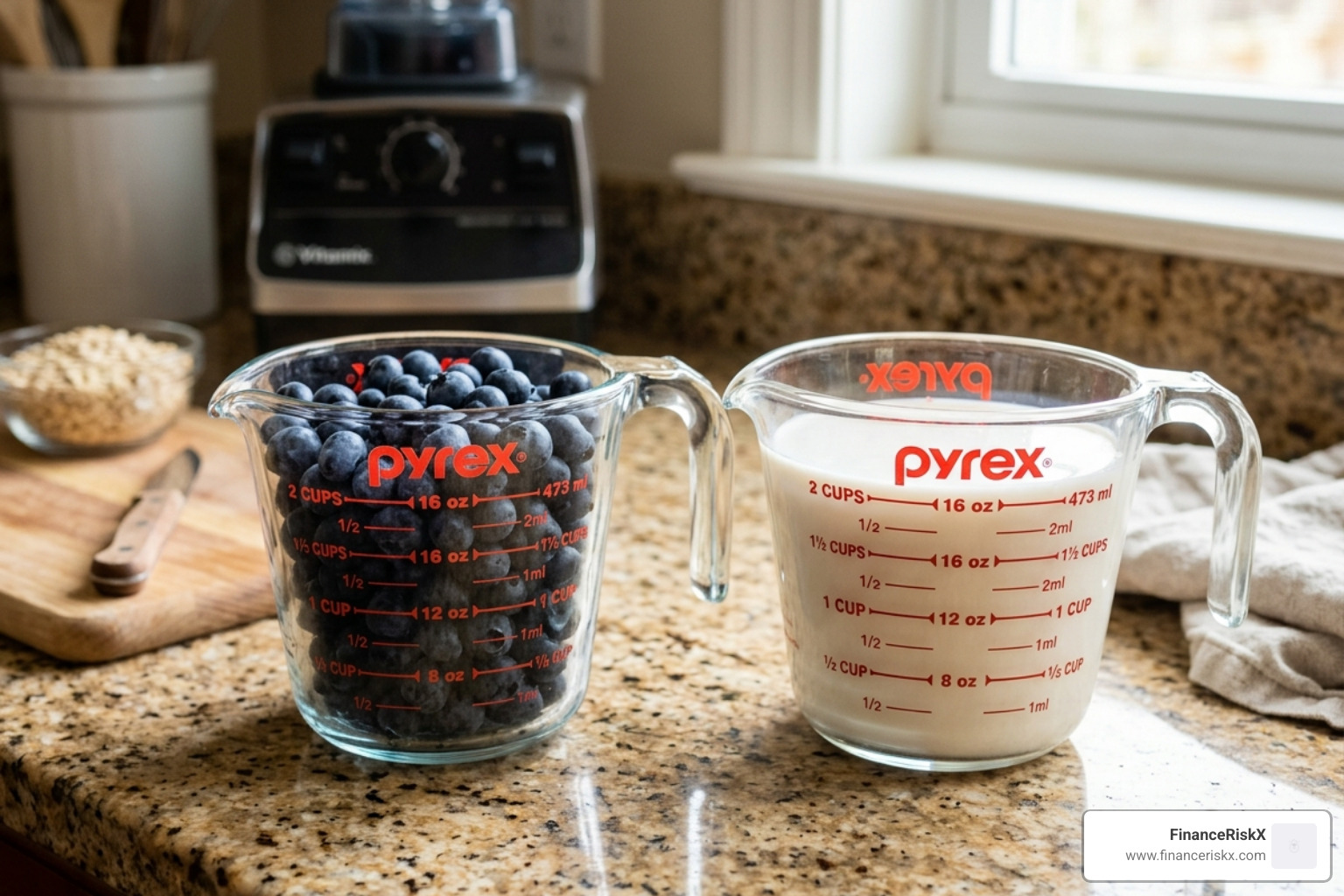
The most reliable starting point for any beginner is the 1:1 ratio. This means for every 1 cup of frozen fruit, you add 1 cup of liquid. This usually results in a standard, drinkable consistency that fits perfectly in a 16-ounce glass. However, if you want something more professional, many culinary experts recommend the 2:1:1 formula: 2 parts frozen fruit, 1 part liquid, and 1 part thickener (like Greek yogurt or nut butter).
The amount of liquid you need changes drastically based on how you plan to eat your smoothie. Are you sipping it through a straw on your commute, or sitting down with a spoon and a bowl?
Liquid Amount Comparison Table
| Desired Texture | Liquid Amount | Solid Amount | Best For |
|---|---|---|---|
| Spoonable | 1/2 cup | 2.5 – 3 cups | Smoothie bowls with heavy toppings |
| Thick & Rich | 3/4 cup | 2 – 2.5 cups | Filling meal replacements |
| Drinkable | 1 – 1 1/4 cups | 2 cups | Quick on-the-go snacks |
Using a The Perfect Smoothie Ratio (+ Smoothie Basics!) approach allows you to scale your recipes up or down. If you are making a large batch for the family, simply maintain these proportions. For more details on managing your intake, check out The Perfect Smoothie Portion Size Guide.
Choosing Your Base: A Smoothie Liquid Amount Guide
The type of liquid you choose acts as the “transportation system” for your nutrients. It doesn’t just provide moisture; it dictates the flavor profile and the final creaminess of the drink.
- Dairy Milk: Provides the highest level of natural creaminess and a significant protein boost.
- Plant-Based Milks: Almond milk is a fan favorite because it is low in calories and pairs beautifully with berries. Oat milk is thicker and naturally sweeter, while coconut milk (from the carton) adds a tropical flair.
- Coconut Water: Excellent for post-workout hydration due to natural electrolytes. It is much thinner than milk, so you may need slightly less than a 1:1 ratio to keep it from becoming watery.
- Fruit Juice: While flavorful, we generally recommend using whole fruit instead of juice to keep the fiber intact. If you do use juice, be mindful of the sugar content. Learn more about How to Make Smoothies Without Sugar.
According to How to Measure the Perfect Amount of Liquid for a Smoothie: Essential Tips and Techniques, your choice of base should align with your blender’s capabilities. Thicker bases like full-fat yogurt or kefir require a “splash” of thinner liquid (like water or milk) to help the blades catch the ingredients.
Customizing Your Smoothie Liquid Amount Guide for Different Bases
Viscosity is the technical term for how thick a liquid is. Water has low viscosity, while cashew milk has high viscosity. If you are using a very thick base like Greek yogurt, you cannot count it as 100% of your liquid. We suggest a “hybrid base”: use 1/2 cup of yogurt and 1/2 cup of a thinner liquid like almond milk. This ensures you are Mastering the Perfect Creamy Smoothie without burning out your blender motor.
Using a Smoothie Liquid Amount Guide for Nutritional Balance
Your liquid choice is a hidden source of calories and macros. If you are looking for a meal replacement, using soy or dairy milk provides the protein necessary for satiety. If you are just looking for a refreshing snack, water or coconut water keeps the calorie count low. Balancing these elements is key to How to Balance Fruit and Protein for long-term energy.
How Ingredients Change Your Liquid Needs
Not all solids are created equal. A cup of spinach behaves very differently in a blender than a cup of frozen banana. Understanding the “thirst” of your ingredients is the secret to a perfect smoothie liquid amount guide.
Adjusting for Frozen vs Fresh Fruit
This is the most common mistake we see. Fresh fruit is full of water. When you blend a fresh peach, it releases its juice, adding to the liquid volume. Frozen fruit, however, contains ice crystals that act as a thickener.
- Fresh Fruit Rule: Use only 1/4 to 1/2 cup of liquid per cup of fruit.
- Frozen Fruit Rule: Use a full 1 cup of liquid per cup of fruit.
Using frozen fruit is generally preferred because it creates a frosty, milkshake-like texture without the need for ice cubes, which can dilute the flavor as they melt. For a deep dive into this comparison, see Frozen Fruits vs Fresh for Smoothies. If you find yourself with only fresh fruit on hand, you’ll need to master the Secrets to Making a Thick Smoothie to avoid a “runny” result.
The Impact of Powders and Add-ins
Add-ins are “liquid thieves.” Ingredients like chia seeds, flaxseed meal, and protein powders are highly absorbent.
- Protein Powder: Some powders, especially casein or plant-based blends (like pea protein), soak up a surprising amount of liquid. You may need to add an extra 2–3 tablespoons of liquid for every scoop of powder used.
- Leafy Greens: While they don’t absorb much liquid, they do require liquid to be pulverized. A good rule is to blend your greens and liquid first before adding anything else.
- Nut Butters: These add incredible richness but also increase the “drag” on your blender blades.
For more ideas on how to boost your drink, check out Health-Boosting Add-Ins for Your Smoothies.
Mastering the Blend: Techniques and Troubleshooting
Even with the perfect smoothie liquid amount guide, the way you blend matters. The goal is to create a controlled suspension—a fancy way of saying everything stays mixed together instead of separating.
The “No-Stall” Stack Order
The order in which you add ingredients determines how well your blender circulates.
- Liquids first: This ensures the blades have something to move immediately.
- Soft items/Powders: Yogurt, nut butters, and protein powders go next.
- Leafy greens: Placing them in the middle helps them get pulverized.
- Frozen fruit and ice: These should be on top so their weight pushes the other ingredients down into the blades.
Avoiding Common Measuring Mistakes
We’ve all been there: you’re in a rush, you eyeball the milk, and suddenly you’re “shaking the blender like it owes you money” because the blades are spinning in an air pocket.
- The “Air Pocket” Trap: This happens when there isn’t enough liquid to pull the frozen chunks down.
- Overfilling: Never fill your blender past the “Max Fill” line. This strains the motor and prevents a proper vortex from forming.
- The Drinking Cup Hack: If you’re making a single serving, fill your actual drinking cup with your solids first, then pour that into the blender. This ensures you don’t make way more than you can drink.
For more beginner-friendly advice, see Smoothie Hacks for Beginners.
How to Fix a Smoothie That is Too Thick or Thin
If your smoothie is struggling to blend, don’t just dump in a cup of water. Add liquid in 1-tablespoon increments. It’s a delicate balance; adding too much at once can turn your breakfast into flavored water.
- Too Thick? Add liquid 1 tablespoon at a time and pulse.
- Too Thin? Add a few more chunks of frozen fruit or a tablespoon of chia seeds (which thicken as they sit).
- The “Rest” Trick: Let your blended smoothie sit for 2 minutes. The fiber in the fruit and greens will naturally hydrate, often thickening the mixture without any extra ingredients.
For more flavor-saving tips, read Tips to Make Smoothies Taste Better.
Frequently Asked Questions about Smoothie Liquids
How much liquid should I start with for a single serving?
For a standard 16-ounce single serving, start with 1 cup (8 ounces) of liquid. This usually balances out about 1.5 to 2 cups of solid ingredients. If you are using a personal-sized blending cup (like a NutriBullet), you may need slightly more liquid (up to 1 1/4 cups) because those smaller blades require more “splash room” to get moving.
Does the type of blender change how much liquid I need?
Yes, absolutely. High-performance blenders (like a Vitamix or Blendtec) have incredibly powerful motors that can pulverize solids with very little liquid. You can often get away with a 3:1 solids-to-liquid ratio in these machines. Standard or budget blenders have less torque and require a 1:1 ratio to prevent the motor from overheating or the blades from stalling. Check out our guide on the Best Blenders for Smoothie Recipes to see where your machine fits.
Can I use yogurt as my only liquid source?
We don’t recommend it. While yogurt is technically a “wet” ingredient, it is too viscous to create a vortex on its own in most blenders. If you want a yogurt-heavy smoothie, use a 1/2 cup of yogurt and at least 1/2 cup of a thinner liquid like water, milk, or coconut water to ensure everything blends smoothly.
Conclusion
At FinanceRiskX, we believe that mastering the basics of healthy living—like nailing your morning smoothie—sets the tone for a productive, balanced day. While this smoothie liquid amount guide provides the science, there is always room for a little art.
Don’t be afraid to experiment. Maybe you prefer a “spoonable” texture on Mondays and a “drinkable” one on Fridays. As long as you remember the golden ratios and the proper layering techniques, you’ll never have to deal with “weird, chunky glop” again.
Ready to perfect your portions? Head over to The Perfect Smoothie Portion Size Guide and start blending like a pro!
