
Why Your Smoothie Sweetener Choice Matters More Than You Think
At FinanceRiskX, we believe that personal health is the ultimate long-term asset. Just as you would carefully select investments to mitigate risk, choosing the right ingredients for your morning routine is essential for sustained performance. The best smoothie sweetener depends on your health goals, but here are the top options ranked for most people:
- Medjool dates – whole-food sweetness with fiber, iron, and a caramel-like flavor
- Frozen mango or pineapple – natural fruit sugars with vitamins and great texture
- Raw honey – lower glycemic index than sugar, with antioxidants and trace minerals
- Pure maple syrup – mild, rich flavor with over 24 antioxidants
- Monk fruit sweetener – zero calories, zero glycemic impact, keto-friendly
- Stevia – plant-based, zero calories, 50-300x sweeter than sugar
- Agave nectar – very low glycemic index (around 11), dissolves easily
- Unsweetened applesauce – gentle sweetness with added moisture
- Yacon syrup – gut-friendly prebiotics, low blood sugar impact
- Allulose – rare sugar with only about 10% of the calories of regular sugar
Bananas are the go-to smoothie sweetener for most people. They add creaminess, natural sugar, and body to almost any blend.
But what if you want something different? Maybe you’re watching carbs. Maybe you just ran out. Or maybe you want more variety in how you sweeten your drinks.
The good news: there are plenty of excellent banana-free options, and some of them are actually better for your health goals.
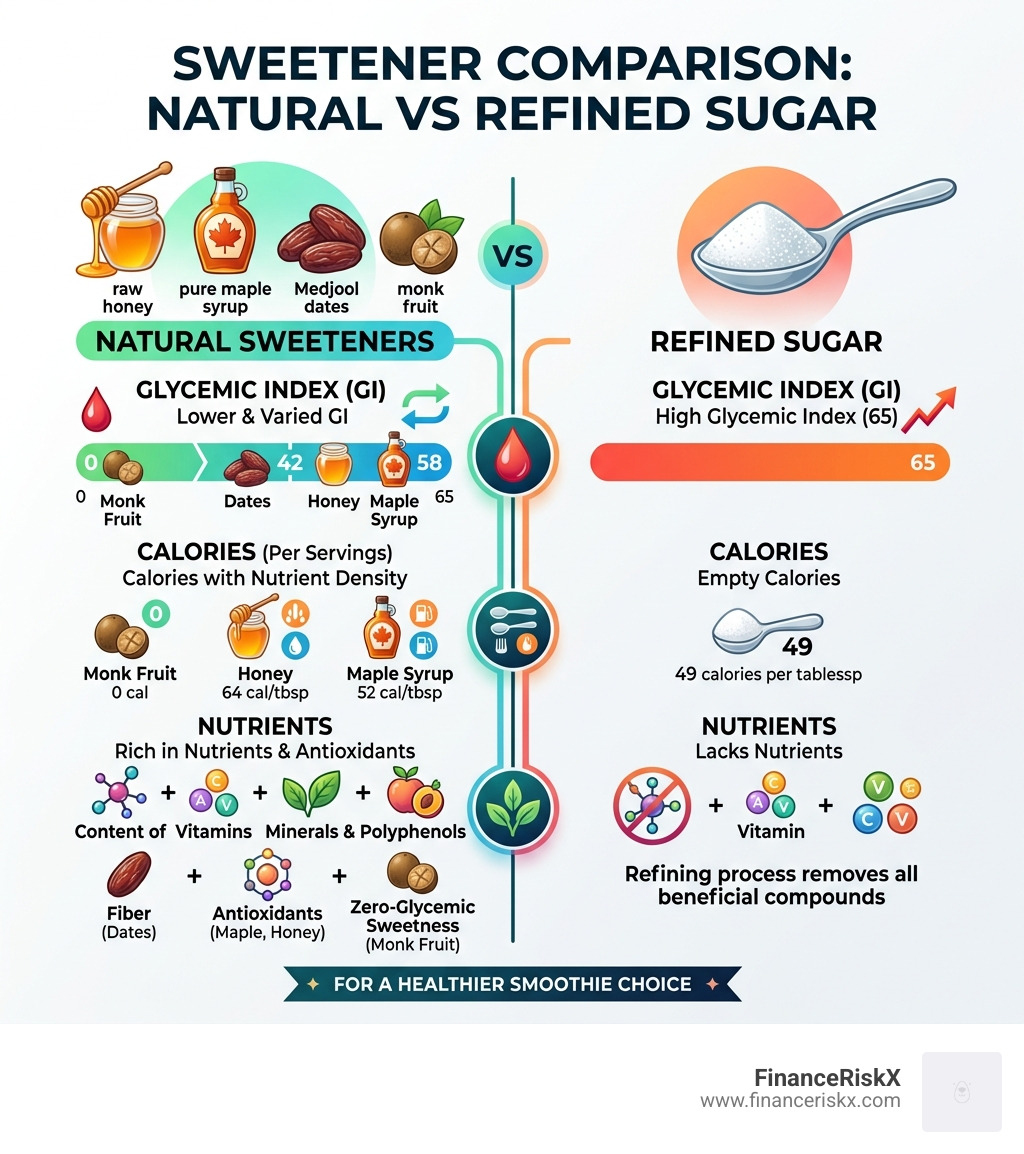
Regular refined sugar has a glycemic index of 65 and offers zero nutritional value. Most natural sweeteners beat it on both counts. Some, like stevia and monk fruit, won’t raise your blood sugar at all.
Choosing the right sweetener isn’t just about taste. It affects texture, nutrient density, and how your body responds after drinking. A small swap can make a real difference.
Why Natural Options are the Best Smoothie Sweetener
When we think about sweetening our morning blend, it’s easy to grab whatever is in the pantry. However, the difference between refined sugar and natural alternatives is staggering. Refined sugar (sucrose) typically comes from processed sugar cane or beets and is stripped of all its original nutrients. It carries a glycemic index (GI) of 65, which can cause those all-too-familiar energy crashes and insulin spikes.
In contrast, the best smoothie sweetener options are usually those that come directly from the earth. Natural sweeteners like honey, maple syrup, and whole fruits contain vitamins, minerals, and antioxidants that refined sugar simply lacks. For example, while white sugar is a “empty calorie” source, maple syrup contains over 24 different antioxidants, and raw honey has been used for its medicinal properties for thousands of years.
One of the biggest advantages of natural sweeteners is their impact on blood sugar. Many options, like agave syrup (GI of 11) or stevia (GI of 0), provide a much steadier release of energy. This is crucial for maintaining the sharp cognitive focus required for financial risk management and avoiding the “sugar blues.” By choosing nutrient-dense options, we aren’t just making our smoothies taste better; we’re fueling our bodies with intention. For more on this, explore our guide on 10 Best Natural Sweetener for Smoothies .
Whole Food Alternatives to Bananas
If you are looking to ditch the banana—whether because of the flavor, the carbohydrate count, or just a desire for a change—whole food alternatives are our top recommendation. At FinanceRiskX, we view fiber as a key “risk mitigation” tool for your metabolism. Fiber slows down the absorption of sugar into your bloodstream, preventing the “spike and crash” cycle.
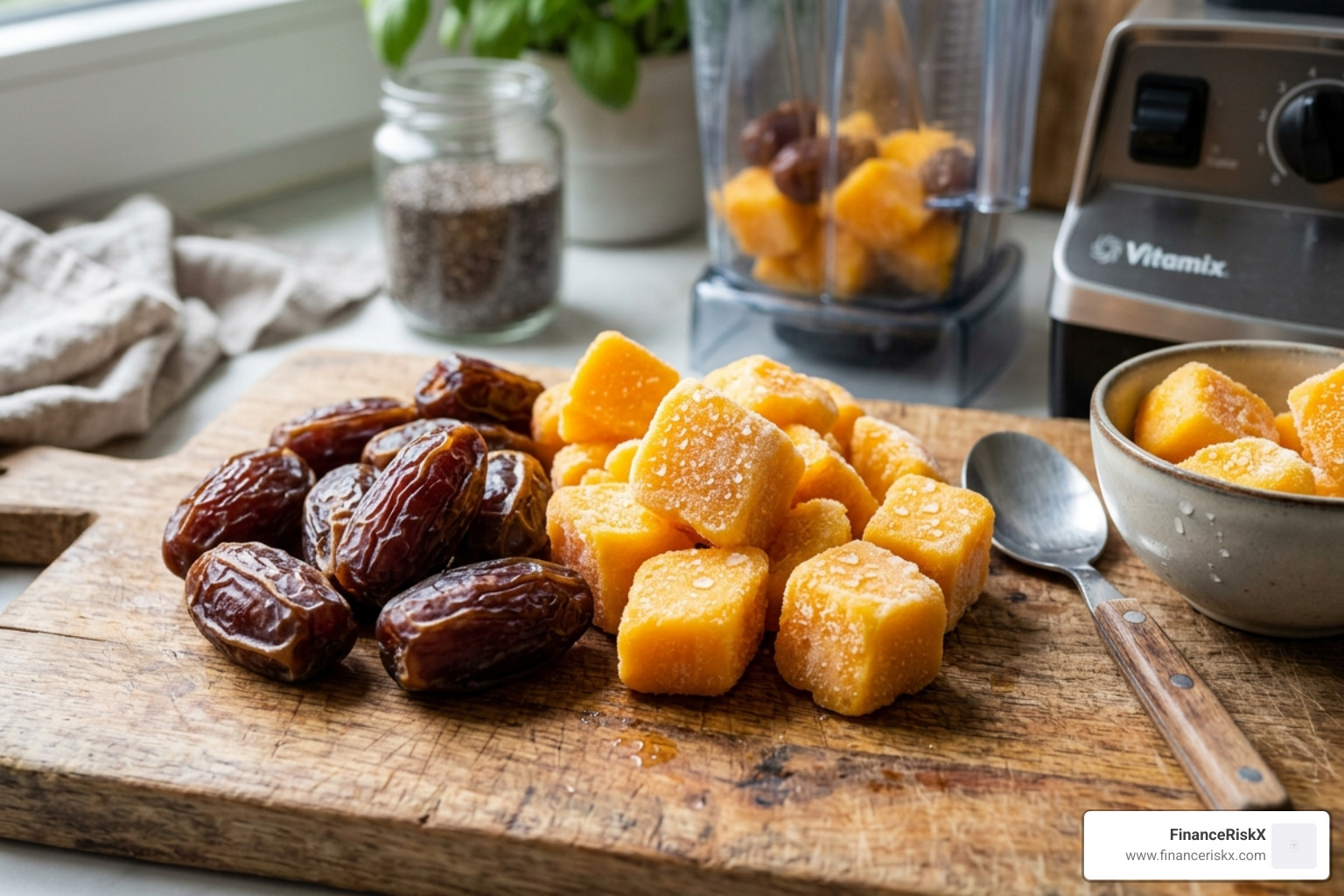
Using whole fruits and plants as a base is often considered a “total upgrade” for your health. To see why these are the gold standard, check out what-is-the-healthiest-alternative-to-sugar-for-your-morning-blend.
Medjool Dates: The Best Smoothie Sweetener for Richness
Dates are often referred to as “nature’s caramel,” and for good reason. They provide a deep, complex sweetness that pairs perfectly with chocolate, nut butters, and earthy greens. Beyond their taste, they are nutritional powerhouses. A single serving of dates contains about 8 grams of fiber, along with iron, potassium, and B vitamins.
For those of us tracking our intake, two Medjool dates offer roughly 3.2 grams of fiber, whereas a tablespoon of maple syrup offers zero. This fiber makes them a fantastic choice for digestive health. To get the best results, we recommend a simple soaking technique: if your dates feel a bit firm, soak them in warm water for 5 to 10 minutes before tossing them in the blender. This ensures they break down completely, leaving you with a silky-smooth texture rather than chewy chunks.
If you’re interested in mastering the art of the sugar-free blend, our deep dive into how-to-make-smoothies-without-sugar is a great place to start.
Frozen Mango and Pineapple
If you want a tropical vibe without the banana, mango and pineapple are your best friends. These fruits are naturally high in fructose, meaning you don’t need much to achieve a high level of sweetness.
Mangoes add a creamy, sorbet-like texture when frozen, which mimics the consistency of a banana-based smoothie. Pineapples, on the other hand, are the ultimate “masking” tool. If you’re struggling to enjoy the taste of kale or spinach, the bright acidity of pineapple is excellent at cutting through those bitter, earthy notes. Plus, pineapple contains bromelain, an anti-inflammatory enzyme that aids in digestion—making your post-workout smoothie even more effective.
Liquid Sweeteners: Syrups and Nectars
Sometimes you just need a quick drizzle to brighten up a blend. Liquid sweeteners are convenient because they dissolve instantly, even in ice-cold drinks. However, not all syrups are created equal. We’ve put together a quick look at how they stack up against each other.
| Sweetener | Glycemic Index (Approx.) | Calories per Tablespoon | Key Benefit |
|---|---|---|---|
| Raw Honey | 50-58 | 64 | Antibacterial & Antioxidants |
| Maple Syrup | 54 | 52 | High in Manganese & Zinc |
| Agave Nectar | 11 | 60 | Very Low GI; Vegan |
| Date Syrup | 54-55 | 60 | Iron & Potassium |
| White Sugar | 65 | 48 | None (Empty Calories) |
For more on choosing between these “liquid golds,” check out liquid-gold-and-coconut-sugar-the-best-ways-to-sweeten-your-sips.
Raw Honey and Pure Maple Syrup
Raw honey is a classic for a reason. It offers floral notes that pair beautifully with citrus and berry smoothies. Because honey is sweeter than cane sugar, you can actually use less of it—about 1/4 cup of honey for every cup of sugar a recipe might call for.
Pure maple syrup (look for Grade A) is another favorite. It has a “softer” sweetness than honey and is packed with over 24 antioxidants. It’s particularly delicious in “cozy” smoothies that feature ingredients like oats, vanilla, and cinnamon.
Agave Nectar and Yacon Syrup
Agave nectar is a popular vegan alternative to honey. It is about 1.5 times sweeter than sugar but has a significantly lower glycemic index. However, because it is high in fructose, we suggest using it sparingly.
Yacon syrup is the “new kid on the block” for many, but it’s a hidden gem. Derived from the yacon root, it contains fructooligosaccharides (FOS), which act as prebiotics. This means it feeds the good bacteria in your gut while having a very low impact on blood sugar levels. It’s thick like molasses and has a slightly spicy, caramel-like flavor.
Zero-Calorie and Keto-Friendly Options
For our friends following keto or low-carb diets, the best smoothie sweetener is one that provides sweetness without the carbohydrates. Luckily, plant-based science has come a long way.
To learn more about how these can elevate your morning routine, visit Elevate Your Morning Smoothie: The Best Natural Sweeteners for Healthier Indulgence .
Stevia and Monk Fruit: The Best Smoothie Sweetener for Low-Carb Diets
Stevia is a heavy hitter in natural sweeteners. It is 50 to 300 times sweeter than cane sugar, meaning a tiny pinch goes a long way. It has a GI of zero and is entirely plant-based. Some people find it has a slight aftertaste, so we recommend starting with a very small amount and building up.
Monk fruit (also known as Luohan Guo) is often preferred by those who find stevia too bitter. It is about 250 times sweeter than sugar and gets its sweetness from antioxidants called mogrosides. It has a cleaner, more sugar-like taste and is excellent for those managing diabetes or weight loss.
Allulose and Erythritol
Allulose is a “rare sugar” found naturally in figs and kiwis. It’s fascinating because it tastes and behaves like regular sugar but contains only about 10% of the calories. It doesn’t cause blood sugar spikes, making it a favorite for keto enthusiasts.
Erythritol is a sugar alcohol that is about 70% as sweet as sugar. It’s unique because it isn’t absorbed by the body in the same way as other carbs, containing only about 6 calories per tablespoon. It’s also tooth-friendly, as it doesn’t contribute to tooth decay. Just be mindful of your digestive tolerance—while 90% of erythritol is digested before it reaches the large intestine, some people may experience sensitivity if they consume large amounts.
Flavor Hacks to Enhance Sweetness Naturally
Sometimes, you don’t actually need “sugar” to make something taste sweet. Our brains are easily tricked by certain flavors and aromas. By using “sweet” spices and extracts, we can reduce the amount of actual sweetener needed.
Spices and Extracts
Spices are the secret weapon of the smoothie world. They add “perceived sweetness” without adding a single calorie.
- Cinnamon: Not only does it taste sweet, but it also helps regulate blood sugar levels.
- Vanilla Extract: A dash of pure vanilla can make a green smoothie taste like a milkshake.
- Nutmeg and Cardamom: These add warmth and complexity, perfect for “apple pie” or “chai” style smoothies.
- Ginger: While spicy, ginger can enhance the natural sweetness of fruits like apples and pears.
Creamy Bases and Nut Butters
Texture plays a massive role in how we perceive flavor. A thin, watery smoothie often tastes “bland,” while a thick, creamy one feels indulgent.
- Almond or Peanut Butter: These add healthy fats and protein, which increase satiety and provide a subtle, nutty sweetness.
- Avocado: This is the ultimate banana replacement for creaminess. It’s virtually tasteless in a smoothie but provides a lush texture and healthy fats.
- Coconut Milk: Using full-fat coconut milk can make a smoothie feel like a dessert, allowing the natural fruit flavors to shine without extra syrup.
Conclusion and Frequently Asked Questions
Finding the best smoothie sweetener for your lifestyle is all about experimentation. Whether you choose the fiber-rich goodness of Medjool dates or the zero-calorie precision of monk fruit, the goal is to enjoy your nutrients without the refined sugar crash.
At FinanceRiskX, we believe that health is an investment. Just as compound interest builds wealth over time, small daily choices, like what you put in your blender, compound to mitigate long-term health risks and create a more vibrant you. For more tips on keeping your blends nutritious, visit smoothie-sweeteners-that-are-healthy.
Which sweetener is best for diabetics?
For those managing blood sugar, zero-calorie natural options like stevia, monk fruit, and allulose are the best choices. They have a glycemic index of zero and do not cause insulin spikes. Sugar alcohols like erythritol and xylitol are also excellent, though they should be used in moderation to avoid digestive upset.
How do I mask the taste of kale?
If you’re trying to hide the “green” flavor, we recommend using pineapple or mango. The high acidity and bright sweetness of these fruits are much more effective at masking bitterness than a banana. Additionally, adding a splash of lemon or lime juice can “brighten” the flavor and neutralize the earthy notes of leafy greens.
Are zero-calorie sweeteners safe?
Natural zero-calorie sweeteners like stevia and monk fruit are generally recognized as safe (GRAS) by the FDA. Stevia has been used for centuries in South America, and monk fruit has a long history in Asian medicine. However, we always recommend reading labels carefully to ensure your sweetener isn’t “bulked” with artificial fillers like maltodextrin. As always, if you have specific health concerns, it’s a great idea to chat with a dietitian or healthcare professional.
