
Why a Smoothie Ratio Chart Is the Secret to a Perfect Blend Every Time
A smoothie ratio chart is the fastest way to stop making watery, chunky, or flavorless smoothies. Here are the core ratios to know:
| Smoothie Type | Ratio | Example |
|---|---|---|
| Frozen fruit smoothie | 2 parts frozen fruit : 1 part liquid : 1 part thickener | 1 cup berries : 1/2 cup milk : 1/2 cup yogurt |
| Fresh fruit smoothie | 3 parts fruit : 2 parts liquid + 2-3 ice cubes | 1.5 cups mango : 1 cup juice |
| Green smoothie | 1 : 1 : 1 : 1 (greens : frozen fruit : liquid : thickener) | 1/2 cup spinach : 1/2 cup mango : 1/2 cup milk : 1/2 banana |
| Drinkable consistency | 1 cup liquid : 2 cups solids | Any combo |
| Thick/spoonable | 3/4 cup liquid : 2-2.5 cups solids | Smoothie bowl |
Most people approach the blender the same way: grab some fruit, pour in some liquid, and hope for the best. The result is often a smoothie that is too thin, too thick, or unevenly blended.
The problem usually is not the ingredients themselves. It is the lack of a repeatable formula.
Think of a smoothie ratio chart the way a baker thinks about measuring flour and butter. The proportions matter. Get them right, and you get a creamy, satisfying drink every time. Get them wrong, and texture and flavor can quickly fall apart.
The good news is that the formula is simple once you see it laid out clearly.
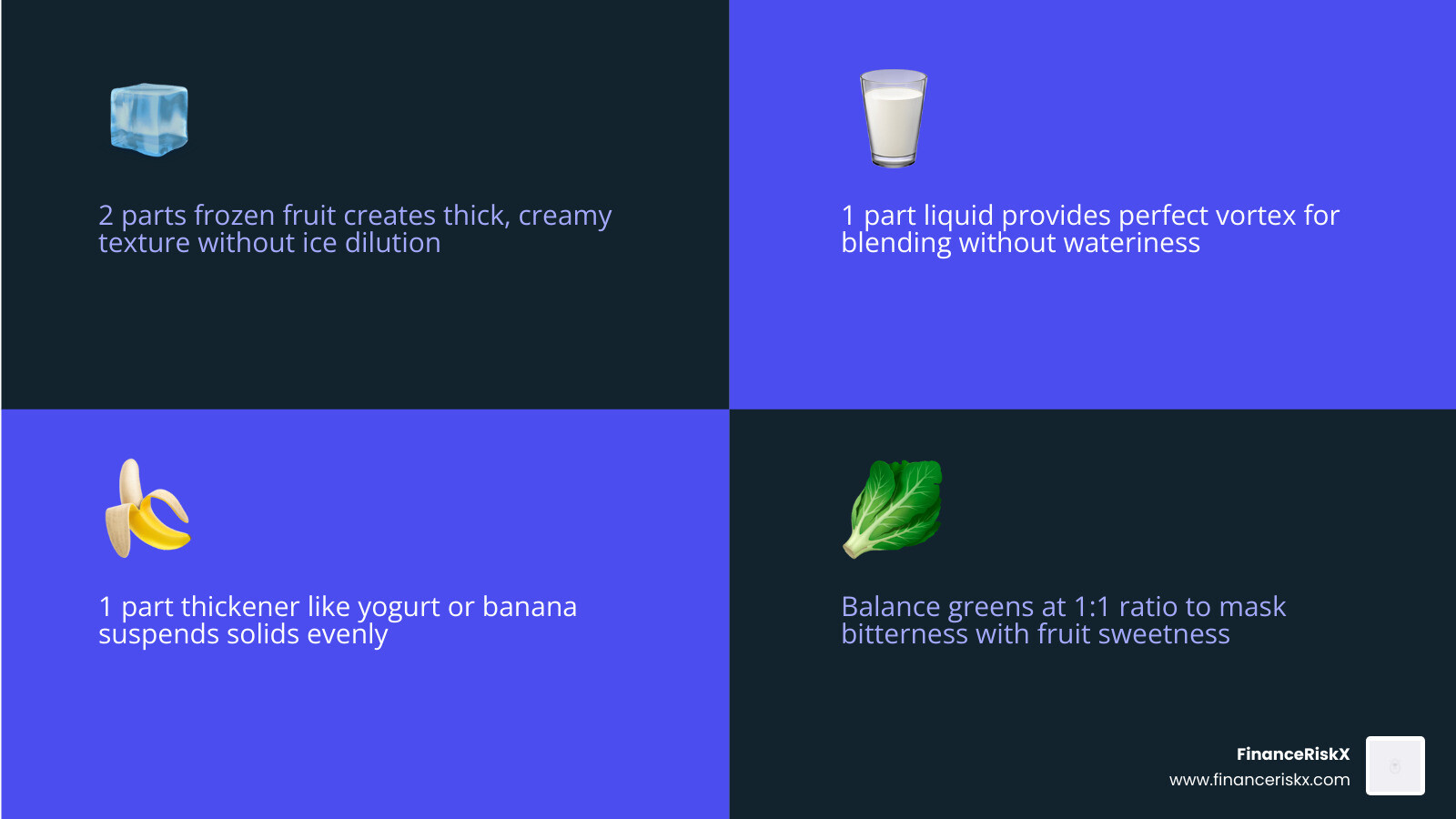
The Master smoothie ratio chart for Every Occasion
When we talk about a smoothie ratio chart, we are really talking about balance. A great smoothie is a controlled blend of solids and liquid. If you have too many solids, your blender can stall and leave chunks behind. Too much liquid, and the result is thin and watered down.
The “Golden Ratio” that many smoothie guides use for a standard, creamy smoothie is the 2:1:1 formula:
- 2 parts frozen fruit (the cold base)
- 1 part liquid (the part that helps the blades move ingredients)
- 1 part thickener (the part that adds creaminess and body)
This formula helps create a drink that is cold enough to be refreshing but thick enough to feel satisfying. If you are looking for more variety, you can find inspiration through this smoothie ratio chart which offers visual layouts for different flavor profiles.
However, texture is subjective. Some people want a smoothie they can sip through a straw, while others prefer a thicker bowl with toppings. To achieve a more spoonable texture, reduce the liquid slightly. For more advanced tips on texture, check out our guide on secrets to making a thick smoothie.
Using a smoothie ratio chart for Fruit Blends
Fruit-based smoothies are the most popular, but they vary depending on whether you use fresh or frozen produce.
If you are using fresh fruit, you often need less added liquid because fresh fruit naturally releases water during blending. A standard ratio for fresh fruit is 3 parts fruit to 2 parts liquid. Because fresh fruit is not as cold as frozen fruit, adding 2-3 ice cubes can help with temperature and texture. However, too much ice can dilute flavor as it melts.
This is why many people prefer frozen fruit. Fruit frozen at peak ripeness can retain flavor and helps create a frosty texture without watering down the smoothie. For a deeper dive into which is better for your specific goals, see our comparison of frozen fruits vs fresh for smoothies.
The Ideal Green smoothie ratio chart
Green smoothies can taste overly earthy if they are not balanced correctly. A simple way to improve flavor and texture is the 1:1:1:1 ratio.
This means equal parts:
- Leafy Greens: Baby spinach is a good starting point because it has a mild flavor and blends easily.
- Frozen Fruit: Mango or pineapple can help balance the taste of greens with natural sweetness.
- Liquid: Milk, coconut water, or diluted juice.
- Thickener: Half a banana or a scoop of Greek yogurt works well here.
Blending greens and liquid first is a useful tip, especially if you do not have a high-powered blender, because it helps prevent leafy bits from remaining in the final drink. If you’re just starting your green smoothie routine, take a look at our green smoothie tips for beginners for more advice.
Essential Components and Goal-Based Customization

To use a smoothie ratio chart effectively, it helps to understand what each component contributes. As long as the proportions stay balanced, you can swap many individual ingredients based on taste, nutrition, or dietary preference.
- Liquid Bases: This is what gets the blender moving. Water is the lightest option, while plant milks such as almond, oat, or soy add more richness. Fruit juices can add sweetness, but they also increase total sugar.
- Creamy Thickeners: These create a smoother texture and fuller mouthfeel. Bananas are a classic option, but mango, avocado, Greek yogurt, and soaked cashews also work well. For those looking for an especially velvety result, read our tips on mastering the perfect creamy smoothie.
- Produce: Fruits and vegetables add flavor, texture, fiber, and micronutrients. A smoothie can be a practical way to include more produce in your day, especially when paired with protein or healthy fats.
Balancing these components also matters nutritionally. If you’re using a smoothie as a meal, make sure it is not overly heavy on fruit alone. Including protein, fiber, and fat can help make it more filling. We have a full guide on how to balance fruit and protein to help you stay full longer.
Flavor Boosters and Nutritional Add-ins
Once you have your base ratio down, you can start adding extras. These usually do not change the ratio much because they are often used in small amounts, such as 1-2 tablespoons.
- Protein: Protein powder, hemp seeds, or nut butters.
- Fiber: Chia seeds, flaxseed, or rolled oats.
- Flavor: A pinch of salt, cinnamon, vanilla extract, or a date for natural sweetness.
- Spices: Turmeric or ginger.
For inspiration on what flavors play well together, check out our smoothie flavor combinations guide.
Ratios for Weight Loss and Recovery
Your smoothie ratio chart can change depending on your goal.
- For Weight Loss: Focus on a higher ratio of greens and lighter liquid bases. Berries are often a good fruit choice because they are flavorful and pair well with high-fiber ingredients.
- For Post-Workout Recovery: Increase the thickener portion with ingredients like Greek yogurt or silken tofu, and include a quality protein source.
- For Meal Replacement: Add healthy fats such as avocado or nut butter and fiber-rich ingredients like oats so the smoothie is more satisfying.
Understanding portion sizes is important so your smoothie matches your nutrition goals. Refer to the perfect smoothie portion size guide to keep your goals on track.
Step-by-Step: Building Your Smoothie Like a Pro
Knowing the ratio is half the battle; the other half is the order in which you add ingredients to the blender. If frozen fruit goes in first, the blades can get stuck and stop pulling ingredients downward efficiently.
The Pro Layering Order:
- Liquids first: This helps create movement that pulls ingredients into the blades.
- Powders and sweeteners: Adding these to the liquid helps them disperse more evenly.
- Leafy greens: Blend these with the liquid first if you do not have a high-powered blender.
- Fresh fruits and soft ingredients: Such as yogurt or nut butters.
- Frozen fruit and ice: These should go last so their weight can help push ingredients down.
For more practical tips on making the process easier, see our smoothie hacks for beginners.
The “No-Stall Stack” Blending Method
If your blender is running but the ingredients are not moving, the mixture may have stalled. This usually happens when there is not enough liquid circulation or when ingredients are layered poorly.
To avoid this, use the staged blending method:
- Start Low: Pulse or blend on the lowest speed for 15 seconds to break up larger pieces.
- Increase Speed: Gradually move to medium-high for 45-60 seconds.
- The Finish: High-powered blenders can usually handle a final short burst on high for a smoother texture.
If it does stall, stop blending, use a tamper or spoon to move the ingredients, add a small splash of liquid if needed, and then continue.
Frequently Asked Questions about Smoothie Ratios
Can I make smoothies ahead of time?
Yes! You can refrigerate a blended smoothie for up to 24 hours, though it might separate (just give it a shake). A better way is to freeze “smoothie packs” with your fruit and greens ready to go. You can even blend your smoothie and freeze it in ice cube trays. When you’re ready to drink, pop the cubes into the blender with a little extra liquid.
Why is my smoothie too watery or too thick?
If it’s too watery, you likely used too much liquid or too much fresh fruit without enough ice. Add more frozen fruit or a tablespoon of oats to thicken it up. If it’s too thick, add liquid one tablespoon at a time until it reaches your desired consistency. It’s easier to thin a smoothie than to thicken it!
What is the best way to clean my blender?
The “One-Minute Routine” is your best friend. As soon as you pour your smoothie, rinse the blender jar with warm water. Fill it 1/3 of the way with warm water and a drop of dish soap. Secure the lid, blend on high for 20 seconds, and rinse. This prevents the “smoothie cement” that happens when fruit fibers dry on the blades.
Conclusion
At FinanceRiskX, we believe that health is the ultimate investment. Mastering a smoothie ratio chart is a small skill that pays huge dividends for your daily energy and long-term wellness. By moving away from “guesswork” and toward a reliable formula, you ensure that every morning starts with a win rather than a “chunky glop.”
Don’t be afraid to experiment with different flavor pairings and add-ins. Once you have the 2:1:1 or 1:1:1:1 ratios down, the possibilities are endless. Just remember to keep an eye on your portions to ensure your healthy habit stays aligned with your fitness goals. For a final check on how much you should be drinking, revisit the perfect smoothie portion size guide.
Happy blending!
