
The Thick Persimmon Smoothie Bowl That Actually Stays on the Spoon
A thick persimmon smoothie bowl is one of the best fall breakfasts you can make — naturally sweet, beautifully orange, and genuinely spoonable when done right.
Here’s how to make it thick, fast:
- Use frozen banana as your base
- Add ripe persimmon (soft and squishy, not firm)
- Use minimal liquid — start with just 2–3 tablespoons of plant milk
- Blend with cashew butter or chia seeds to add body
- Top with seeds, fruit, and granola for texture
Persimmons, which belong to the genus Diospyros, are sometimes called the “Fruit of the Gods” — and for good reason. A single persimmon delivers roughly 80% of your daily vitamin C and nearly 20% of your daily fiber. They’ve been grown for over 2,000 years, prized in China as a symbol of good luck.
But here’s the problem most people run into: persimmon smoothie bowls turn out too runny. They end up drinking breakfast instead of eating it. The fix is simpler than you think — it’s mostly about frozen fruit ratios and keeping liquid to a minimum.
This guide covers everything: which persimmon to pick, how to prep it, and how to build a bowl thick enough that your toppings don’t sink.
Essential Ingredients for a Thick Persimmon Smoothie Bowl
To create a thick persimmon smoothie bowl that rivals the texture of soft-serve ice cream, we need to be strategic about our pantry and freezer choices. Persimmons have a unique, custard-like flesh that blends beautifully, but they lack the structural integrity of frozen berries or acai. Therefore, we rely on a few “anchor” ingredients to provide that sought-after thickness.
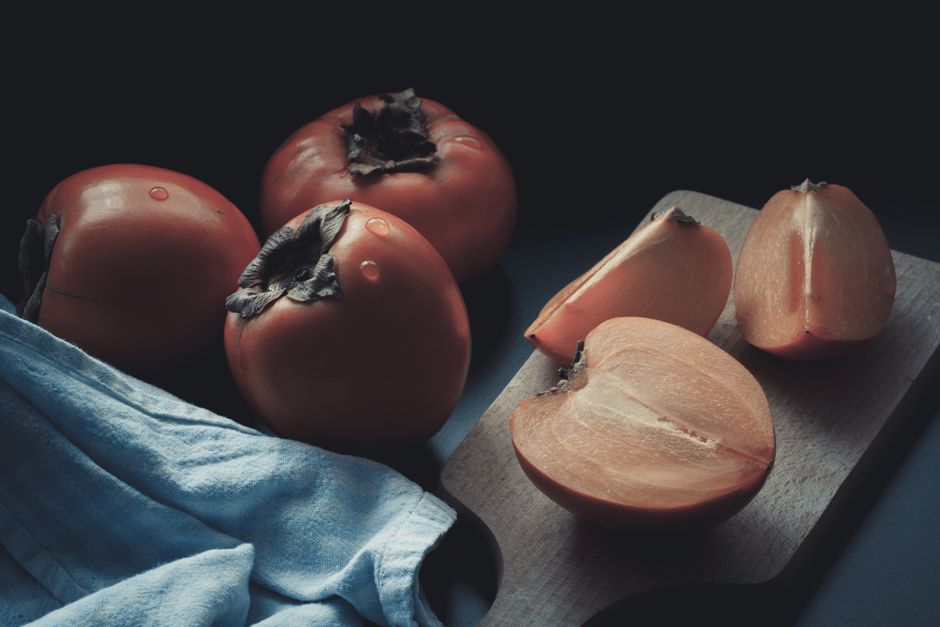
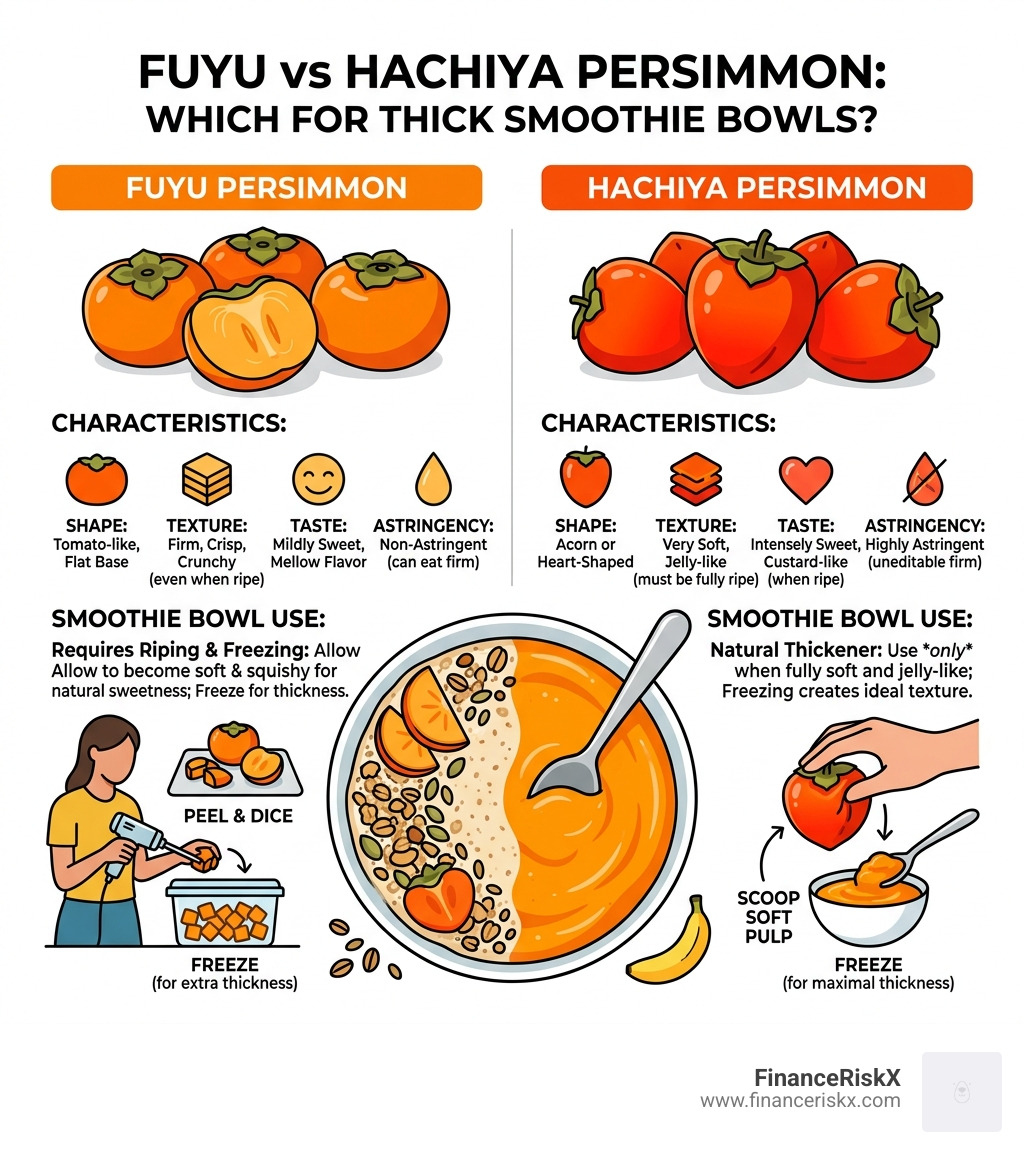
The two heavy hitters in our ingredient list are the persimmons themselves and frozen bananas. While you can use different varieties of persimmons, the choice between Fuyu and Hachiya will change how you prep your bowl.
| Feature | Fuyu Persimmon | Hachiya Persimmon |
|---|---|---|
| Shape | Squat and round (like a tomato) | Acorn-shaped with a pointed bottom |
| Ripeness for Smoothies | Can be firm, but softer is better | Must be jelly-soft and squishy |
| Flavor Profile | Mild, sweet, honey-like | Deeply sweet, like a spiced apricot |
| Astringency | Non-astringent (tasty even when firm) | Highly astringent until fully ripe |
| Texture Contribution | Adds bulk and mild sweetness | Adds a “jammy” silkiness |
Aside from the fruit, we recommend adding cashew butter. Cashew butter provides a sweet-salty contrast and healthy fats that help emulsify the mixture. For spices, cinnamon is non-negotiable; it highlights the natural “persinnamon” notes of the fruit. Finally, choose a creamy plant milk (like oat or cashew) but use it sparingly to maintain that spoonable density.
Step-by-Step Guide to a Thick Persimmon Smoothie Bowl
Creating the perfect thick persimmon smoothie bowl is an art that requires a bit of patience and the right technique. If you dump everything in and hit “high,” you might end up with a soup. Follow our tried-and-true method:
- Prep Your Fruit: Ensure your bananas are frozen solid and your persimmons are ripe. If using Hachiya, scoop out the jelly-like pulp. If using Fuyu, remove the green crown and chop into small pieces.
- Layer the Blender: Add your minimal liquid first (just 1/4 cup to start), followed by any powders (like protein powder), then your nut butter, and finally the frozen fruit on top. This helps the blades catch without needing excess liquid.
- The Low-and-Slow Start: Start your blender on the lowest speed. If you have a high-speed blender with a tamper, use it to push the frozen fruit down into the blades.
- Increase Speed Gradually: Only increase the speed once the base is moving. You are looking for those “four pillows” or “vortex” shapes to form in the thick mixture.
- The Final Spiced Touch: Add a dash of cinnamon, cloves, or ginger toward the end of the blend to ensure the flavors are evenly distributed.
Pro Tips for a Thick Persimmon Smoothie Bowl
If your smoothie still feels a bit thin, don’t panic. There are several “rescue” ingredients that add body without thinning out the flavor.
- Chia Seeds: Adding a tablespoon of chia seeds before blending acts as a natural thickening agent. Chia seeds absorb liquid and create a pudding-like consistency.
- Rolled Oats: For a more “porridge-like” feel that keeps you full during marathon training or a long workday, add 1/3 cup of rolled oats. This adds fiber and a rustic texture.
- The Tamper Tool: This is the secret weapon of pro smoothie makers. It allows you to process very thick mixtures without adding extra milk.
For more advanced techniques, check out our guides on secrets to making a thick smoothie and mastering the perfect creamy smoothie.
Selecting and Preparing the Perfect Persimmon
Selecting a persimmon is different from picking an apple or an orange. Because there are two distinct types, “ripeness” looks very different depending on what you bought.
For a thick persimmon smoothie bowl, we generally prefer the Fuyu variety because it is more forgiving. A Fuyu is ripe when its skin is bright orange and slightly soft to the touch, similar to a ripe peach. However, if you have a Hachiya, you must wait until it is “dangerously” ripe. It should feel like a water balloon or a bag of jelly. If you eat a Hachiya too early, the tannins will cause a dry, “fuzzy” mouthfeel that is quite unpleasant.
To ripen astringent persimmons faster, leave them at room temperature. Once they are soft, you can even freeze the pulp in ice cube trays to use later in your thick persimmon smoothie bowl. This is a great way to enjoy this seasonal fruit even when it’s out of stock at the market.
When it comes to the skin, it is entirely edible! For Fuyus, we often leave the skin on for extra fiber (persimmons provide 20% of your daily fiber). If you want an ultra-smooth, “angelic” texture, you can peel them, but it isn’t strictly necessary. For more ways to improve your blend, see our tips to make smoothies taste better.
Avoiding Common Preparation Mistakes
The most common mistake is using an underripe Hachiya persimmon. This results in a chalky, astringent taste that no amount of maple syrup can fix. If your persimmon isn’t squishy, wait another day!
Another mistake is over-blending. While you want it smooth, blending for too long generates heat from the blades, which can melt your frozen bananas and turn your thick bowl into a thin drink. Keep your blending time under 60 seconds if possible. For those just starting out, our smoothie hacks for beginners can help you avoid these early pitfalls.
Nutritional Benefits of the “Fruit of the Gods”
Persimmons aren’t just a pretty orange face; they are nutritional powerhouses. Often called a “beauty fruit,” they are packed with nutrients that support everything from your heart to your skin.
- Vitamin C: A single persimmon can provide 80% of your daily requirement, which is essential for immunity and collagen production.
- Fiber: With nearly 20% of your daily fiber in one fruit, these bowls are excellent for digestion and keeping you full.
- Antioxidants: Persimmons contain flavonoids like quercetin and kaempferol, as well as betulinic acid, which help fight oxidative stress.
- Vitamin A: Great for eye health and skin integrity.
- Potassium: A thick persimmon smoothie bowl can contain upwards of 1600mg of potassium, which is vital for heart health and muscle function.
Customizing for Dietary Needs
One of the best things about the thick persimmon smoothie bowl is how adaptable it is. Whether you are vegan, gluten-free, or looking for a protein boost, you can make this recipe work for you.
- Vegan Options: Use coconut yogurt, almond milk, or cashew butter to keep the bowl entirely plant-based.
- High Protein: Add a scoop of vanilla pea protein or sprouted almonds. This is especially helpful if you’re using the bowl as a post-workout recovery meal.
- Gluten-Free: Ensure your granola and oats are certified gluten-free.
- Fructose Sensitivity: If you are sensitive to fructose, limit yourself to 1/2 cup of persimmon flesh and balance it with more seeds and healthy fats.
If you find yourself missing an ingredient, don’t worry. Check our smoothie recipe substitutions guide for easy swaps.
Creative Flavor Variations and Toppings
The base of the smoothie is just the beginning. The real fun — and the secret to a satisfying meal — lies in the toppings. Because a thick persimmon smoothie bowl has a mild, honey-like flavor, it pairs beautifully with warm spices and crunchy textures.
- Pomegranate Seeds: These add a tart pop of flavor and a beautiful jewel-like appearance.
- Cacao Nibs: For a bit of bitterness and crunch that balances the sweetness of the fruit.
- Sprouted Almonds: Per Ayurvedic principles, soaking and sprouting almonds makes them easier to digest and increases their “life force.”
- Hemp Hearts & Chia Seeds: These add healthy Omega-3 fats and a subtle nuttiness.
For more inspiration on how to layer your flavors, visit our smoothie flavor combinations guide.
Spiced and Tropical Twists
Want to change the vibe of your bowl? Try these variations:
- The Spiced “Persinnamon” Bowl: Lean heavily into autumn with cinnamon, cloves, and cardamom. This version tastes like “Christmas in a bowl.”
- Tropical Persimmon: Blend your persimmon with frozen mango and coconut milk for a bright, sunny flavor that feels like a winter escape.
- The Green Persimmon: Add a handful of spinach. The orange of the persimmon and the green of the spinach might make a “unique” color, but the nutritional boost is worth it!
Remember to keep an eye on your portions to ensure you’re getting a balanced meal. Our the perfect smoothie portion size guide can help you stay on track.
Frequently Asked Questions about Persimmon Smoothie Bowls
Can you eat the skin of a persimmon in a smoothie?
Yes! The skin of a Fuyu persimmon is thin and perfectly edible. It contains a good portion of the fruit’s fiber. Just be sure to wash it well before blending. For Hachiya persimmons, the skin is also edible but can be a bit tougher; most people prefer to scoop out the jelly-like flesh and discard the skin.
What is the best substitute for banana in a persimmon bowl?
If you aren’t a fan of bananas or want a lower-sugar option, try using frozen cauliflower rice or frozen avocado. Both provide incredible creaminess and thickness without the strong banana flavor. Frozen mango or frozen pear are also great alternatives that complement the persimmon’s flavor profile.
How long can you store a persimmon smoothie bowl?
Smoothie bowls are best enjoyed immediately to maintain their thick, frozen consistency. However, if you have leftovers, you can store them in an airtight container in the fridge for up to 24 hours. The texture will become more like a pudding. You can also freeze the mixture in popsicle molds for a healthy frozen treat!
Conclusion
At FinanceRiskX, we believe that starting your day with a nutrient-dense, seasonal meal is one of the best investments you can make for your long-term health. The thick persimmon smoothie bowl is more than just a trend; it’s a delicious way to embrace the “Peaches of Winter” and fuel your body with essential vitamins and fiber.
By choosing the right fruit, mastering the “low-and-slow” blending technique, and getting creative with your toppings, you can create a breakfast that is as beautiful as it is beneficial. Don’t let the short persimmon season pass you by — grab a few Fuyus or Hachiyas this week and start blending!
Ready to expand your smoothie repertoire? Explore more nutritious recipes at FinanceRiskX and discover your next favorite breakfast.
