
Why No Sugar Added Smoothies Are Worth Making at Home
No sugar added smoothies are blended drinks made entirely from whole foods — no honey, agave, syrups, or sweeteners added. The sweetness comes purely from fruit and other natural ingredients.
Quick answer: Best ingredients for no sugar added smoothies
| Category | Best Options | Sugar Per Serving |
|---|---|---|
| Low-sugar fruits | Raspberries, strawberries, blackberries | 5-7g per cup |
| Creamy bases | Frozen banana, avocado, Greek yogurt | Minimal added sugar |
| Leafy greens | Spinach, kale | Near zero sugar |
| Bulking veggies | Zucchini, cauliflower | Near zero sugar |
| Liquid base | Unsweetened almond milk, coconut water | 0-5g |
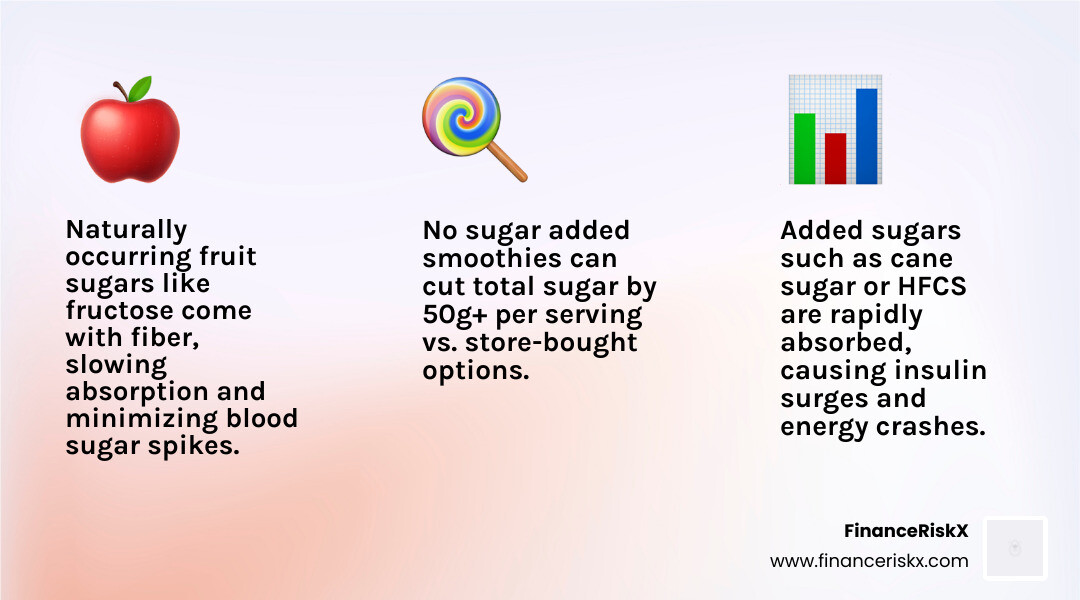
Here’s the problem most people run into: they swap soda for a smoothie, thinking they’re making a healthy choice. But many store-bought and cafe smoothies contain 50g or more of sugar per serving — close to what you’d find in a can of soda.
That sugar spike is real. And it’s avoidable.
The good news? Making a thick, creamy, genuinely satisfying smoothie without any added sugar is simpler than most people think. You don’t need protein powders, sweeteners, or juice concentrates to get great flavor.
What you do need is the right combination of ingredients — and a few smart techniques.
This guide covers exactly that: the best low-sugar fruits and veggies, natural thickeners, keto-friendly sweetener options when you want a little extra sweetness, and recipes you can make in under five minutes.
The Science Behind No Sugar Added Smoothies
When we talk about no sugar added smoothies, we are navigating a specific regulatory and biological landscape. According to FDA guidelines (21 CFR 101.60(c)), for a food to be labeled “sugar-free,” it must contain less than 0.5g of sugar per serving. However, “no added sugar” is a different beast. It means we haven’t dumped in cane sugar, high fructose corn syrup, or even “natural” syrups like agave or honey during the blending process.
Fructose vs. Glucose: The Metabolic Difference
The sugar in your smoothie primarily comes in two forms: fructose and glucose. Glucose is the body’s preferred energy source and causes an immediate rise in blood sugar, triggering an insulin response. Fructose, found naturally in fruit, is processed primarily by the liver.
While isolated fructose (like high fructose corn syrup) is linked to health issues, the fructose found in whole fruits behaves differently. Because it is packaged with vitamins, antioxidants, and—most importantly—fiber, the body processes it more slowly. This is why a whole-fruit blueberry smoothie is a world away from a glass of blueberry-flavored soda.
The Power of Fiber and Nutrient Density
The “magic” of a healthy blend lies in the fiber. Fiber acts as a biological speed bump, slowing down the absorption of sugar into your bloodstream. This prevents the dreaded “sugar crash” that leaves you shaky and hungry an hour after breakfast. By focusing on how to make smoothies without sugar, we ensure we are getting nutrient-dense fuel rather than just liquid candy.
Homemade vs. Store-Bought: The Cost of Convenience
If you walk into a typical cafe, you might pay $8 to $12 for a “Green Machine” that is actually 60% apple juice concentrate. By making no sugar added smoothies at home, you control the quality and the cost. You can use frozen fruits picked at their peak—which often retain more nutrients than “fresh” produce that has sat on a truck for a week—and save significantly on your monthly grocery bill. Clean ingredients mean no hydrogenated oils, no GMOs, and no hidden fillers.
Best Low-Sugar Fruits and Veggies for Your Blend
To keep your glycemic load low, we need to be strategic about our produce. Not all fruits are created equal when it comes to sugar content.

The Low-Sugar Fruit Rankings
If you want to keep your sugar intake to a minimum, berries are your best friends. Here is how they stack up per cup:
- Raspberries: 5g sugar (The gold standard for low-sugar blending)
- Strawberries: 7g sugar
- Blackberries: 7g sugar
- Blueberries: 12g sugar (Slightly higher, but packed with anthocyanins)
- Granny Smith Apple: 14g (Lower than red varieties)
On the flip side, a cup of mango can pack up to 22.5g of sugar, and a large banana has about 18g. We don’t have to avoid these entirely, but we should use them as “sweeteners” rather than the bulk of the drink.
The Secret Veggie Weapons
Vegetables are the ultimate way to add volume and nutrients without the sugar.
- Spinach & Kale: These are classics for a reason. They disappear into the flavor of the fruit while providing iron and Vitamin K.
- Zucchini & Cauliflower: Use these frozen! They provide a creamy, thick texture similar to a banana but with almost zero sugar. Frozen cauliflower is a “sneaky” bulking agent that won’t make your smoothie taste like a salad.
- Avocado: This is the king of healthy fats. It adds a luxurious, buttery texture and helps your body absorb fat-soluble vitamins (A, D, E, and K) from your greens.
Ingredients to Avoid
To keep your smoothie truly “no added sugar,” stay away from:
- Fruit Juice/Concentrates: These are pure sugar without the fiber.
- Sweetened Nut Milks: Always check the label for “Unsweetened.”
- Flavored Yogurts: These are often dessert in disguise.
- High Fructose Corn Syrup: Often hidden in cheap protein powders or “smoothie bases.”
How to Achieve Creamy Texture Without Added Sugar
Many people rely on honey or maple syrup to get that “mouthfeel” they crave. We don’t need them. We can use structural ingredients to create a rich, satisfying drink.
Natural Thickeners Comparison
| Ingredient | Benefit | Best Use Case |
|---|---|---|
| Avocado | High healthy fats, extreme creaminess | Keto or low-carb blends |
| Silken Tofu | High protein, neutral flavor | Vegan meal replacements |
| Frozen Squash | Natural sweetness, velvety texture | Fruit-free smoothies |
| Greek Yogurt | Probiotics and protein | Post-workout recovery |
High-Protein Techniques
To make a smoothie a true meal replacement, you need protein. Registered dietitians often recommend at least 15g of protein per meal to keep you full. You don’t need chalky powders for this:
- Cottage Cheese: Don’t knock it until you try it. When blended, it becomes perfectly smooth and adds a cheesecake-like tang and a massive protein boost.
- Chia & Flaxseeds: These add “gel” power. Let them sit in the liquid for a minute before blending to help thicken the mix.
- Nut Butters: Peanut, almond, or sunflower butter adds satiety and slows digestion.
The No-Ice Blending Tip
Stop using ice cubes! Ice dilutes the flavor and creates a watery, grainy texture. Instead, use frozen fruit and vegetables. Peel overripe bananas, break them in half, and freeze them. Use frozen zucchini coins or frozen berries. This ensures your no sugar added smoothies are thick, frosty, and flavor-packed from the first sip to the last.
Top Keto and Low Glycemic Sweeteners for No Sugar Added Smoothies
Sometimes, your taste buds need a little help, especially if you are transitioning away from a high-sugar diet. If a berry-and-spinach blend feels too tart, you can use keto-friendly sweeteners that won’t spike your insulin.
Healthy Alternatives
- Stevia: A plant-based sweetener that is hundreds of times sweeter than sugar with zero calories. Use it sparingly, as a little goes a long way.
- Monk Fruit: Derived from a small melon, this is a fantastic 1:1 sugar replacement that doesn’t have the bitter aftertaste some people find in stevia.
- Erythritol: A sugar alcohol that is easy on the gut for most people and provides a cooling sweetness.
For more depth on these, check out what is the healthiest alternative to sugar for your morning blend and explore other smoothie sweeteners that are healthy.
Flavor Enhancers (The Non-Sweeteners)
You can trick your brain into thinking a drink is sweeter by using aromatic spices.
- Cinnamon: Known to help with blood sugar regulation.
- Vanilla Bean: Use pure extract or the bean itself for a rich, “sweet” aroma.
- Nutmeg & Ginger: Add warmth and complexity.
If you are looking for even more ways to sweeten your sips without the crash, read about liquid gold and coconut sugar the best ways to sweeten your sips.
Customizing No Sugar Added Smoothies for Every Diet
We believe everyone should enjoy a good blend, regardless of dietary restrictions.
- Diabetic-Friendly: Focus on a 2:1 ratio of vegetables to fruit. Use raspberries and blackberries as your primary fruit sources and always include a fat (like almond butter) to stabilize blood sugar.
- Keto-Specific: Skip the bananas. Use frozen cauliflower and avocado for texture, and unsweetened coconut milk for the base.
- Kid-Friendly: Involve the kids! Let them press the blender button. Use a “monster green” name for spinach blends. Adding a few frozen strawberries usually masks the taste of any greens.
- Anti-Inflammatory: Boost your recovery by adding fresh ginger or turmeric. These roots add a spicy “kick” that balances out earthy greens.
Quick and Delicious No Sugar Added Smoothies Recipes
Ready to blend? Here are some of our favorite combinations. For all of these, simply add the liquid first, followed by the solids, and blitz until smooth.
- Banana-Berry Classic: 1/2 frozen banana, 1/2 cup mixed berries, 1 cup unsweetened almond milk, 1/4 cup Greek yogurt.
- Tropical Green: 1/2 cup frozen pineapple, 1 cup spinach, 1/2 grated zucchini, 1 cup coconut water, and a squeeze of lime.
- Blueberry Strawberry Bliss: 1/2 cup frozen blueberries, 1/2 cup frozen strawberries, 1 cup milk (dairy or plant-based), and a dash of cinnamon.
- The “No-Fruit” Energizer: 1 cup steamed then frozen butternut squash, 1 tbsp almond butter, 1 cup spinach, 1 cup unsweetened soy milk, and vanilla extract.
- Raspberry Cheesecake: 1 cup frozen raspberries, 1/2 cup cottage cheese, 1/2 cup water, and a drop of monk fruit sweetener.
Frequently Asked Questions about No Sugar Added Smoothies
Are no sugar added smoothies safe for diabetics?
Generally, yes. Because they retain the fiber of the whole fruit and avoid refined sugars, they have a much lower glycemic index than juice. However, it is always best to prioritize low-sugar berries and include protein and healthy fats to ensure a slow, steady release of energy.
Can I lose weight by switching to no added sugar smoothies?
Replacing a high-calorie, high-sugar breakfast or snack with a no sugar added smoothie can reduce your overall caloric intake and eliminate insulin spikes that contribute to fat storage. Research suggests that people who eat whole fruits often find it easier to manage their weight compared to those who consume fruit juices.
How do I make my smoothie taste better without honey or agave?
Use ripeness to your advantage! Overripe bananas are much sweeter than green ones. You can also use a single Medjool date (though it contains sugar, it also has fiber) or rely on spices like cinnamon and vanilla to enhance the natural sweetness of the fruit.
Conclusion
At FinanceRiskX, we know that health is the ultimate wealth. Integrating no sugar added smoothies into your daily routine is a sustainable way to maintain high energy levels without the metabolic “risk” of sugar crashes. By taking control of your ingredients, you aren’t just making a drink—you’re investing in your long-term vitality.
Ready to upgrade your morning routine? Find the best smoothie sweeteners that are healthy and start blending your way to better health today!
