
Why the Best Liquid for Smoothies Makes or Breaks Your Blend
The best liquid for smoothies depends on your goal, but here’s a quick breakdown of the top choices:
| Liquid Base | Calories (per cup) | Best For |
|---|---|---|
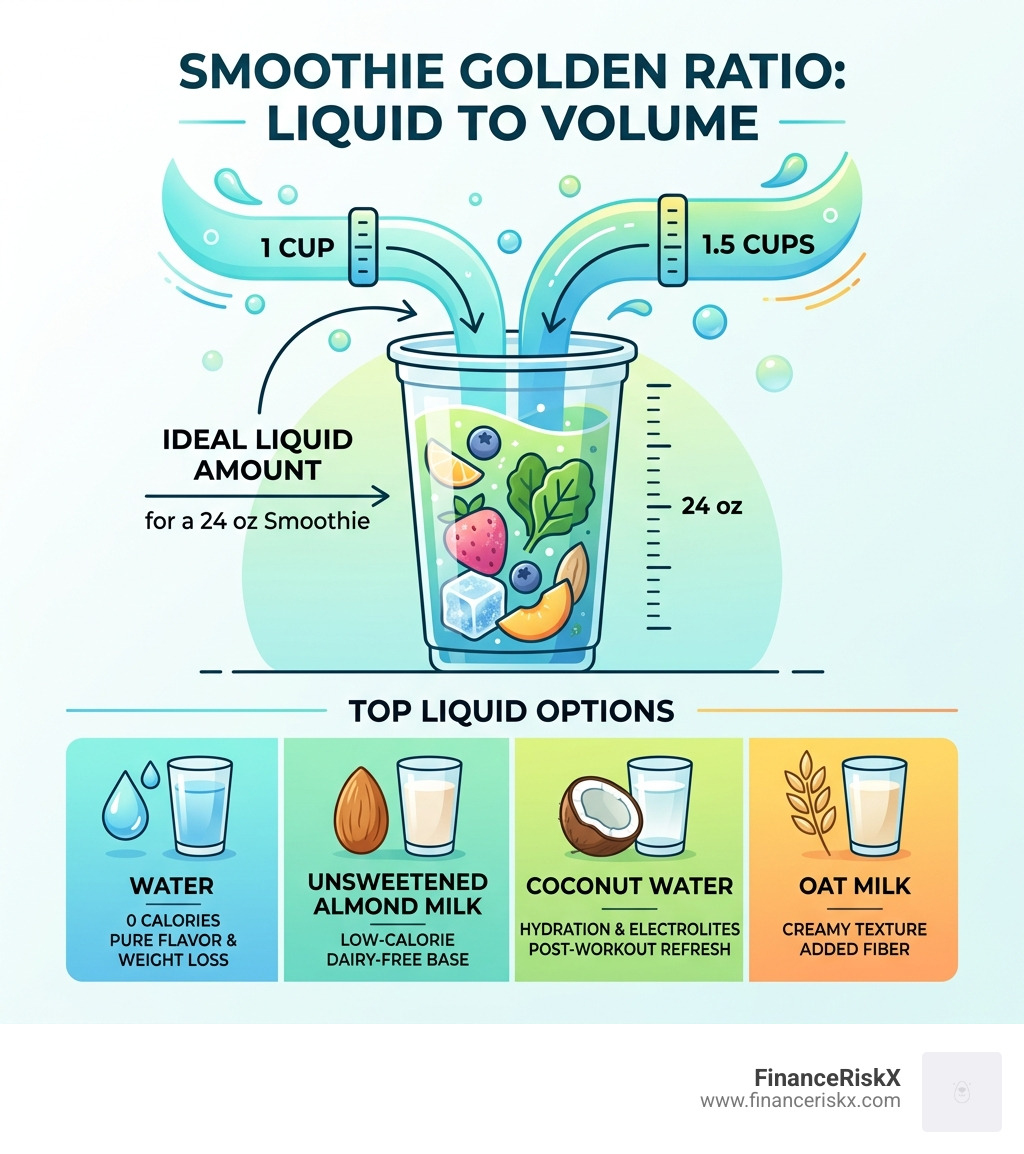
| Water | 0 | Weight loss, pure flavor |
| Unsweetened almond milk | 30-40 | Low-calorie, dairy-free |
| Coconut water | 45-60 | Post-workout, hydration |
| Oat milk | ~120 | Creaminess, fiber |
| Soy milk | ~90 | High protein, vegan |
| Dairy milk | ~150 | Protein, meal replacement |
| Fruit juice | ~110+ | Natural sweetness (use sparingly) |
Most people grab whatever is in the fridge and pour it in. But that one choice shapes everything — the taste, the thickness, and how filling your smoothie actually is.
The wrong liquid can water down your flavors, spike your sugar intake, or leave you hungry an hour later. The right one can turn a basic blend into a satisfying, nutrient-packed meal.
There’s no single “best” answer for everyone. A post-workout smoothie calls for something different than a weight-loss breakfast blend.
This guide walks through every major option — from plain water to creamy milk alternatives to unexpected picks like kombucha and broth — so you can match your liquid to your goals.
The Best Liquid for Smoothies: Hydrators and Low-Calorie Bases
When we think about the foundation of a great drink, we often look for something that provides maximum hydration without unnecessary “filler” calories. If your primary goal is weight management or simply staying hydrated during a busy day, your search for the best liquid for smoothies should start with the basics.
Using a light, hydrating base allows the natural flavors of your frozen mango, fresh spinach, or tart berries to take center stage. It also ensures your smoothie remains a refreshing beverage rather than a heavy dessert. For those looking to keep their blends even lighter, understanding liquid gold and coconut sugar the best ways to sweeten your sips can help you balance flavor without relying on high-calorie liquids.

Water: The Ultimate Calorie-Free Base
It might seem “boring,” but water is frequently the best liquid for smoothies when you want the purest nutritional profile possible. It is the only option with zero calories, zero sugar, and zero fat.
The Pros:
- Flavor Neutrality: Water doesn’t compete with your ingredients. If you’ve spent money on high-quality organic berries, water lets you actually taste them.
- Digestion Friendly: It helps move fiber through your system, which is vital if you’re loading your blender with kale, flax seeds, or chia.
- Budget-Friendly: As the saying goes, water is “free-free.” It’s the most accessible option for daily blending.
The Cons:
- Texture: Water provides no creaminess. If you want a thick, milkshake-like consistency, you’ll need to rely on “whole food” thickeners like frozen bananas or avocado.
- Dilution: If you use too much, your smoothie can end up tasting thin or “icy.”
According to the experts at Smoothie Authority, water is the “great neutralizer,” making it a safe bet for almost any recipe.
Coconut Water: The Best Liquid for Smoothies and Hydration
If water is the basic foundation, coconut water is the upgraded, electrolyte-rich cousin. It is often cited as the best liquid for smoothies intended for post-workout recovery.
One cup of coconut water typically contains between 45 and 60 calories and provides about 8g of natural sugars. Its real power lies in its mineral content—specifically potassium and magnesium—which helps replenish the body after a sweat session.
We love pairing coconut water with tropical fruits like pineapple or mango. It adds a subtle, nutty sweetness that feels like a “vacation in a cup.” However, keep in mind that while it is hydrating, those natural sugars do add up if you are strictly monitoring your glycemic intake.
Creamy Classics: Dairy and Plant-Based Milk Alternatives
For many of us, a smoothie isn’t a smoothie unless it’s creamy. This is where milks—both dairy and plant-based—come into play. Choosing the best liquid for smoothies in this category often depends on whether you view your drink as a light snack or a full meal replacement.
Using a milk base provides a sense of satiety (fullness) that water simply can’t match. If you are struggling to get that velvety texture, mastering the perfect creamy smoothie involves picking a base with a bit of healthy fat or protein.
Dairy Milk and High-Protein Alternatives
Cow’s milk remains a “gold standard” for those who want a classic, milkshake-like texture. It is naturally rich in calcium, Vitamin D, and B vitamins. More importantly, it provides a mix of casein and whey proteins, which are excellent for muscle repair.
However, if you are dairy-free or vegan, you don’t have to sacrifice protein.
- Soy Milk: This is a nutritional powerhouse, often containing up to 9g of protein per cup. It is a “complete protein,” meaning it contains all nine essential amino acids.
- Pea Milk: A rising star in the plant-milk world, a cup of pea milk offers about 8 grams of protein with only 80 calories. It’s a fantastic allergen-friendly alternative to soy or dairy.
As noted in the guide by PROMIXX, these high-protein bases turn a simple fruit blend into a functional meal that keeps you full until lunch.
Almond, Oat, and Soy: Choosing the Best Liquid for Smoothies Based on Diet
The plant-milk aisle can be overwhelming, but here is how to choose based on your specific dietary needs:
- Unsweetened Almond Milk: This is the go-to for the keto community and calorie-counters. At just 30-40 calories per cup, it provides a mild nutty flavor and a dose of Vitamin E without the sugar spike. Always check the label for “unsweetened” to avoid hidden additives.
- Oat Milk: If you want the creamiest plant-based option, oat milk is the winner. It contains beta-glucan, a type of soluble fiber known for supporting heart health and lowering cholesterol. It usually provides 2-3 grams of fiber per serving, though it is higher in carbs and calories (~120 per cup) than almond milk.
- Soy Milk: As mentioned, this is the best for those needing a vegan protein boost. It has a thicker consistency that mimics dairy milk very closely.
Flavor Boosters and Functional Bases
Sometimes, the best liquid for smoothies isn’t just about hydration—it’s about a concentrated burst of flavor or a specific health benefit.
Fruit Juices and Natural Sweeteners
Fruit juice can transform a bland green smoothie into something delicious, but it comes with a warning: sugar. For example, 1 cup of apple juice contains about 24 grams of sugar.
If you choose to use juice, we recommend a “50/50 split”—dilute 4 ounces of juice with 4 ounces of water. This gives you the Vitamin C and bright flavor of orange or apple juice without the massive insulin spike. For those looking to cut out processed sugars entirely, our guide on how to make smoothies without sugar offers excellent alternatives.
Probiotic Powerhouses: Yogurt and Kefir
While technically semi-solids, Greek yogurt and kefir can function as a “liquid” base if thinned slightly with water.
- Greek Yogurt: This adds incredible thickness and a massive protein boost. It’s the secret to secrets to making a thick smoothie that you can eat with a spoon.
- Kefir: This fermented dairy drink is loaded with probiotics, which are essential for gut health. It has a tangy, sourdough-like flavor that pairs beautifully with sweet berries or bananas.
Unconventional Liquids and Expert Blending Tips
If you’re feeling adventurous, the best liquid for smoothies might be something you’ve never considered before.
- Kombucha: Adds a fizzy, tangy effervescence and a probiotic boost. Use it with berries for a “sparkling” smoothie experience.
- Green Tea or Hibiscus Tea: These infuse your drink with antioxidants and a sophisticated flavor profile without adding calories.
- Iced Coffee: The perfect morning hack. Blend chilled coffee with a frozen banana, a scoop of protein powder, and some almond butter for a caffeinated breakfast.
- Vegetable Broth: For a savory “gazpacho-style” smoothie, use low-sodium broth with tomato, avocado, and cucumber.
The Pro Layering Technique: To protect your blender and ensure a smooth consistency, always add your ingredients in this order:
- Liquids first: This creates a vortex that pulls the solids down.
- Powders: (Protein, collagen, etc.)
- Fresh fruits and greens.
- Frozen ingredients and ice: These should be at the top to weigh down the other ingredients.
If you find yourself missing an ingredient, don’t panic—check out our list of smoothie recipe substitutions to keep your blend on track.
Frequently Asked Questions about Smoothie Bases
How much liquid should I use in a standard smoothie?
The “Golden Ratio” for a standard 24 oz smoothie is 1 to 1.5 cups of liquid. If you prefer a “drinkable” consistency, lean toward 1.5 cups. If you are making a smoothie bowl, start with 1/2 to 3/4 cup and add more slowly until you reach the desired thickness.
What is the healthiest liquid base for weight loss?
Plain water and unsweetened almond milk are the top choices. They provide the volume needed to blend your ingredients without adding significant calories or sugars. Avoiding fruit juices and sweetened milks is key to maintaining a calorie deficit.
Which liquid provides the most protein for a post-workout smoothie?
Dairy milk, soy milk, and pea milk are the winners here. Each provides roughly 8-9 grams of protein per cup. Pairing these with a scoop of protein powder and coconut water (for electrolytes) creates the ultimate recovery drink.
Conclusion
At FinanceRiskX, we believe that personalized nutrition is the key to long-term health. Finding the best liquid for smoothies isn’t about following a single rule; it’s about balancing your dietary goals with flavor harmony.
Whether you choose the hydrating simplicity of water, the creamy luxury of oat milk, or the probiotic punch of kefir, your liquid base is the foundation of your wellness routine. By experimenting with different combinations and paying attention to ingredient balance, you can create a blend that is as functional as it is delicious.
For more help on perfecting your daily blend, don’t miss our the perfect smoothie portion size guide to ensure you’re getting exactly what your body needs. Happy blending!
