
Why Greek Yogurt Thickens Best for Smoothies and Bowls
Greek yogurt thickens best because it has been strained to remove liquid whey, concentrating its proteins and fat into a dense, creamy base that outperforms almost every other liquid option for smoothies and bowls.
Quick answer – why Greek yogurt wins for thickness:
| Base | Thickness | Protein per Cup | Notes |
|---|---|---|---|
| Greek yogurt | Very thick | 11-15g | Strained, concentrated |
| Regular yogurt | Medium | 5-8g | More whey, thinner |
| Whole milk | Thin | 8g | Good fat, low viscosity |
| Plant-based milk | Very thin | 1-4g | Needs added thickeners |
| Skyr | Very thick | 15-17g | Similar to Greek, milder |
The difference comes down to whey removal. Regular yogurt holds onto its liquid whey. Greek yogurt has that whey strained out – which roughly halves the volume but doubles down on protein and creaminess.
That straining process also concentrates fat, which is why full-fat Greek yogurt feels so rich and satisfying. It’s not a fancy ingredient or a special additive. It’s simply yogurt with the watery part taken out.
For anyone trying to make smoothies thicker and more filling without relying on ice or banana, Greek yogurt is the most straightforward, nutritious swap you can make.
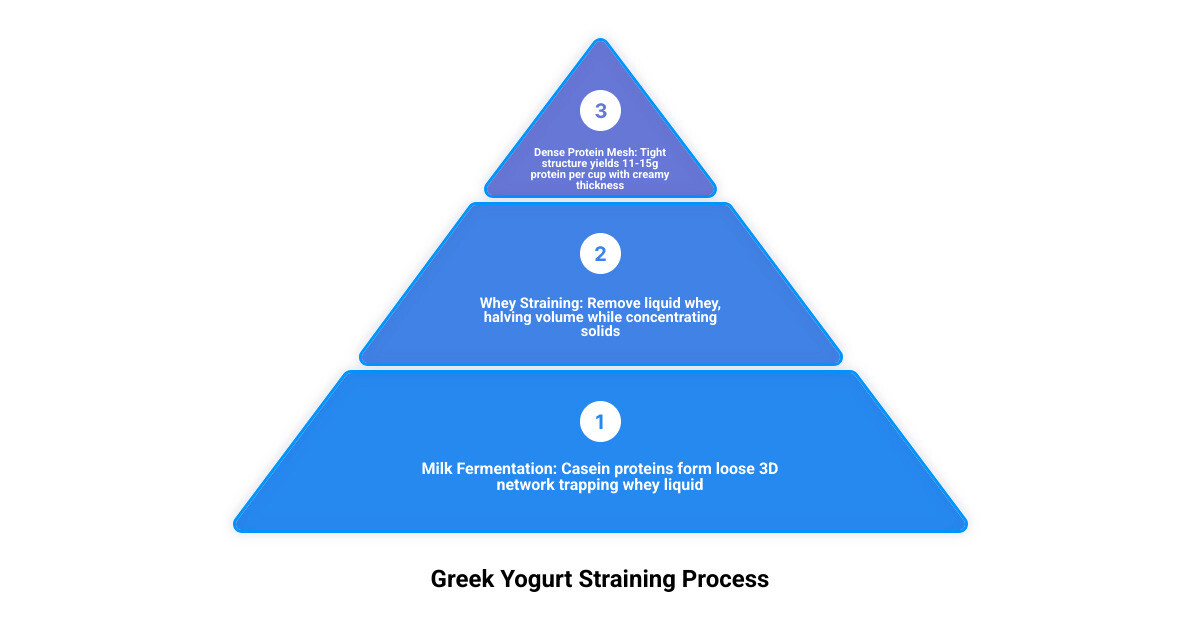
At its core, the reason greek yogurt thickens best lies in the science of the protein mesh. When milk is fermented, the casein proteins unravel and reform into a 3D network that traps liquid. In regular yogurt, this network is loose and holds a lot of water (whey). By straining that yogurt, we remove the water, forcing the protein mesh to collapse into a much tighter, denser structure.
This concentration is not just about texture; it is about nutrition. When you strain two cups of plain yogurt, you typically yield about one cup of Greek yogurt. This process concentrates the protein to roughly 11-15g per cup. If you are looking for the secrets to making a thick smoothie, starting with a base that is already physically dense is a practical first step. Following professional steps to make thick Greek yogurt at home allows you to control this density perfectly.
Why Homemade Greek Yogurt Thickens Best with Heat
If you have ever tried to make yogurt at home and ended up with a runny batch, the culprit was likely the heating stage. Heating milk to 195°F (90°C) and holding it there for 10 minutes is a reliable way to improve the final set.
Why does this work? At these high temperatures, whey proteins – specifically lactoglobulin – denature. Instead of staying liquid and floating around, these denatured proteins join the casein mesh. This creates a much stronger, more stable scaffold that can hold more moisture and resist breaking. Research on yogurt and dairy protein behavior consistently shows that higher heat treatment can produce a thicker final texture than a lower-heat approach.
When we use this high-heat method, we are not just addressing food safety; we are also changing how the milk proteins behave. This bond between lactoglobulin and casein helps prevent a weak or uneven texture and supports a thick, custard-like result. For more detail, you can explore various methods to achieve the ultimate thick and creamy homemade yogurt.
How Greek Yogurt Thickens Best Compared to Skyr
While we often group them together, Greek yogurt and Icelandic Skyr are close relatives, not identical products. Skyr is technically a soft cheese made with a slightly different bacterial culture and often a bit of rennet.
In terms of thickness, Skyr often wins the spoon-standing-up test. It is strained even more aggressively than Greek yogurt, resulting in a product that is incredibly high in protein (often 15-17g per cup) and very low in fat. However, because it lacks the fat content of a whole-milk Greek yogurt, it can sometimes feel drier on the palate.
If you are mastering the perfect creamy smoothie, Greek yogurt often provides a better balance of creaminess and thickness. Skyr is a strong option for ultra-lean protein goals, but for a velvety mouthfeel in smoothies and bowls, the fat-protein balance in Greek yogurt is hard to beat.
Top Liquid Bases for Thick Blends: A Roundup
Choosing the right base is the difference between a smoothie you eat with a straw and one you eat with a spoon. Here is how the most common options stack up:
| Liquid Base | Fat Content | Viscosity | Best For |
|---|---|---|---|
| Whole Milk | 3.5% | Low | Light, creamy drinks |
| Greek Yogurt | 0-10% | Very High | Smoothie bowls, dips |
| Soy Milk | 2% | Medium-Low | Vegan high-protein blends |
| Oat Milk | 1.5% | Medium | Naturally sweet, smooth texture |
| Cashew Milk | 2-3% | Medium | Rich, nutty undertones |
When looking for tips to make smoothies taste better, fat carries flavor. A non-fat base might be lower in calories, but it won’t have the same “cling” on the tongue that makes a blend feel satisfying.
Whole Milk and Dairy Alternatives
Whole milk is a classic for a reason. With a standard 3.5% fat content, it provides a rich flavor base. However, if you want your milk-based yogurt to be thicker before you even start straining, we recommend adding milk solids.
By whisking in 1/4 to 1/3 cup of non-fat milk powder to a half-gallon of milk, you boost the protein and sugar (lactose) available for the bacteria to work with. This creates a denser “curd” right from the start. For those learning how to make Greek yogurt, this “lazy” thickening method is a game-changer for anyone who doesn’t want to wait 12 hours for a strainer to do all the work.
Plant-Based Thickening Options
For our vegan friends, achieving that “Greek-style” thickness can be a challenge because plant milks lack casein—the protein responsible for that thick mesh. Soy milk is generally the best candidate for yogurt-making because its protein structure is the most similar to dairy.
However, to get a truly thick plant-based blend, you’ll often need a little help from “thickening agents.”
- Agar-Agar: A seaweed-based gelatin substitute that creates a very firm set.
- Tapioca Starch: Provides a smooth, slightly stretchy thickness.
- Chia Seeds: These are hydrophilic, meaning they love water. Adding a tablespoon of chia to your blend and letting it sit for 30 minutes can transform a runny smoothie into a thick pudding.
Using these smoothie hacks for beginners ensures that even without dairy, your blends remain “creamy and dreamy.”
Pro Methods to Achieve Maximum Thickness at Home
If you have a tub of store-bought yogurt that’s just too runny, don’t toss it! You can easily transform it into a gourmet Greek-style treat.

The most effective method is straining. Here is a quick guide on timing for your desired thickness:
- 2-4 Hours: Standard Greek yogurt consistency. Perfect for smoothies.
- 6-8 Hours: Extra-thick, similar to a soft cream cheese.
- 12-24 Hours (Labneh): This is “yogurt cheese.” It’s so thick you can roll it into balls and preserve it in olive oil.
While cheesecloth is the traditional tool, it can be messy. Reusable yogurt strainers with fine stainless steel mesh are a fantastic investment if you find yourself thickening yogurt weekly. They are easier to clean and provide a more consistent result. If you’re wondering how to thicken Greek yogurt, the answer is almost always “more time in the strainer.”
The High-Low Culturing Technique
For the true yogurt nerds, the “High-Low” method is the gold standard for texture. Most people culture yogurt at a steady 110°F. However, starting the incubation at 120°F for the first hour and then dropping it to 86°F for the remainder of the time creates a much more stable protein mesh.
Culturing at a lower temperature (below 104°F) prevents the proteins from tightening too quickly, which is what causes that watery “whey separation” you see in some batches. This method takes longer (often 12-18 hours), but the result is a yogurt so smooth and thick it looks like silk.
Using starter cultures that include L. Casei also helps. These specific bacteria produce a more viscous, “stretchy” texture that feels naturally thicker on the spoon. For more on bacterial strains, you can research specific cultures that help make yogurt thicker.
Using Additives for Instant Results
Sometimes you don’t have 12 hours to wait for straining. In these cases, additives can save the day.
- Non-fat Dry Milk: As mentioned, adding 1/3 cup per quart of milk before culturing significantly boosts the final thickness.
- Gelatin: This is the secret of many commercial brands. Bloom 1 teaspoon of unflavored gelatin in cold water, then whisk it into your warm milk (or even into finished yogurt that you’ve gently warmed). Once it chills, the yogurt will have a stable, jiggly set that won’t weep whey.
- Pectin or Guar Gum: These are often used in “low-fat” commercial yogurts to mimic the mouthfeel of fat.
If you’re whipping up a delightful-strawberry-smoothie-with-yogurt-recipe, adding a scoop of milk powder or a pinch of xanthan gum can give you that “premium” thickness instantly.
Troubleshooting and Storage for Thick Yogurt
Even the pros have bad days. If your yogurt didn’t turn out as planned, here’s how to fix it.
- Why is it lumpy? This usually happens if the milk was heated too fast or the starter wasn’t mixed in thoroughly. Always “temper” your starter by mixing it with a small cup of warm milk before adding it to the main pot.
- Why is it grainy? Using too much starter can cause “overcrowding,” where the bacteria compete for food too aggressively, shattering the protein network. Use only 1 tablespoon of starter per quart of milk.
- The UHT Trap: Never use “Ultra-Pasteurized” (UHT) milk for yogurt. The high-heat processing used for shelf-stable milk permanently damages the proteins, meaning they can’t form a mesh. You’ll end up with “yogurt soup” every time.
For more troubleshooting, see our tips-to-make-smoothies-taste-better-2.
Managing Leftover Whey and Storage
When you strain yogurt, you’re left with a yellowish liquid called whey. Do not pour this down the drain! It is “liquid gold,” packed with protein, probiotics, and minerals.
- Smoothies: Use it as the liquid base for your next blend.
- Baking: Substitute it for water or milk in bread and pizza dough for a sourdough-like tang.
- Brining: Use it to brine chicken or pork; the acidity tenderizes the meat perfectly.
Your thickened Greek yogurt should be stored in an airtight container in the coldest part of your fridge. It will stay fresh for about 5 to 7 days. If you see mold or it smells “off” (like yeast or old gym socks), it’s time to toss it. A great recipe to start with is a perfectly thick and creamy homemade Greek yogurt.
Frequently Asked Questions about Yogurt Thickness
Why is my store-bought yogurt so runny?
Store-bought yogurt often becomes runny because the “whey” has separated during shipping and handling. Many people stir this liquid back in, which thins out the entire container. Also, many commercial brands use stabilizers rather than traditional straining to save money; if those stabilizers break down, the yogurt loses its structure.
Can I thicken yogurt without straining it?
Yes! You can add thickeners like non-fat milk powder, gelatin, or even a bit of heavy cream. Another “cheat” is to evaporate the milk by about 10-15% during the initial heating phase, which concentrates the proteins naturally.
What is the best starter culture for thick results?
Look for starters that contain Lactobacillus acidophilus, Bifidobacterium, and especially L. Casei. Brands like Fage or Stonyfield make excellent starters because they contain active, robust cultures that produce a thick, creamy set.
Conclusion
At FinanceRiskX, we believe that taking control of your nutrition starts with understanding the “why” behind your ingredients. Whether you are looking for the perfect smoothie base or a high-protein snack, knowing why greek yogurt thickens best allows you to customize your kitchen experience.
By mastering the art of heat, straining, and culturing, you can move away from overpriced, additive-filled store brands and enjoy the superior taste of homemade quality. Ready to put that thick yogurt to use? Explore our full guide to green smoothies and start blending like a pro today!
