
Why Getting Your Athlete Smoothie Portions Right Actually Matters
An athlete smoothie portion guide is the fastest way to turn a basic blended drink into a precision performance tool. Here’s a quick-reference breakdown before we dive deeper:
Quick Athlete Smoothie Portion Guide:
| Ingredient | Portion | Why It Matters |
|---|---|---|
| Protein (powder, yogurt, cottage cheese) | 25-30g total | Muscle repair and synthesis |
| Carbohydrates (fruit, oats, honey) | 30-60g | Glycogen replenishment |
| Healthy fats (nut butter, chia, avocado) | 1-2 tbsp | Satiety and sustained energy |
| Vegetables (spinach, kale) | 1 handful | Micronutrients and antioxidants |
| Liquid (milk, coconut water, water) | 250ml / ~8-10 oz | Hydration and consistency |
You just finished training. Your muscles are broken down, your glycogen stores are depleted, and the last thing you want is to spend 30 minutes cooking. A smoothie should solve that problem instantly — but only if the portions are right.
Get them wrong and you’re either leaving gains on the table or accidentally drinking a sugar bomb.
The research is clear: athletes need at least 30 grams of protein post-workout to meaningfully support muscle repair. A single frozen banana delivers ~27 grams of carbohydrates to restock energy fast. These numbers aren’t arbitrary — they reflect real metabolic demands your body has within a narrow recovery window.
Most athletes don’t under-train. They under-fuel.
The tricky part is that smoothies are easy to get wrong. Too little protein, too much fruit juice, not enough healthy fat — and your “performance blend” is basically a dessert drink.
This guide fixes that with exact portions, practical visuals, and timing strategies built around how hard you’re actually training.
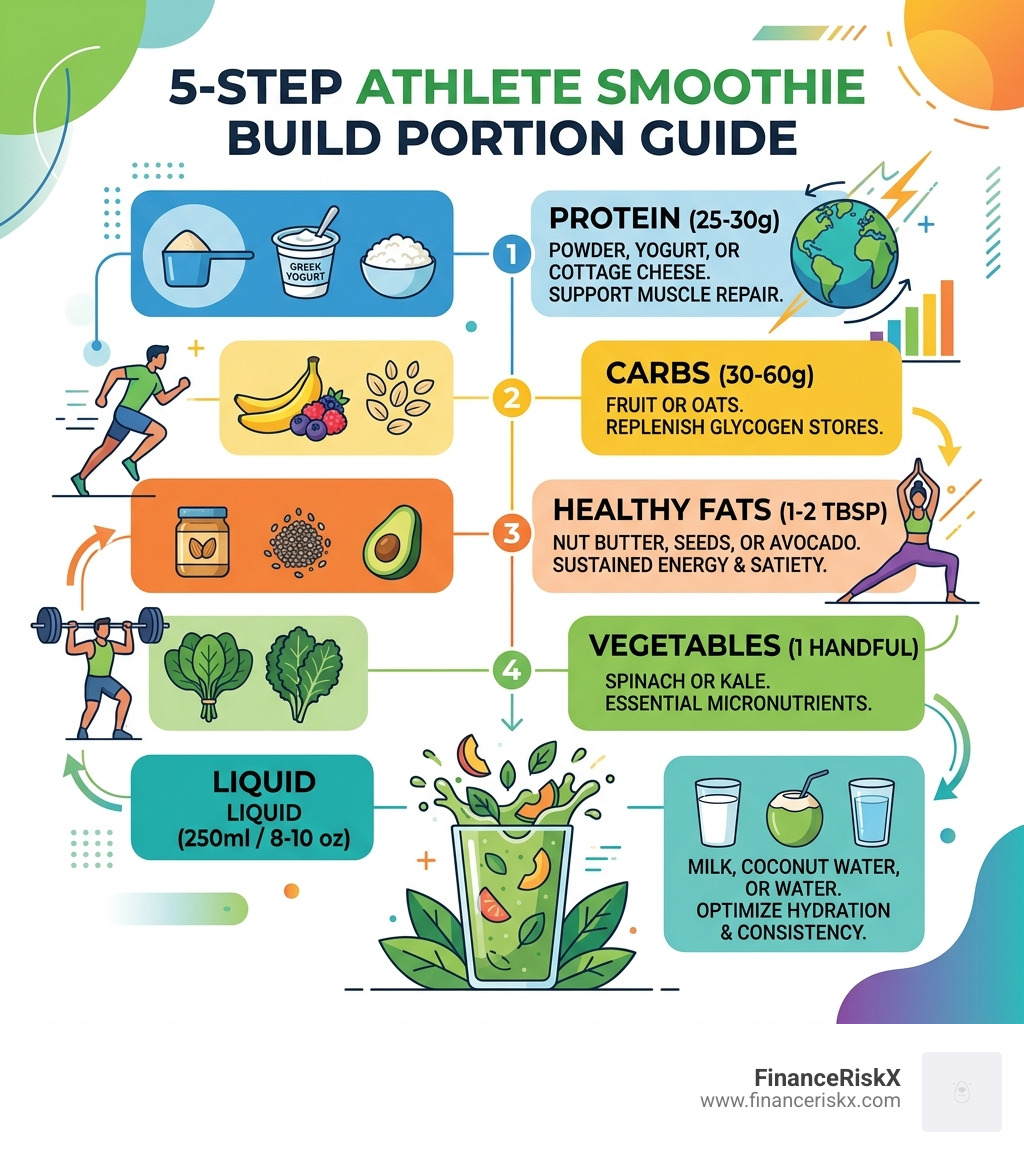
The Essential Athlete Smoothie Portion Guide for Every Goal
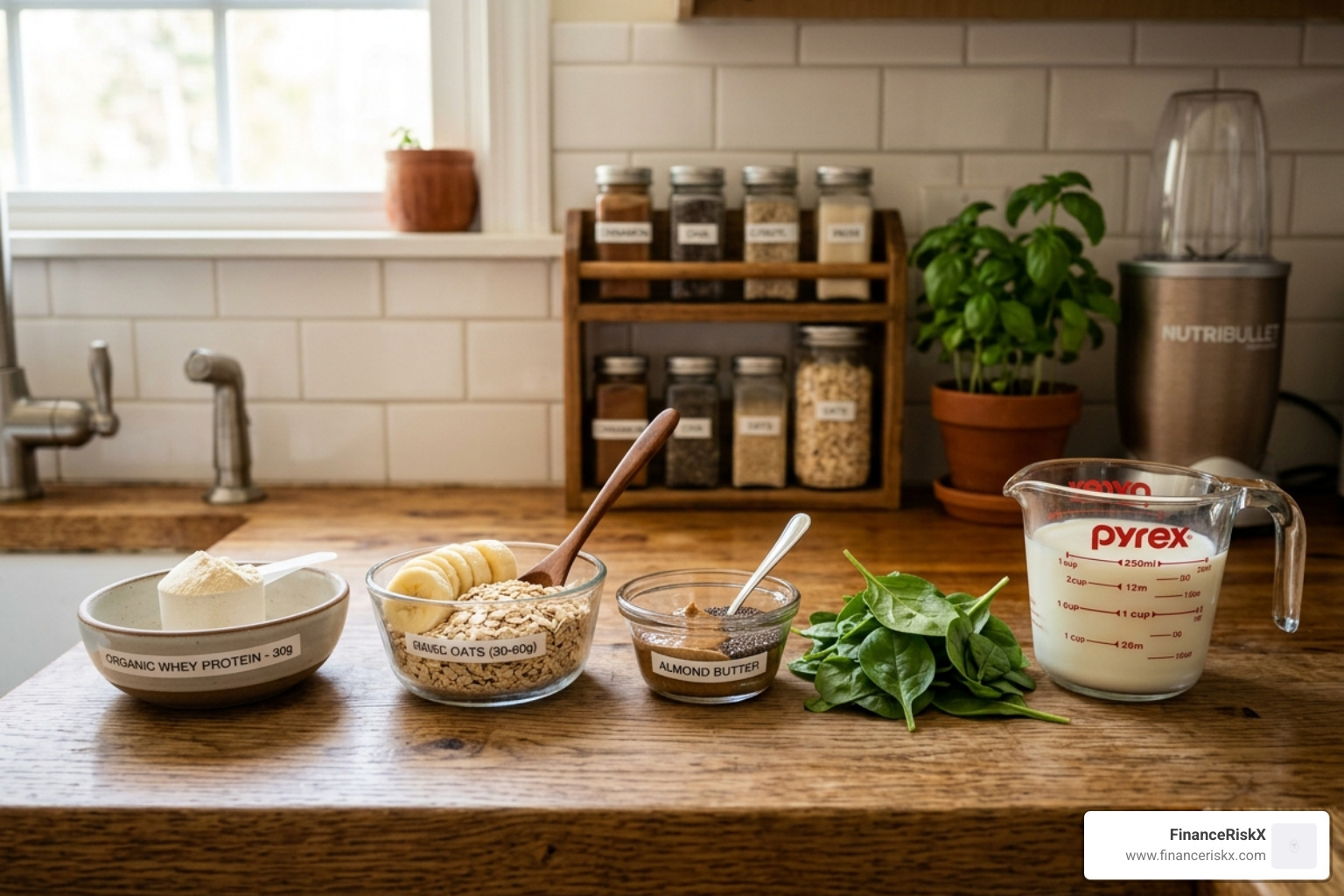
When we talk about the athlete smoothie portion guide, we aren’t just talking about taste; we are talking about metabolic demand. Your body’s needs change based on whether you just ran a marathon, hit a heavy leg day, or are simply trying to maintain your current weight during a deload week.
A common mistake we see is “eyeballing” ingredients without considering the total caloric load. For instance, while a tablespoon of nut butter is a healthy fat, “two big scoops” can easily add 400 calories to a drink that was supposed to be a light snack. On the flip side, many athletes under-fuel by using only water and a handful of berries, failing to provide the 30-60 grams of simple carbohydrates needed to restock glycogen.
Tailoring Portions to Your Training Intensity
Your portions should scale with your effort. On high-intensity days, your “Performance Plate” (or in this case, “Performance Pitcher”) should lean heavily into carbohydrates. On rest days, we shift the focus toward micronutrients and anti-inflammatory ingredients to support systemic recovery.
Portion Comparison: Snack vs. Meal Replacement
| Component | Snack / Pre-Workout | Meal Replacement / Recovery |
|---|---|---|
| Total Calories | 200–350 kcal | 500–800+ kcal |
| Protein | 15–20g | 30–40g |
| Carbohydrates | 30g (Simple) | 60–90g (Complex + Simple) |
| Fats | Minimal (for digestion) | 1–2 Servings (Avocado/Nuts) |
| Liquid Base | Water or Coconut Water | Milk or Soy Milk |
For those looking for muscle hypertrophy (growth), the goal is a caloric surplus. This means adding energy-dense items like oats, full-fat Greek yogurt, or even an extra half-serving of nut butter. For weight management, we swap high-calorie liquids for water or unsweetened almond milk and double down on high-volume, low-calorie vegetables like spinach or cucumber.
Mastering Macro Ratios: Protein, Carbs, and Fats
To build the ultimate blend, we need to look at the “Big Three” macros. According to Smoothie Essentials for Athletes, a balanced athlete smoothie must include protein for repair, carbs for energy, and fats for satiety.
Protein Benchmarks in Your Athlete Smoothie Portion Guide
Protein is the cornerstone of the athlete’s diet. Research suggests athletes should consume approximately 0.25-0.3 grams of protein per kilogram of body weight at each eating occasion. For most, this lands squarely between 25 and 30 grams per smoothie.
- Greek Yogurt: A standard 5.3 oz container provides about 13g of protein. To hit your 30g target, you’ll need to supplement with powder or use a full cup (which offers nearly 20g).
- Cottage Cheese: This is a “secret weapon” for athletes. One cup contains a massive 28g of protein. Because it contains casein, it’s a slow-digesting option perfect for evening smoothies to support overnight muscle protein synthesis.
- Ultra-Filtered Milk: Swapping regular cow’s milk (8g per cup) for ultra-filtered high-protein milk (13g per cup) is an easy way to boost your totals without changing the flavor.
- Protein Powders: Most scoops provide 20-25g. Check your labels—some brands require two scoops to reach the advertised serving size!
For a deeper dive into how these portions fit into your daily routine, check out the perfect smoothie portion size guide.
Carbohydrate and Fat Scaling for Performance
Carbohydrates are your body’s preferred fuel. If you are drinking a smoothie 60 minutes before a game, you want 30-60g of simple, easy-to-digest carbs. Nutrition: Smoothies for athletes – Athletics Weekly notes that ingredients like frozen bananas (27g carbs) and honey are ideal here.
Healthy fats, while essential for hormone health and vitamin absorption, should be managed carefully. One tablespoon of nut butter or seeds is usually plenty. If you’re using avocado, stick to about 1/4 of a medium fruit (roughly 5-7g of fat) to keep the smoothie from becoming too heavy and slowing down digestion when you need quick energy.
Visual Estimations: Using Hand-Based Portions
Not every athlete wants to carry a food scale to the gym. While weighing your food is great for the first week to “calibrate” your eyes, you can eventually rely on hand-based guides.
- Protein = Your Palm: One “palm” of Greek yogurt or a single scoop of powder is your protein baseline.
- Vegetables = Your Fist: A fist-sized portion of spinach or kale ensures you get your nitrates and antioxidants without overfilling the blender.
- Carbohydrates = Cupped Hand: One cupped hand of frozen berries or rolled oats provides the necessary glycogen support.
- Fats = Your Thumb: A thumb-sized dollop of peanut butter or a thumb-length slice of avocado is the perfect fat portion.
Remember the difference: a serving size is what is on the label (e.g., 28g of nuts), but a portion is what you choose to put in the blender. Using your hands ensures your portions stay consistent with your body size.
Customizing Your Blend for Training Intensity and Timing
Timing is everything in sports nutrition. A smoothie consumed at 6:00 AM before a run looks very different from one consumed at 8:00 PM for recovery.
- Pre-Workout (1 hour prior): Focus on 30-60g of simple carbs and moderate protein. Avoid high fiber (too much kale) and high fat, as these can cause “heavy stomach” or cramping.
- Post-Workout Recovery (The 30-60 Minute Window): This is when bioavailability matters most. Liquid nutrition is ideal because it digests faster than solid food. Aim for a 2:1 or 3:1 carb-to-protein ratio to spike insulin and drive nutrients into the muscles.
- Bedtime Recovery: Use cottage cheese or casein powder. These slow-releasing proteins provide a steady stream of amino acids while you sleep.
- High-Intensity Days: Double the carbohydrate portion. Add 1/2 cup of oats or an extra banana to meet the increased caloric demand.
Adjusting Your Athlete Smoothie Portion Guide for Rest Days
On rest days, your metabolic rate is lower, but your “repair” needs are still high. We recommend:
- Reducing “Extra Energy”: Cut back on honey, maple syrup, and large portions of oats.
- Boosting “The Little Guys”: This is the time for antioxidants. Use 1 cup of berries (blueberries/cherries) to fight inflammation.
- Increasing Volume: Use more leafy greens and water-heavy vegetables like cucumber to stay full without the calorie spike.
Frequently Asked Questions about Athlete Smoothie Portions
How much protein should I actually put in a post-workout smoothie?
To maximize muscle protein synthesis and hit the “leucine threshold” (the amount of amino acids needed to trigger muscle growth), aim for 30 grams. While 20g is a standard serving for many, athletes who have just completed intense resistance training benefit from the slightly higher 30g mark to ensure full repair.
Can a smoothie replace a full meal for a high-performance athlete?
Yes, but only if it is built like a meal. A meal replacement smoothie needs a liquid base (milk/soy), a significant protein source, a complex carb (oats), a fruit/veg, and a healthy fat. If your smoothie is under 400 calories, it’s a snack, not a meal. For more on building a complete blend, see 5 steps to create the perfect athlete smoothie | NSW Institute of Sport (NSWIS) .
Is it better to use a food scale or visual estimates for portions?
In the beginning, use a scale. Most athletes underestimate how much Greek yogurt is in a “serving” or overestimate how many berries they are using. Once you know what 175g of yogurt looks like in your specific blender cup, you can switch to visual estimates. Consistency is the key to performance tracking.
Conclusion
At FinanceRiskX, we believe that performance is a result of preparation. Just as you wouldn’t enter a competition without a game plan, you shouldn’t approach your nutrition without a strategy. By following this athlete smoothie portion guide, you ensure that every sip serves a purpose—whether that’s rebuilding muscle, restoring energy, or simply staying hydrated.
Personalized nutrition is a long-term investment in your health and athletic career. For more tactical advice on perfecting your intake, visit our comprehensive resource on the perfect smoothie portion size guide.
Fuel smart, train hard, and let your nutrition be the edge that sets you apart.
