
Why Restaurant Smoothie Cup Size Determines Your Bottom Line
Restaurant smoothie cup size is one of the most practical decisions any smoothie bar, café, or restaurant owner makes — and it directly shapes customer satisfaction, portion control, and profit margins.
Here’s a quick answer to what you need to know:
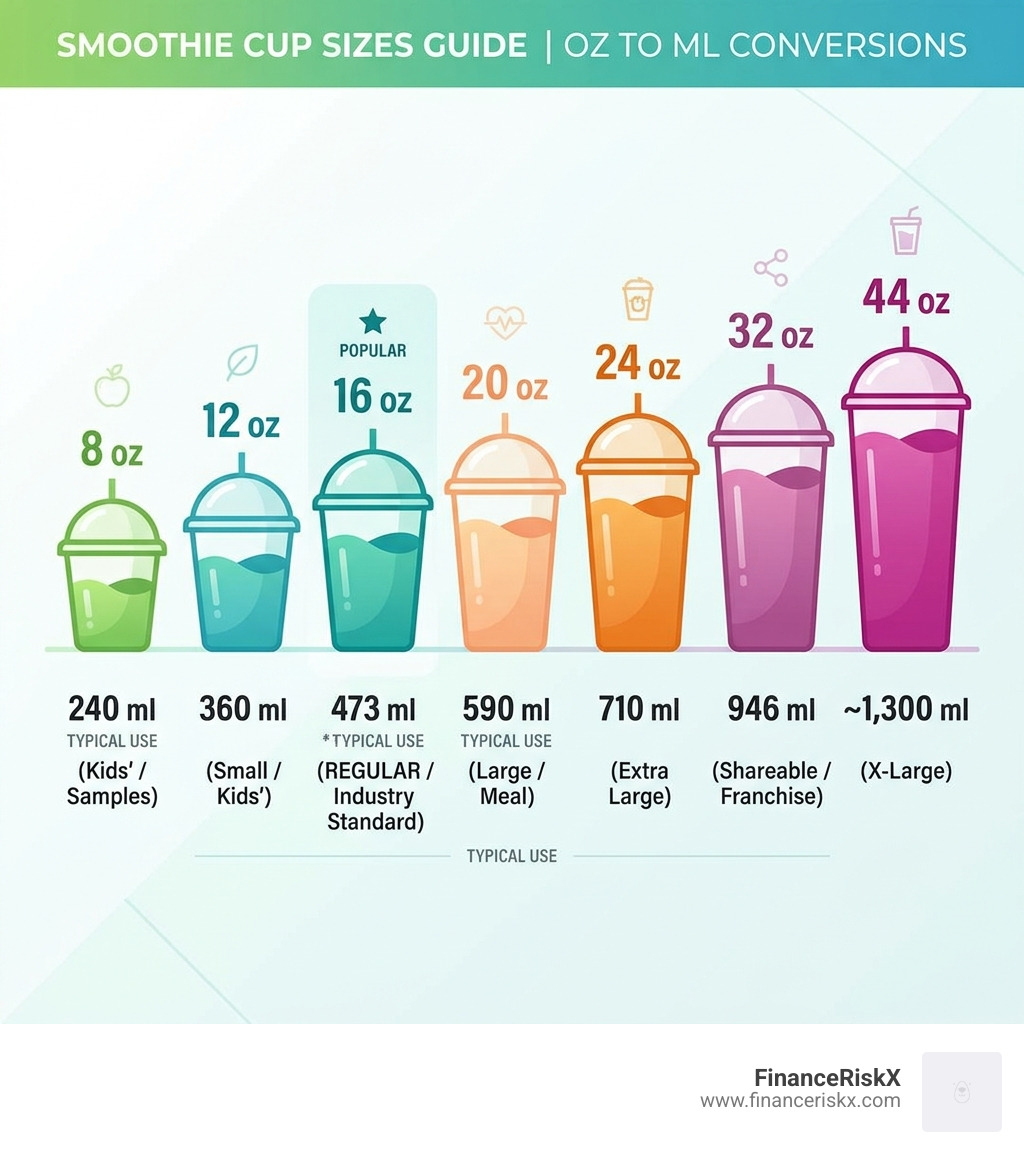
| Cup Size | Volume (ml) | Typical Use |
|---|---|---|
| 8 oz | 240 ml | Kids’ menu, samples, tastings |
| 12 oz | 360 ml | Small/entry-level, kids’ drinks |
| 16 oz | 473 ml | Industry standard “regular” |
| 20 oz | 590 ml | Large, meal replacement |
| 24 oz | 710 ml | Extra-large, post-workout |
| 32 oz | 946 ml | Franchise-style, shareable |
| 44 oz | ~1,300 ml | X-large (e.g., Smoothie King) |
The 16 oz cup is the most popular size in the smoothie industry — it’s the recognized standard for a regular serving across major chains and independent bars alike.
Different chains size things differently. Smoothie King runs from 12 oz (kid) all the way to 44 oz (x-large). Tropical Smoothie Cafe uses 16 oz as its small, 24 oz as medium, and 32 oz as large. Most independent smoothie bars keep it simpler, anchoring around 12 oz, 16 oz, and 20 oz.
Getting cup sizing right isn’t just about holding liquid. It affects how customers perceive value, how easy your inventory is to manage, and whether your pricing actually covers your costs.
Standard Restaurant Smoothie Cup Size Guide
When we talk about restaurant smoothie cup size, we aren’t just picking numbers out of a hat. The industry has gravitated toward specific increments because they align with standard packaging manufacturing and consumer psychological triggers. If you offer a size that is too small, the customer feels cheated; too large, and your food costs skyrocket while the customer struggles to finish the drink before it melts.
Here is a deeper look at the common volumes you will encounter:
| Ounces (oz) | Milliliters (ml) | Primary Market Use Case |
|---|---|---|
| 2 oz | 60 ml | Wellness shots, ginger/wheatgrass samples |
| 8 oz | 240 ml | Kids’ portions, promotional tasters |
| 12 oz | 355 ml | Standard “Small,” kids’ meals, entry-level pricing |
| 16 oz | 473 ml | The Industry Standard, “Regular,” Medium |
| 20 oz | 591 ml | “Large,” meal replacements, post-workout protein |
| 24 oz | 710 ml | Extra-large, specialty drinks with many toppings |
| 32 oz | 946 ml | “Quart” size, shareable portions, franchise large |
| 44 oz | 1,300 ml | Mega-size, high-calorie meal replacements |
For more details on how these fit into a professional menu, check out Smoothie Cup Sizes Explained: Which One Fits Your Menu? – KimEcopak.
The Industry Standard Restaurant Smoothie Cup Size (16 oz)
If you were to walk into ten different juice bars today, at least nine of them would offer a 16 oz (473 ml) option. Why has this become the “Goldilocks” of the industry?
First, it strikes a perfect balance for the consumer. It is substantial enough to feel like a full snack or a light breakfast, but it doesn’t carry the intimidating calorie count of a 32 oz “mega-smoothie.” Second, from our perspective as operators, the 16 oz cup offers the best profitability balance. It allows for a price point that covers premium ingredients (like organic berries or whey protein) while remaining accessible to the average commuter.
In the UK, where the smoothie market accounts for 18.6% of the total European scene, the 16 oz “regular” is the undisputed champion of the high street. It fits perfectly in standard car cup holders and is easy for customers to carry while on the move.
Choosing the Right Restaurant Smoothie Cup Size for Your Menu
We recommend aligning your cup sizes with the specific function of the drink. A menu shouldn’t just be “one size fits all.”
- Fruity & Refreshing: These are often consumed as snacks. A 12 oz or 16 oz size is usually sufficient.
- Protein & Power Shakes: These are frequently used as meal replacements or post-gym recovery. Customers expect more volume here, making 20 oz or 24 oz the preferred choice.
- Indulgent/Dessert Smoothies: Because these are higher in sugar and calories (often containing yogurt or chocolate), a smaller 12 oz “treat” size can help maintain a healthier brand image.
For a deeper dive into portioning logic, see our the-perfect-smoothie-portion-size-guide.
Acai Bowl Sizes vs. Traditional Smoothie Cups
It is important to note that acai bowls follow a different sizing logic than drinks. While a smoothie is tall and narrow to maintain cold temperatures and fit cup holders, an acai bowl needs a wide mouth to accommodate layers of granola, sliced fruit, and nut butters.
Standard acai bowl sizes usually break down as:
- 12 oz (Small): Ideal for a light snack; typically fits 2-3 fruit toppings.
- 16 oz (Medium): The most popular meal size; offers a balance of base and toppings.
- 24 oz (Large): Often considered a shareable size or a very heavy meal replacement.
Volume does not always equal weight in the bowl world. A 16 oz bowl filled with dense acai and heavy peanut butter will weigh significantly more than a 16 oz smoothie. Scaling your toppings is key—a 24 oz bowl needs at least double the granola of a 12 oz bowl to maintain the right “crunch-to-smoothie” ratio.
Technical Specifications: Fill Types and Materials
Choosing a restaurant smoothie cup size involves more than just picking a volume. You have to consider how that volume is measured and what the cup is made of.
Flush Fill vs. Practical Fill
This is a technicality that can save you thousands in spilled product and frustrated customers.
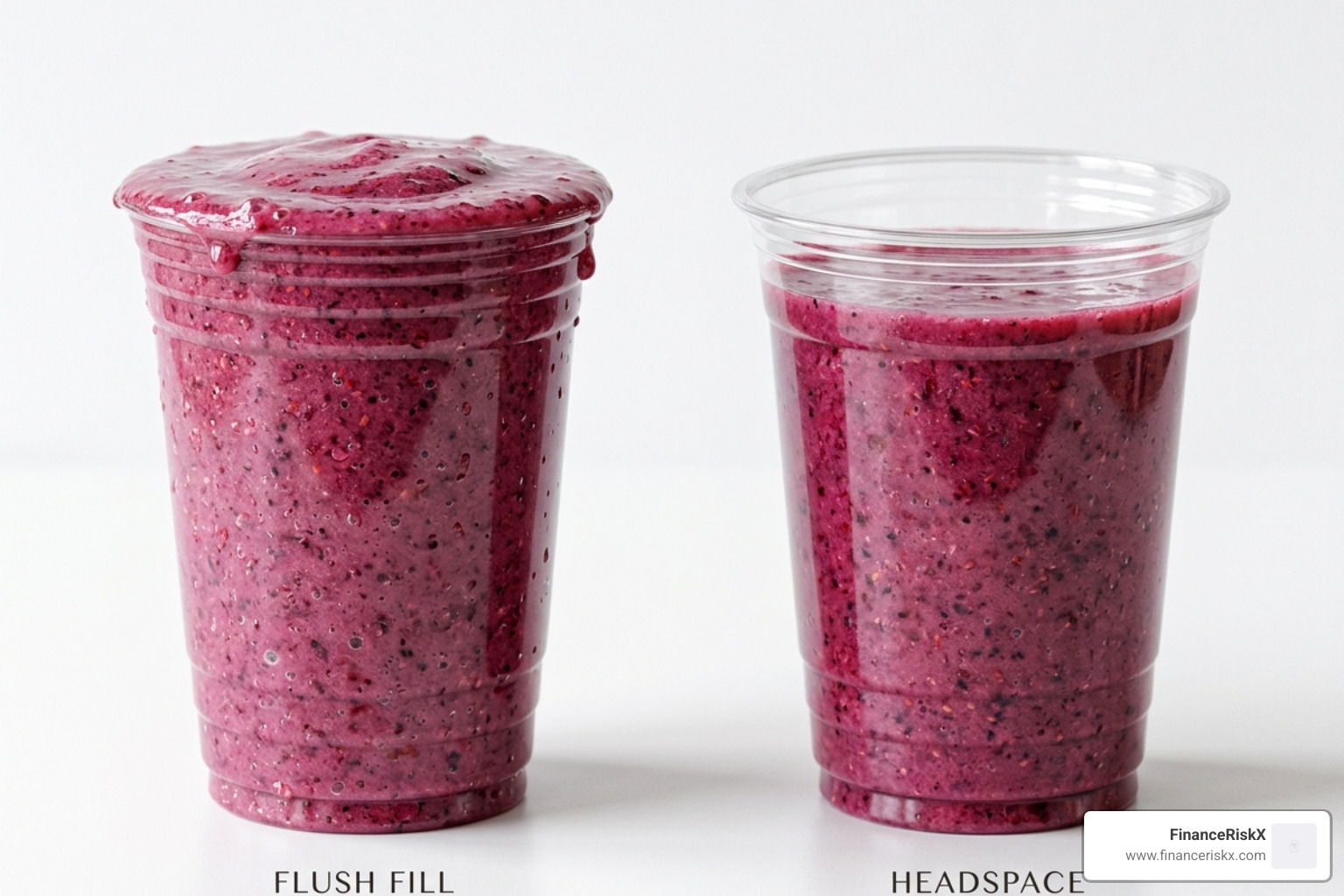
- Flush Fill: This is the volume of the cup when filled exactly to the brim. If a cup is “16 oz flush fill,” you cannot actually put 16 oz of smoothie in it and put a lid on without it overflowing.
- Practical Fill: This is the “real world” capacity. It leaves about 0.5 to 1 inch of “headspace” at the top.
In the smoothie world, headspace is your best friend. It prevents the smoothie from surging out of the straw hole or leaking under the lid rim during delivery. When ordering inventory, always ask your supplier for the practical fill measurements to ensure your portioning stays consistent.
Material Selection: PET, PLA, and Paper
The material of your cup affects the customer’s sensory experience and your brand’s environmental footprint.
- PET (Polyethylene Terephthalate): The industry workhorse. It is crystal clear, which is vital for showing off the vibrant colors of a mango or kale smoothie. It is also crack-resistant and widely recyclable.
- PLA (Polylactic Acid): These look like plastic but are made from plant-based starches. They are commercially compostable. However, be warned: they have a lower heat tolerance. If you store them in a hot delivery truck, they can warp.
- Paper: Often used for branding, as paper cups offer a great surface for high-quality printing. They provide slightly better insulation, keeping the smoothie frozen for longer, but they hide the visual appeal of the drink.
For larger restaurant smoothie cup sizes (24 oz and up), we recommend cups with reinforced bottoms. The weight of a large smoothie can cause thinner cups to “squish” when picked up, leading to “lid-pop” disasters.
Business Impact and Menu Strategy
The sizes you choose dictate your operational flow. If you offer five different sizes, you need five different lids, five different straw lengths, and five different storage slots in your tiny prep area.
Optimizing Profit Margins through Tiered Sizing
We suggest using a “Good-Better-Best” tiered model. This usually involves three sizes: 12 oz, 16 oz, and 20 oz.
This strategy works because of consumer psychology. Most customers will shy away from the most expensive (20 oz) and the “cheapest” (12 oz), naturally gravitating toward the 16 oz middle option. By pricing your 16 oz cup as your primary profit driver and the 20 oz as a high-value upsell, you can maximize your average transaction value.
From a cost perspective, the “jump” from 12 oz to 16 oz (a 33% increase in volume) often costs the restaurant only pennies in extra ingredients, but you can charge significantly more, widening your margin.
Branding and Customization
Your restaurant smoothie cup size provides the “canvas” for your marketing. A larger 20 oz or 24 oz cup offers more surface area for custom printing. In the age of social media, a vibrant, layered smoothie in a clear, branded cup is a walking billboard.
We’ve seen that visual layering—putting a splash of coconut milk or a swirl of pitaya at the bottom—works best in 16 oz clear PET cups. It creates a premium aesthetic that justifies a higher price point and encourages customers to post photos online, providing you with free advertising.
Frequently Asked Questions about Smoothie Cup Sizes
What is the most common smoothie cup size in the industry?
The 16 oz (473 ml) cup is the universal “regular” size. It is the most popular because it fits standard cup holders, offers a satisfying portion for one person, and provides the best balance between ingredient cost and retail price.
How do I choose between a flat lid and a dome lid?
- Flat Lids: Best for standard smoothies and delivery. They are easier to stack and less prone to leaking.
- Dome Lids: Essential if you add whipped cream, fresh fruit chunks, or granola on top. They create a premium “wow” factor and allow you to fill the cup slightly above the rim with toppings.
What straw size is best for thick smoothies?
Standard soda straws will not work for smoothies. You need “Jumbo” or “Mega” straws.
- For 12-16 oz smoothies: 8mm diameter straw.
- For 20-32 oz or very thick shakes: 10mm to 12mm “Boba” style straw. Using a straw that is too thin is the number one cause of customer frustration!
Conclusion
At FinanceRiskX, we know that the “little things” like restaurant smoothie cup size are actually the big things when it comes to running a profitable business. Choosing the right sizes helps you control your food costs, satisfy your customers’ appetites, and streamline your inventory.
Whether you are sticking to the industry-standard 16 oz or going big with franchise-style 32 oz portions, make sure your choice reflects your brand’s goals. For more advice on dialing in your portions, visit our the-perfect-smoothie-portion-size-guide.
Remember: in the smoothie business, size doesn’t just matter—it’s the foundation of your success. Happy blending!
